Prostatitis: Symptoms in Men and Which Tests to Take
Reviewed by the LabReadAI medical team
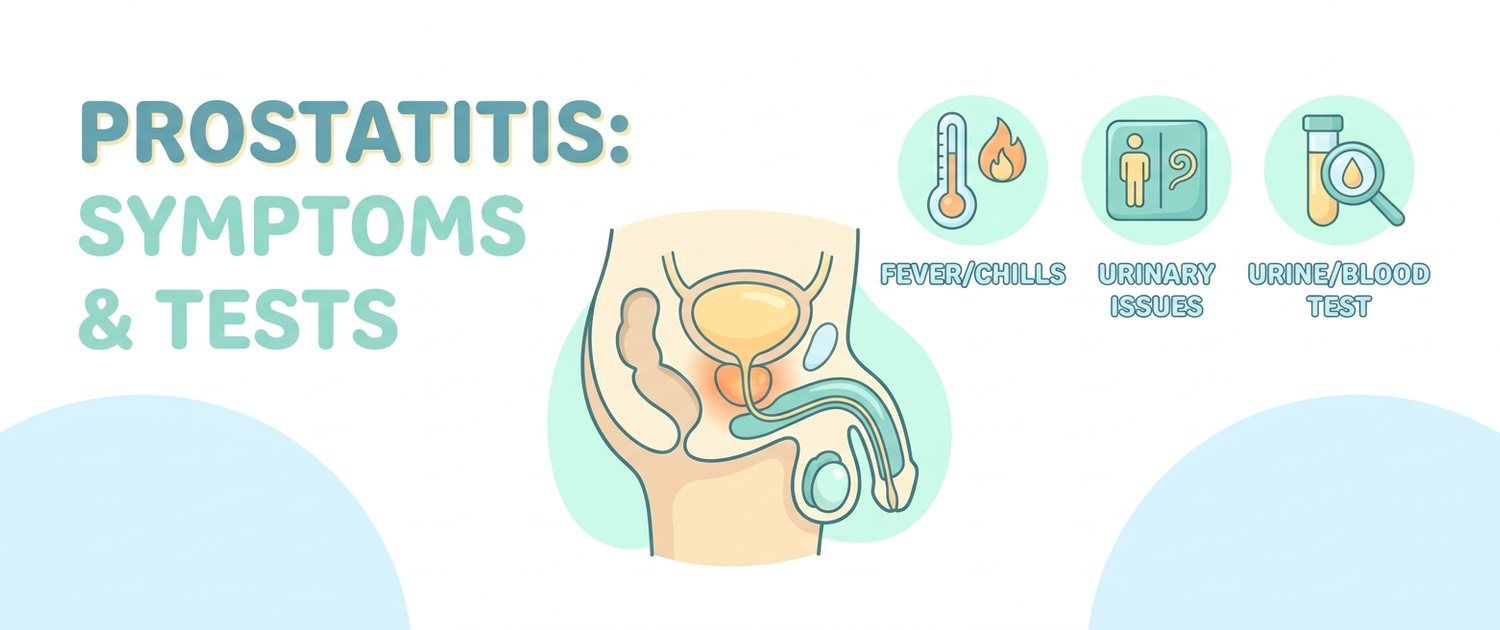
Prostatitis is one of the most common male urological problems, and there are many fears and myths around it. Let's go through it calmly and to the point: what the symptoms of prostatitis are, how acute prostatitis differs from chronic, which tests to take and when to see a doctor urgently rather than "tough it out."
What Prostatitis in Men Is
Prostatitis is inflammation of the prostate gland. It may be caused by infection or be non-infectious, run acutely or drag on for months. The prostate surrounds the start of the urethra, so its inflammation shows so clearly in urination and in how the pelvic area feels. This condition is treatable, and there is no need to panic.
Symptoms of Prostatitis: Pelvic and Perineal Pain
Typical symptoms of prostatitis in men are a pulling or aching pain in the perineum, lower abdomen and groin, sometimes radiating to the lower back. Discomfort on ejaculation is common. The pain may worsen with long sitting. It is the combination of pelvic pain and urinary problems that raises suspicion of prostatitis and prompts a visit to a urologist.
Urinary Symptoms
The second group of complaints is urinary: frequent urination, especially at night, a feeling of incomplete emptying, stinging or burning, a weakened stream. These symptoms partly resemble those of benign prostatic hyperplasia, so it is important not to guess yourself but to distinguish the conditions with a doctor by tests and examination.
Acute and Chronic Prostatitis
Acute prostatitis develops suddenly: severe pain, high fever, chills, marked urinary problems — this state needs urgent care. Chronic prostatitis runs milder and longer, with periods of flare-up and calm, and it is the more common form. The approach to acute and chronic prostatitis differs, and it is set by a doctor.
Which Tests to Take for Prostatitis
The basic work-up usually includes a urinalysis (and a culture if infection is suspected), examination of prostate secretion, and if needed tests for sexually transmitted infections. By indication a prostate ultrasound is added to assess the gland and residual urine. The specific set of tests for prostatitis is chosen by a urologist based on symptoms.
Prostatitis and PSA: Why It Is Read Carefully
An important nuance: inflammation of the prostate transiently raises PSA. So a "high PSA" during prostatitis should not be read immediately as a cancer alarm — taking and interpreting a PSA test during active inflammation is incorrect. PSA is usually assessed after the inflammation subsides and over time. The final interpretation is made by a doctor.
When to See a Doctor Urgently
There are warning signs when you must not wait: high fever with chills, severe pain, and especially an inability to urinate (acute urinary retention). This calls for urgent medical care. In other cases prostatitis is seen by a urologist on a planned basis. If your test results are unclear, you can upload the report for decoding and go through the values in plain language before the visit.
This article is for informational purposes only and does not replace a doctor's consultation. A diagnosis of prostatitis and its treatment are determined by a urologist based on examination and tests.
For informational purposes only
This article is for informational purposes only and does not constitute medical advice, diagnosis, or treatment. Please consult a healthcare professional for medical guidance.