Frequent Urination and Thirst: Causes and Which Tests to Take
Reviewed by the LabReadAI medical team
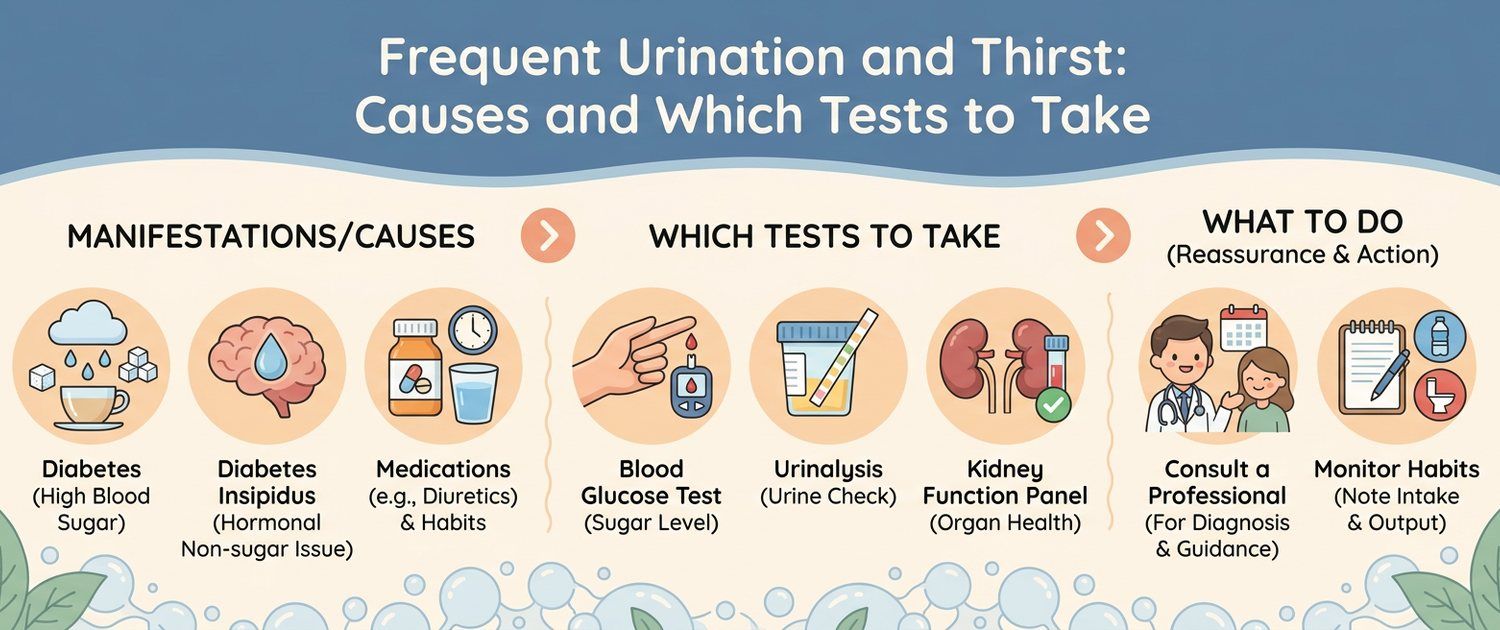
How many times a day you pass urine is individual, but when the urge becomes noticeably more frequent, night-time trips appear, or constant thirst is added, it is worth finding the cause. Frequent urination can be harmless (you drank a lot, coffee, stress), but it can also be the first signal of diabetes, an infection or a prostate problem. Here is when it is normal and when it is a reason to get tested.
When Frequent Urination Is Normal and When It Is a Symptom
On average a person urinates 4–7 times a day and usually does not get up at night for it. The norm depends heavily on how much and what you drink: coffee, tea and alcohol have a diuretic effect. It becomes a symptom when the urge increases for no clear reason, night-time trips (nocturia) appear, or urination comes with thirst, pain, stinging or a changed stream. It matters to distinguish a larger urine volume (polyuria — a lot of fluid out) from frequent small portions (bladder irritation).
Diabetes: Frequent Urination and Constant Thirst
The combination of "a lot of urine + strong thirst + dry mouth" is the classic triad of diabetes. With high blood sugar the kidneys excrete excess glucose along with water, so a person loses fluid and drinks a lot. Weakness, weight loss and persistent fatigue are often added. High sugar dries the skin and can cause itchy skin.
The basic check is fasting blood glucose and HbA1c (average sugar over 3 months). If sugar is borderline, it may be prediabetes, a reversible stage; with a confirmed rise it is type 2 diabetes. The earlier high sugar is found, the easier it is to control.
Urinary Tract Infections and Frequent Urination
If frequent urination comes with stinging, burning, lower abdominal pain or cloudy urine, a urinary tract infection (cystitis) is likely, especially in women. A urinalysis is informative here: it shows white blood cells, bacteria and other signs of inflammation. An infection needs a doctor's review and usually treatment.
The Prostate and Urination in Men
In men over 45–50, frequent urination — especially at night — a weak stream and a sense of incomplete emptying are more often linked to an enlarged prostate or prostatitis. The work-up uses PSA, a marker of prostate status, and a urologist's exam. Warning symptoms (blood in the urine, sudden inability to urinate) need urgent care.
Other Causes: Diuretics, Bladder, Kidneys
Frequency can occur without disease: large fluid intake, coffee and tea, diuretic medication. An overactive bladder causes frequent sudden urges in small portions. Kidney disease affects urine volume and concentration — kidney function tests help assess it. More rarely the cause of polyuria is diabetes insipidus — a separate condition not related to sugar.
Frequent Urination in Women
In women frequent urges are most often linked to cystitis, but also occur in pregnancy (pressure from the uterus), in menopause and with an overactive bladder. If frequent urination without pain comes with thirst and dry mouth, diabetes is ruled out first by checking blood sugar.
Which Tests to Take for Frequent Urination
A sensible starting set depends on the accompanying symptoms:
- Blood glucose and HbA1c — if there is thirst, dry mouth, weakness.
- Urinalysis — if there is stinging, burning, pain (suspected infection).
- PSA and a urologist's exam — for men with night-time trips and a weak stream.
If you are not sure where to start, you can describe your symptoms — the service suggests likely causes and which tests to discuss with your doctor.
When to See a Doctor Urgently
Do not delay if frequent urination comes with: blood in the urine; a high fever and flank pain; severe thirst, nausea and confusion (possible diabetic decompensation); or an inability to urinate. Otherwise, calmly taking basic tests is enough — the cause is usually found and corrected.
This article is for informational purposes only and does not replace a doctor's consultation. The set of tests and any treatment are chosen by a specialist.
For informational purposes only
This article is for informational purposes only and does not constitute medical advice, diagnosis, or treatment. Please consult a healthcare professional for medical guidance.