Itchy Skin Without a Rash: Causes and Which Tests to Take
Reviewed by the LabReadAI medical team
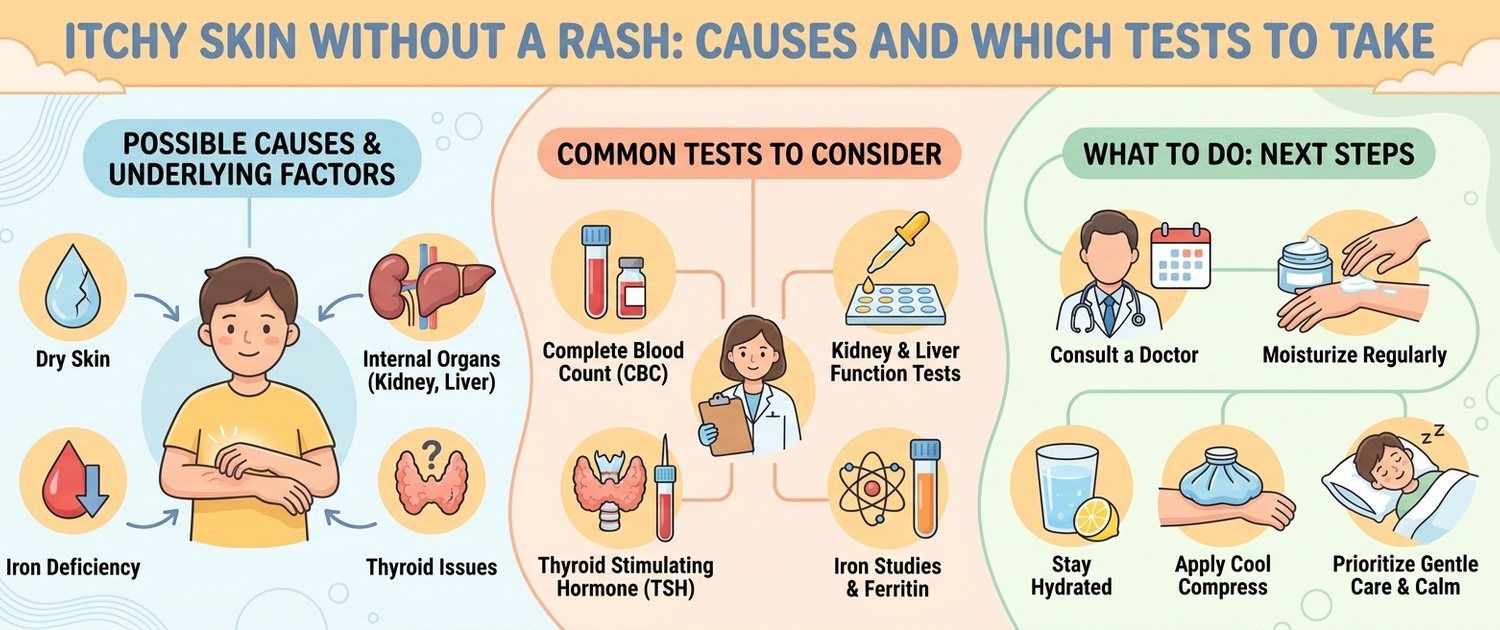
When your skin itches but there is no rash, the cause often has to be sought not on the skin but inside the body. Persistent itch without a rash is a known signal of liver, kidney, thyroid, blood and metabolic disease — and about one in six people with chronic itch turn out to have a systemic cause. Here is when itchy skin is not a skin disease, and which blood tests help find the source.
When Itchy Skin Is Not a Skin Disease
If the skin has a rash, scaling or blisters, it is most likely a skin condition (dermatitis, eczema, allergy), managed by a dermatologist. But when the skin itches with no visible rash (only scratch marks), especially all over and for more than a few weeks, it is sensible to check internal causes. The longer and more generalized the itch, the more important the work-up.
Liver and Bile Disease (Cholestatic Itch)
Impaired bile flow (cholestasis) is a classic cause of distressing skin itch, often before jaundice appears. Itch from liver disease often worsens at night and on the palms and soles. The basic check is liver markers: bilirubin and GGT. If yellowing of the skin and eyes joins in, that is jaundice — a reason for prompt evaluation.
Kidney Disease and Itching
In chronic kidney disease the blood accumulates substances that irritate the skin's nerve endings — uremic itch develops, usually generalized and stubborn. Kidney function is assessed with creatinine; more detail in the article on chronic kidney disease.
Thyroid, Diabetes and Itch
Thyroid disorders (both over- and underactive) change the skin's condition and moisture and can cause itch — the basic screen is TSH. In diabetes the skin becomes dry, and high sugar and skin infections worsen itch; it is useful to check glucose, especially if itch comes with thirst and frequent urination.
Iron Deficiency and Blood Disorders
Iron deficiency itself can cause itch — assessed by ferritin. Iron deficiency often comes with persistent fatigue too. Less commonly, persistent itch is driven by blood disorders (such as polycythemia vera — itch after contact with water) or lymphoma; abnormalities on a complete blood count help raise suspicion.
Allergy and Other Causes
An allergic reaction can also cause itch with minimal rash — total IgE is informative here. Other causes include dry skin (especially in older adults and in winter), medication side effects, scabies (needs an exam), pregnancy and psychogenic itch. So the approach is always comprehensive.
Which Tests to Take for Itchy Skin
A sensible starting set for itch without a rash covers the main systemic causes:
- Complete blood count, ferritin, liver and kidney chemistry.
- TSH and glucose — thyroid and diabetes.
- Total IgE — when allergy is suspected.
If you are not sure where to begin, you can describe your symptoms — the service suggests likely causes and which tests to discuss with your doctor.
When to See a Doctor
A routine visit is warranted if the itch lasts more than 2–6 weeks, is generalized or disturbs sleep. Do not delay if itch comes with jaundice, weight loss, night sweats, swollen lymph nodes or marked weakness — these combinations call for ruling out serious causes. In most cases, though, a systemic cause of itch is found on blood tests and corrected.
In children the causes of rash and itch differ from adults — see rash in children.
This article is for informational purposes only and does not replace a doctor's consultation. The set of tests and any treatment are chosen by a specialist.
For informational purposes only
This article is for informational purposes only and does not constitute medical advice, diagnosis, or treatment. Please consult a healthcare professional for medical guidance.