Constant Fatigue and Weakness: Causes and Which Tests to Take
Reviewed by the LabReadAI medical team
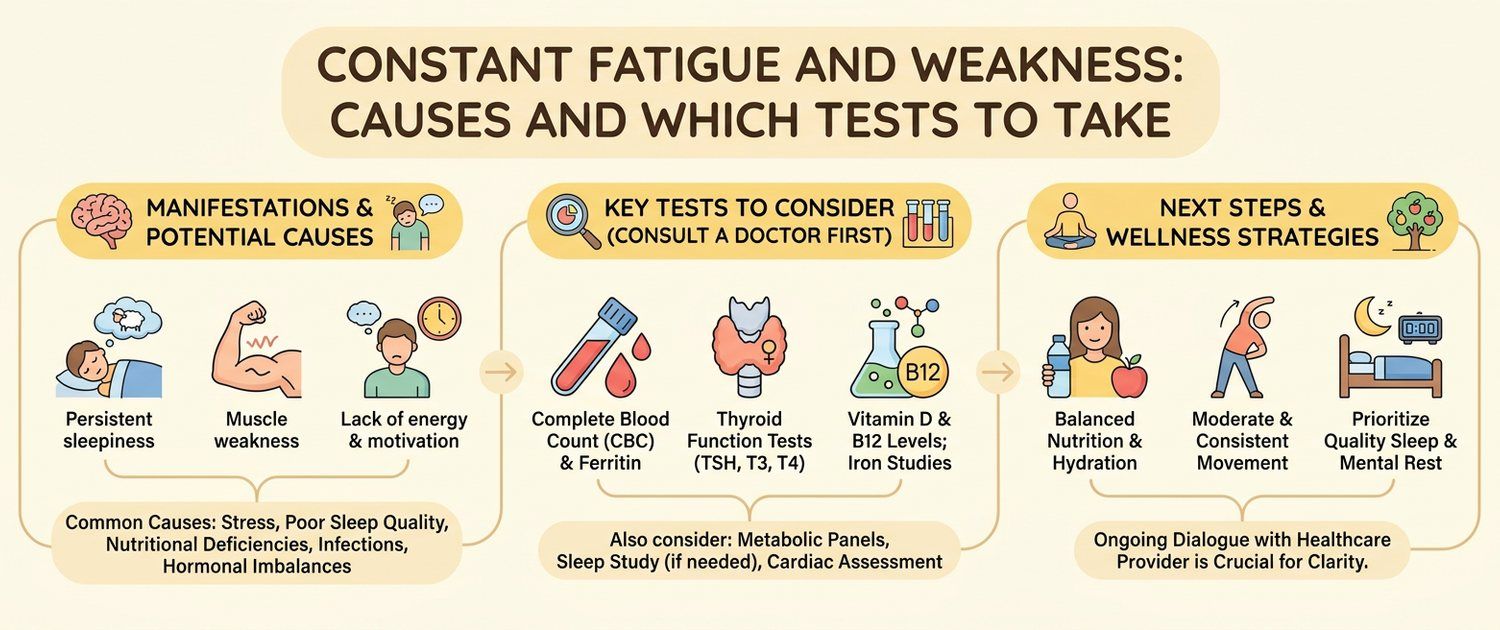
Feeling tired after a hard day is normal. But when weakness lingers after sleep and weekends, drags on for weeks and gets in the way of ordinary tasks, there is usually a specific and fixable cause behind it. Persistent fatigue is one of the most common reasons people see a doctor, and in most cases the source can be found with simple blood tests. Here is why weakness and low energy appear, and where to start.
What Constant Fatigue Is and Why It Happens
It helps to separate ordinary tiredness from a persistent symptom. Physiological fatigue resolves after rest and sleep — its causes lie in lifestyle: too little sleep, overload, irregular meals. Chronic fatigue is when weakness lasts more than a few weeks, is not explained by obvious exertion and does not lift after recovery.
Persistent weakness usually comes from one of three big groups of causes: deficiencies (iron, vitamins), hormonal disorders (above all the thyroid) and sleep problems. Less often it is chronic inflammatory, cardiac or kidney disease, or depression. The good news is that the most common causes are picked up by a routine set of blood tests. Fatigue often comes together with other symptoms — hair loss, dizziness or frequent urination: such combinations hint at a shared cause.
Iron Deficiency — the Most Common Cause of Fatigue and Weakness
A lack of iron is the number-one cause of fatigue, especially in women. Weakness appears even before anemia develops: iron stores are depleted gradually, and a person feels low on energy while hemoglobin is still formally normal. This state is called latent (hidden) iron deficiency.
The key marker here is ferritin, which reflects the body's iron stores and falls earliest. Hemoglobin only drops at a later stage, when the deficiency becomes iron deficiency anemia. That is why, when someone complains of weakness, ferritin is assessed rather than just a basic blood count: low ferritin with normal hemoglobin is a common and easily corrected cause of fatigue.
The Thyroid: Hypothyroidism and Low Energy
The thyroid sets the pace of metabolism. When its function is reduced (hypothyroidism), everything "slows down": marked weakness, sleepiness, feeling cold, weight gain, dry skin and low mood appear. It is one of the most common endocrine causes of chronic fatigue.
The basic screen is TSH: this pituitary hormone is the first to respond when the thyroid underperforms. A raised TSH is a reason for a closer work-up with an endocrinologist. Hypothyroidism is treatable, and with treatment the loss of energy usually resolves.
Vitamin D and B12 in Chronic Fatigue
Vitamin D deficiency is widespread, especially in northern regions and in winter, and often shows up precisely as weakness and reduced tone. A vitamin D test helps assess your status; more detail in the article on vitamin D deficiency.
The second important cause is a lack of vitamin B12. It is needed for blood formation and the nervous system, and its deficiency causes fatigue, numbness, "brain fog" and, over time, a particular type of anemia. Those at risk include vegetarians, older adults and people on metformin or acid-lowering drugs (more in vitamin B12 deficiency).
Other Causes of Weakness and Sleepiness
If deficiencies and the thyroid are ruled out, consider other sources. Sleep disorders (including apnea) cause daytime sleepiness and grogginess even with enough time in bed. Blood sugar swings and prediabetes also come with sluggishness — here assessing glucose helps. Chronic stress and depression contribute too: with these, fatigue has more of a "mental" flavour — no energy or motivation from the very morning. Finally, weakness can be a side effect of medication or a sign of chronic inflammation. If scattered attention and brain fog are mixed in with the fatigue, the list of causes only partly overlaps — it is covered separately in what steals your attention.
Which Blood Tests to Take for Fatigue
A sensible starting set for persistent weakness is a few basic tests that cover the most common causes:
- Complete blood count — detects anemia and signs of inflammation.
- Iron studies — ferritin and related markers to find hidden deficiency.
- Thyroid hormones — TSH and related markers.
- Vitamin D and B12, glucose or HbA1c — as indicated.
If you are not sure where to begin and want a quick orientation based on your complaints, you can describe your symptoms and get a breakdown: the service suggests likely causes and which tests to discuss with your doctor.
When Fatigue Means You Should See a Doctor
Weakness on its own is rarely dangerous, but there are warning combinations that should not be put off:
- Fatigue with unexplained weight loss, night sweats or a prolonged fever.
- Marked breathlessness, chest pain or a racing heartbeat together with weakness.
- A sharp increase in weakness over days, fainting, pallor or black stools (possible blood loss).
- Fatigue lasting more than a few weeks that lifestyle does not explain.
In most cases, though, the cause of weakness is found and fixed. Start with the basic blood tests — it is the shortest path from "always exhausted" to a clear plan of action with your doctor.
If the tests come back clean and the tiredness stays, the question shifts: why rest stopped helping and what gets checked first when there is no energy for anything.
This article is for informational purposes only and does not replace a doctor's consultation. The set of tests and any treatment are chosen by a specialist.
For informational purposes only
This article is for informational purposes only and does not constitute medical advice, diagnosis, or treatment. Please consult a healthcare professional for medical guidance.