Iron Deficiency Anemia: Symptoms, Diagnosis and Treatment
Reviewed by the LabReadAI medical team
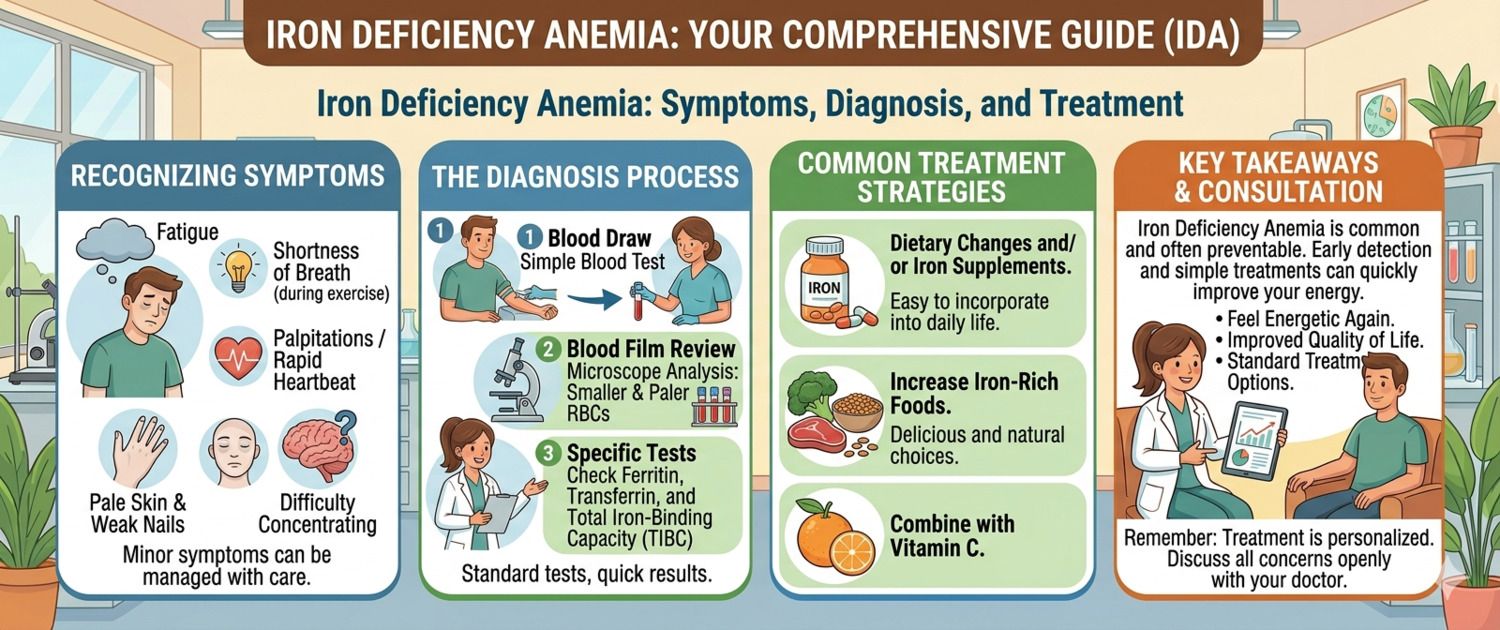
Fatigue after a short walk, shortness of breath climbing one flight of stairs, pallor that others notice before you do — these aren't just signs of stress or poor sleep. Iron deficiency anemia — the most common form of anemia worldwide — develops slowly and stays hidden for months, because the body expertly depletes its reserves before giving up. Let's look at how it works, which tests reveal it, and how to treat it properly.
What Is Iron Deficiency Anemia and How It Develops
Iron is the raw material for hemoglobin, the protein in red blood cells that carries oxygen from the lungs to every cell in the body. When iron runs short, hemoglobin synthesis falls, red blood cells become small and pale, and tissues begin to chronically "suffocate."
Iron is depleted in stages — imagine a warehouse with three storage sections. First to empty is the reserve: stores of ferritin in the liver and bone marrow. Next, transport iron drops — the iron circulating in the blood bound to transferrin. Only last does hemoglobin fall — the body's "combat reserve," protected until the very end.
This is why ferritin drops months before a complete blood count shows anemia. By the time hemoglobin dips below normal, iron deficiency has existed for a long time.
Causes of Iron Deficiency Anemia
Iron deficiency develops when losses exceed intake. There are three reasons: insufficient intake, poor absorption, and increased losses.
Chronic Blood Loss
This is the leading cause in adults. In women of reproductive age — heavy periods: losing more than 80 ml of blood per month creates a negative iron balance. In men and postmenopausal women with newly diagnosed anemia, hidden gastrointestinal bleeding (ulcer, polyps, colon cancer) must be ruled out first. Regular use of NSAIDs (aspirin, ibuprofen) also causes microbleeding from the stomach lining.
Impaired Absorption
Even with adequate dietary iron, absorption may be reduced. Celiac disease, inflammatory bowel disease, gastric surgery (including bariatric), and chronic atrophic gastritis all impair iron absorption in the duodenum.
Increased Demand
Pregnancy, breastfeeding, and active growth in children and adolescents are periods when the body needs significantly more iron than usual. If diet doesn't compensate, deficiency is inevitable.
Symptoms: How Iron Deficiency Presents
Symptoms of iron deficiency anemia fall into two groups: general signs of oxygen starvation and specific signs unique to iron deficiency.
General symptoms appear when hemoglobin is already low: chronic fatigue that doesn't resolve with rest; shortness of breath with exertion that was previously easy; rapid heartbeat; pale skin and mucous membranes; dizziness and ringing in the ears.
Specific iron deficiency symptoms — signs that should point directly to this diagnosis: brittle, spoon-shaped nails (koilonychia); hair loss; dry skin and cracks at the corners of the mouth (cheilitis); pica — craving chalk, clay, or ice; restless legs syndrome at night; difficulty concentrating.
Important: specific symptoms can appear at the latent deficiency stage — when hemoglobin is still normal but ferritin is already low.
Which Tests Confirm Iron Deficiency Anemia
Diagnosis is two-level. First, a complete blood count identifies the anemia itself; then an iron panel reveals the cause.
Complete Blood Count Picture
| Marker | In IDA | Normal (adults) |
|---|---|---|
| Hemoglobin (Hb) | Low | F: 120–155 g/L, M: 130–170 g/L |
| MCV (red cell volume) | Low < 80 fL | 80–100 fL |
| MCH (color index) | Low | 27–33 pg |
| Platelets | Often elevated | 150–400 × 10⁹/L |
A low MCV is the key finding: small (microcytic) and pale (hypochromic) red blood cells.
Iron Panel Picture
| Marker | In IDA | Normal |
|---|---|---|
| Ferritin | Low < 12 µg/L | F: 10–120 µg/L, M: 20–250 µg/L |
| Serum iron | Low | 9–30 µmol/L |
| Transferrin | Elevated | 2.0–3.6 g/L |
| Transferrin saturation | Low < 16% | 20–50% |
Ferritin below 30 µg/L in a woman with fatigue symptoms is sufficient reason to address iron deficiency — even if hemoglobin is within normal range.
Three Stages of Iron Deficiency
1. Pre-latent deficiency — ferritin stores are depleted, but transport iron and hemoglobin are normal. Blood count is clean. Symptoms may already be present.
2. Latent deficiency — ferritin and serum iron are low, transferrin is elevated, but hemoglobin still holds. Deficiency exists; anemia does not.
3. Iron deficiency anemia — hemoglobin is low, red cells are small and pale. Symptoms are pronounced.
Treatment of Iron Deficiency Anemia
Treatment has two mandatory parts: replenishing iron stores and eliminating the cause. If the source of blood loss is not found and addressed, iron supplements will only provide temporary relief.
The standard is oral iron. Key rules: take 30–60 minutes before meals; avoid tea, coffee, and dairy at the same time; vitamin C improves absorption; dark stools are a normal reaction.
Hemoglobin begins to rise within 3–4 weeks. For more on how to increase haemoglobin, see the dedicated article. After hemoglobin normalizes, treatment continues for another 3–6 months to replenish ferritin stores.
Intravenous iron is used when absorption is impaired, oral forms are not tolerated, or anemia is severe.
When to See a Doctor Urgently
Seek immediate help if: hemoglobin is below 70 g/L; anemia is newly diagnosed in a man or postmenopausal woman — bowel cancer must be excluded; progressive breathlessness at rest, chest pain, or fainting; anemia fails to respond to treatment within 4 weeks.
Summary
Iron deficiency anemia responds well to treatment — but only when the underlying cause is found. Ferritin should always be measured alongside hemoglobin: it drops earlier and more accurately reflects true iron stores. If fatigue persists and the blood count looks "normal" — that's a reason to check the iron panel and ferritin separately.
In children iron deficiency is often first noticed as a departure from the growth trajectory — see child growth and weight by age.
Iron shortage is the single most common cause of reactive thrombocytosis: the marrow answers the deficit by releasing more platelets, so a report with low hemoglobin frequently shows high platelets alongside it. Telling iron deficiency apart from other anemias is the job of the red cell indices: a low MCV together with a high RDW is the characteristic signature of iron shortage.
This article is for informational purposes only. Interpretation of test results and treatment decisions are the responsibility of a physician.
For informational purposes only
This article is for informational purposes only and does not constitute medical advice, diagnosis, or treatment. Please consult a healthcare professional for medical guidance.