Antidepressants Not Working: Treatment-Resistant Depression Workup
Reviewed by the LabReadAI medical team
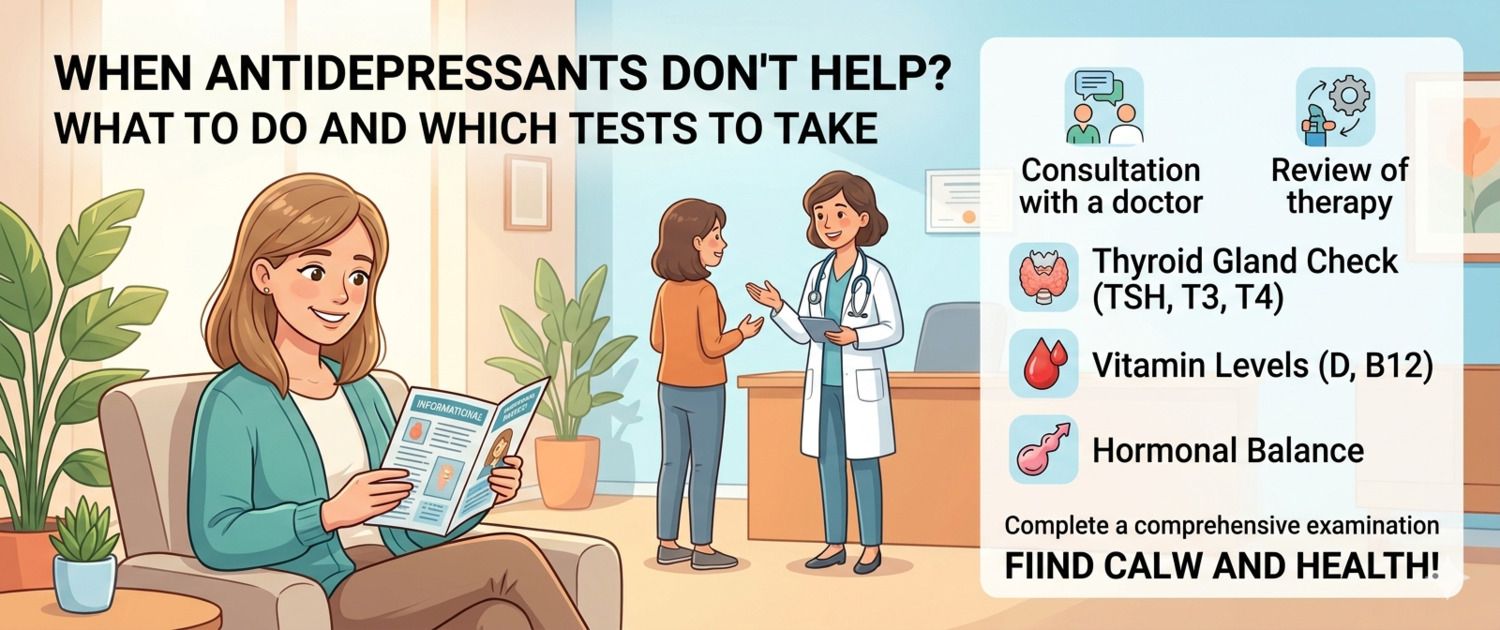
"Taking the antidepressant for 6 weeks, no effect" is a common clinical situation. Most patients and clinicians at this point think about switching. But between prescription and result there are often biochemical factors blocking the antidepressant from working: inflammation, neurotransmitter cofactor deficiency, individual CYP450 metabolism. They can be tested — and often this changes the plan more than switching the drug.
Why Antidepressants Don't Work: The Statistics
Per large studies (STAR*D and similar), only 30–40% of patients respond adequately to the first SSRI. Another 20–30% partially respond but don't achieve remission. The remaining 30–40% are resistant, and their treatment requires combinations, augmentation, or class change.
This isn't "bad drugs" — it's real neurobiological heterogeneity of depression and anxiety. Under one diagnosis hide different biological subtypes:
- Serotonergic (classic SSRI response)
- Dopamine-noradrenergic (better with SNRIs and bupropion)
- Inflammatory (poor SSRI response, requires anti-inflammatory strategy)
- Deficiency-driven (folate/B12/vitD/iron deficits)
- With genetic fast/slow drug metabolism
Biochemical causes of resistance are often correctable — and checking them before a drug switch saves months of fruitless therapy.
Inflammatory Depression: CRP and SSRIs
One of the most important findings of recent years — the link between chronic inflammation and antidepressant resistance. With high-sensitivity C-reactive protein (hs-CRP) > 3 mg/L:
- SSRIs work significantly worse (2010s meta-analyses showed 30–50% efficacy drop)
- Paradoxically, anti-inflammatory strategies (omega-3, celecoxib in trials, gut inflammation control) can improve response
- Inflammation increases IDO enzyme activity, diverting tryptophan from serotonin synthesis into the kynurenine pathway — the biochemical basis of "inflammatory depression"
What causes chronic inflammation:
- Visceral obesity (adipose tissue is a pro-inflammatory endocrine organ)
- Chronic infections (Helicobacter, latent viral infections, periodontitis)
- Increased gut permeability ("leaky gut")
- Autoimmune disease
- Smoking
- Chronic sleep deprivation
With hs-CRP > 3 mg/L, it's reasonable to look for the inflammation source in parallel with switching/augmenting the antidepressant.
Neurotransmitter Cofactor Deficiencies
Serotonin, dopamine, noradrenaline, and GABA are synthesized through specific cofactors. Their deficiency is a real and often missed cause of a "non-working" antidepressant.
Folate (folic acid, methylfolate):
Folate is a cofactor for BH4 (tetrahydrobiopterin) synthesis, needed for all monoamines. Low folate produces "biochemical depression" poorly responsive to SSRIs. 30–40% of people have an MTHFR mutation, where ordinary folic acid converts poorly to the active form — requiring methylfolate (L-5-MTHF). SSRI augmentation with methylfolate 7.5–15 mg/day showed effect in several meta-analyses.
Methylation and myelin synthesis cofactor. Low B12 produces brain fog, fatigue, depression. Standard B12 testing misses many — holotranscobalamin (active B12) and methylmalonic acid are more informative.
Regulates brain serotonin synthesis. Deficiency < 30 ng/mL is linked to poorer antidepressant response. Target — 40–60 ng/mL.
GABAergic system activator. Deficiency amplifies the anxious component and worsens SSRI tolerance.
Low iron reduces dopamine synthesis. Symptoms — apathy, low motivation, fatigue — are part of the depression picture.
All these markers can be checked via the anxiety causes panel.
Metabolism Genetics: CYP2D6 and CYP2C19
Antidepressants are metabolized in the liver by the CYP450 cytochrome system. CYP2D6 and CYP2C19 enzyme activity varies genetically — from "ultra-rapid metabolizers" to "slow."
Consequences:
- Slow metabolizer: drug accumulates in blood → side effects at standard dose → patient stops therapy
- Fast metabolizer: drug clears quickly → effective concentration not reached → "doesn't work" at standard dose
Pharmacogenetic CYP2D6 + CYP2C19 testing is a one-time test in specialized labs. It's meaningful for:
- Resistance to 2+ antidepressants
- Severe side effects at minimal dose
- Family history of antidepressant intolerance
This isn't a routine test — it's indicated for specific clinical scenarios, discussed with a psychiatrist.
Which Tests to Take Before Switching
Minimum "biochemistry of resistance" pack:
- hs-CRP — inflammatory subtype
- Vitamin B12 (+ holotranscobalamin if suspected)
- Folate (preferably red-cell) — monoamine synthesis cofactor
- Vitamin D 25-OH — serotonergic regulation
- Magnesium (preferably red-cell)
- Ferritin — dopamine synthesis
- TSH + free T4 — thyroid function affects antidepressant response
- Cortisol morning — hypercortisolism reduces SSRI effect
- Fasting glucose + insulin — metabolic status
- Homocysteine — methylation marker
Conveniently in one comprehensive anxiety causes panel. With indication, add CYP2D6/CYP2C19 test through a psychiatrist.
When to See a Psychiatrist
The decision to switch or augment antidepressant therapy is the psychiatrist's. Lab findings are tools for the clinical conversation, not grounds for self-discontinuation.
Urgent psychiatric consultation — for:
- Worsening depressive-anxious symptoms on therapy
- New or intensified suicidal thoughts
- Psychotic symptoms
- Manic switch (possibility in bipolar spectrum)
Scheduled discussion — for:
- No effect after 6–8 weeks of adequate therapy
- Partial response with residual symptoms
- Severe side effects at minimal dose
- Biochemical findings (high CRP, deficiencies) that may affect response
For the broader approach see anxiety: which lab tests and anxiety pills: which lab tests.
This article is for informational purposes only and does not replace professional medical advice. Antidepressant changes are coordinated with a psychiatrist.
For informational purposes only
This article is for informational purposes only and does not constitute medical advice, diagnosis, or treatment. Please consult a healthcare professional for medical guidance.