Anxiety Pills: Which Lab Tests to Take Before Starting Therapy
Reviewed by the LabReadAI medical team
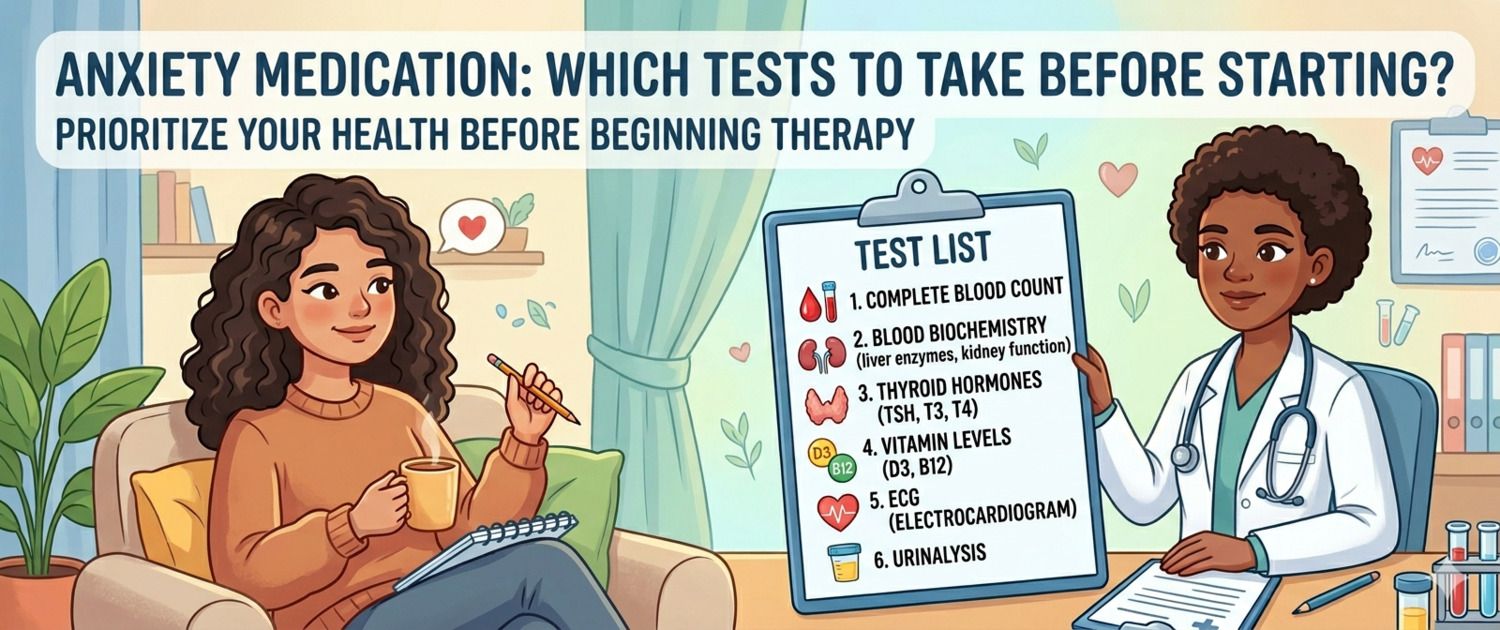
Anxiety pills are the most popular request in a primary care or psychiatry office. The wish to "take it and forget" is understandable, but between symptom and pill there's usually a missed step — laboratory testing. In a substantial share of people, anxiety is driven by ferritin, B12, vitamin D, or magnesium deficiency, hyperthyroidism, or hypoglycemia — conditions corrected by repletion, not by SSRIs or anxiolytics. Testing before starting medication takes 1–2 weeks that can completely change the treatment plan.
Why Test Before Taking Anxiety Pills
Anxiety disorders are real medical diagnoses, and for some patients antidepressants and anxiolytics work effectively. But there's a statistic that's rarely discussed: in 30–40% of people with anxiety symptoms, one or more correctable biochemical causes are found that can independently explain the symptoms.
This means:
- Prescribing an antidepressant without checking causes is symptomatic treatment when the cause may be removable in 8–12 weeks of repletion
- Antidepressants in undiagnosed hyperthyroidism work poorly or worsen symptoms
- With high CRP (inflammation), SSRIs work significantly worse — known from meta-analyses
- With B12, folate, or magnesium deficiency, neurotransmitters synthesize poorly even on therapy
So a short "filter" of 7–8 tests before starting medication makes sense. This isn't a rejection of psychopharmacology — it's its enhancement: after deficiency repletion, antidepressants often work better.
Which Tests to Take First
Minimum screening package for biochemical anxiety causes:
TSH + free T4 + anti-TPO — hyperthyroidism and autoimmune thyroiditis. Target TSH for well-being — 1.0–2.5 mIU/L.
Ferritin — low iron reduces dopamine synthesis, drives anxiety and sleep disturbance. Target for anxiety — > 50 ng/mL.
Vitamin B12 — critical for myelin and neurotransmitters. Ideally with holotranscobalamin if deficiency is suspected.
Vitamin D — target 40–60 ng/mL for the nervous system. Deficiency causes seasonal anxiety worsening.
Magnesium — GABA and melatonin synthesis cofactor. Red-cell more accurate than serum.
Cortisol morning — HPA-axis assessment. Chronically elevated cortisol sustains an anxious background.
Fasting glucose + insulin — reactive hypoglycemia produces symptoms identical to a panic attack.
All together this is the anxiety causes panel — best drawn in one visit.
5 Biochemical Anxiety Causes That Don't Require Pills
1. Iron deficiency. Low ferritin is the most common missed cause in women of reproductive age. Symptoms: anxiety, irritability, insomnia, restless legs syndrome, fatigue. Treatment: iron + vitamin C with ferritin retest at 8–10 weeks.
2. Hyperthyroidism (overt or subclinical). TSH below 0.4 + free T4 upper-normal or above. Symptoms: palpitations, tremor, sweating, insomnia — clinically nearly indistinguishable from panic disorder. Treatment: antithyroid therapy by an endocrinologist.
3. Reactive hypoglycemia. Sharp glucose drops 1.5–2 hours post-meal cause anxiety, tremor, sweating — the biochemical equivalent of a panic attack. Treatment: meal stabilization, regular protein with slow carbs.
4. Magnesium deficiency. Depleted by chronic stress. Without magnesium the GABAergic (inhibitory) system fails. Treatment: magnesium glycinate 300–400 mg/day for 6–8 weeks.
5. Chronically high cortisol. In functional hypercortisolism the nervous system is permanently "on." Treatment: sleep, post-noon caffeine restriction, exercise, psychotherapy. Details in how to lower cortisol.
When Pills Are Still Needed
Critically important: laboratory testing is not an alternative to psychiatry — it is a part of it. Antidepressants and anxiolytics are appropriately prescribed for:
- Severe anxiety disorders with functional impairment
- Depressive-anxiety symptoms with suicidal thoughts
- Panic disorder with frequent severe attacks
- Social phobia and obsessive-compulsive disorder
- Anxiety unresponsive to deficiency repletion over 12–16 weeks
- Severe clinical pictures where waiting 12 weeks is impossible
After deficiency repletion, antidepressants often work better — that's the "therapy optimization" possible only with prior laboratory testing. But the medication decision always belongs to the psychiatrist.
When to See a Specialist
To a psychiatrist urgently:
- Suicidal thoughts or plans
- Severe obsessive states
- Anxiety with derealization and functional impairment
To a psychotherapist:
- Anxiety with a clear psychotraumatic context
- Persistent anxiety after deficiency repletion
- Wish to address cognitive and behavioral patterns
To an endocrinologist:
- TSH < 0.4 or > 4.0
- Morning cortisol > 690 nmol/L
- Significantly elevated anti-TPO
To a primary care doctor:
- Nutrient deficiency repletion
- Monitoring of somatic markers
For the full anxiety approach see anxiety: which lab tests.
This article is for informational purposes only and does not replace professional medical advice. The decision to start psychotropic medication is a psychiatrist's; lab testing is a parallel tool.
For informational purposes only
This article is for informational purposes only and does not constitute medical advice, diagnosis, or treatment. Please consult a healthcare professional for medical guidance.