Panic Attacks: Causes, Symptoms and Which Tests to Take
Reviewed by the LabReadAI medical team
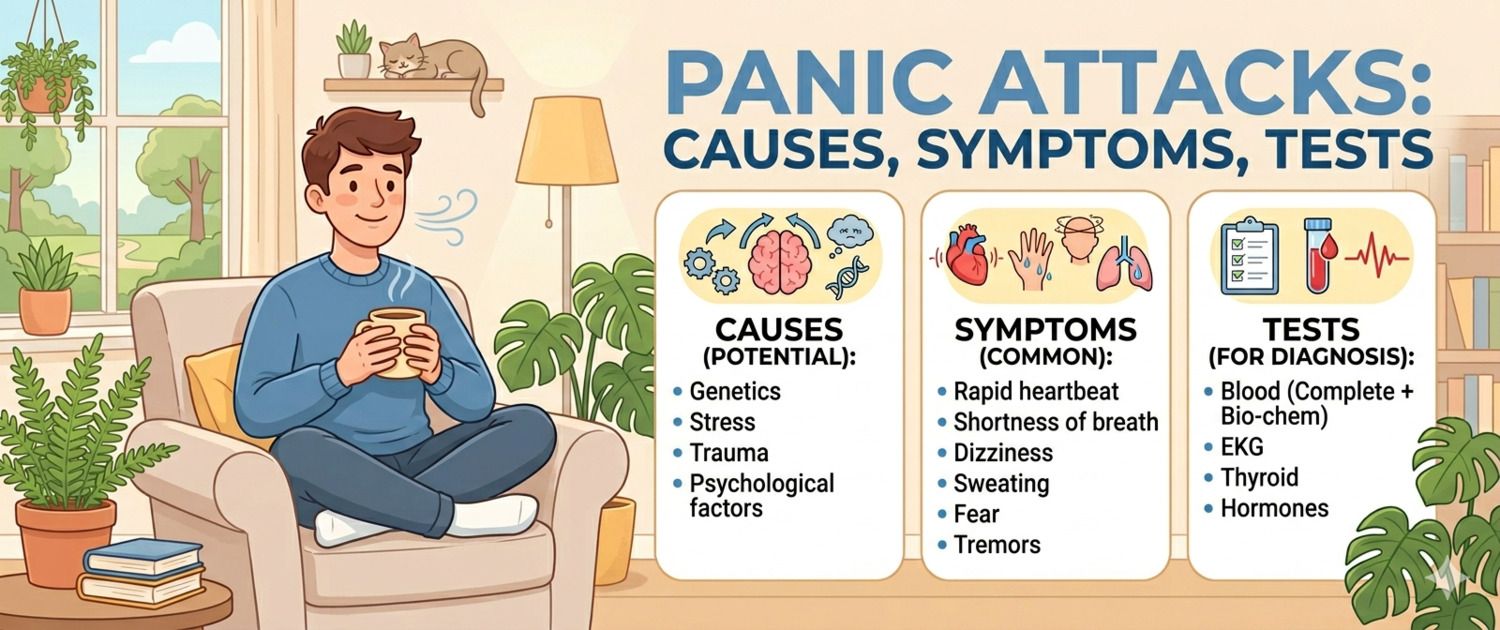
A panic attack is a sudden episode of intense fear with physical symptoms: palpitations, shortness of breath, tremor, sweating, the sense of "I'm about to die." In most cases panic attacks are psychogenic — but not always. In 20–30% of patients the cause is somatic or endocrine: hyperthyroidism, pheochromocytoma, hypoglycemia, severe iron deficiency, HPA-axis dysregulation. Prescribing tranquilizers without excluding these causes is closing the eyes to potential organic disease.
What a Panic Attack Is: Symptoms and Manifestations
A panic attack unfolds over 5–10 minutes, peaks, then gradually subsides. Typical duration is 15–60 minutes. Symptoms:
- Palpitations, the sensation of a "pounding" heart
- Sudden intense fear, fear of dying or going insane
- Shortness of breath, "air hunger"
- Tremor, shakiness, sweating
- Chest pain, abdominal discomfort
- Dizziness, derealization
- Tingling and numbness in extremities
A diagnosis of "panic disorder" requires recurring attacks and persistent anticipatory anxiety. A single attack under heavy stress is not a diagnosis.
Important sign: in a "typical" panic attack, physical symptoms appear together with fear. In somatic causes (pheochromocytoma, hypoglycemia) the physical symptoms come first, with fear and anxiety joining secondarily — patients describe "first my heart started racing, then I got scared."
Psychogenic vs Somatic Causes of Panic Attacks
Psychogenic:
- Anxiety disorder, chronic stress
- Post-traumatic stress disorder (PTSD)
- Anticipatory anxiety
- Depression with anxious component
- Social phobia
Somatic / endocrine:
- Hyperthyroidism (overt or subclinical)
- Pheochromocytoma and paraganglioma
- Hypoglycemia (often after rapid carbs or in insulin-treated diabetics)
- Arrhythmias (PVCs, sinus tachycardia)
- Iron deficiency with significantly reduced ferritin
- Vestibular dysfunction
- Carcinoid (rare)
Some cases combine psychogenic and somatic factors. For example, a person with low ferritin and a tendency toward anxiety has more panic attacks than the same person after iron repletion.
Which Tests to Take for Panic Attacks
Minimum set to exclude somatic causes:
Thyroid hormones: TSH + free T4 — mandatory. TSH < 0.4 in panic attacks is a high priority for endocrinology referral. Conveniently drawn as a thyroid panel.
Morning (8:00–10:00) and evening (4:00–6:00 PM) cortisol. Cortisol is often modestly elevated in panic disorder; evening cortisol shows whether the circadian rhythm is preserved.
Ferritin — target > 50 ng/mL. Low ferritin is found in 30–40% of patients with panic attacks, especially women.
Fasting glucose + insulin — to assess hypoglycemic tendencies.
For attacks with strong cardiovascular features:
- 24-hour urinary or plasma metanephrines and normetanephrines (to exclude pheochromocytoma)
- ECG, ideally with Holter monitoring
- Magnesium, potassium
Vitamin D, B12, folate, magnesium — to exclude nutrient causes of hyperexcitability.
The stress block is conveniently combined into one adrenal stress panel.
Hyperthyroidism and Panic Attacks
Hyperthyroidism is the most common endocrine cause of "panic-like" symptoms. Excess thyroid hormones make β-adrenergic receptors hypersensitive to catecholamines, subjectively felt as tachycardia, tremor, fear. Additional features:
- Weight loss with preserved or increased appetite
- Heat intolerance, sweating
- Fine finger tremor
- Frequent stools
- Insomnia and "always irritable"
- Sometimes — eye proptosis (in Graves' disease)
With panic attacks plus these features, a TSH test is mandatory first. Paradoxically, a patient may be treated for "anxiety" with antidepressants for years while the real cause is thyroid hyperfunction.
Pheochromocytoma: A Rare but Dangerous Cause
Pheochromocytoma is a tumor of the adrenal medulla or extra-adrenal chromaffin tissue secreting catecholamines (epinephrine, norepinephrine). It is rare but extremely important to exclude — "classic" panic attacks in pheochromocytoma can occur with hypertensive crises and stroke risk.
Key features distinguishing pheochromocytoma crises:
- Sharp BP rises > 180/110 during attacks
- Symptoms emerge "from outside in" — first physical, then fear
- Attacks are often triggered by exertion, bending, or abdominal palpation
- Severe headache at the peak of the attack
- Pale (not flushed) skin
- Increased urination after the attack
Lab work: urinary or plasma metanephrines and normetanephrines elevated 3–10-fold. Confirmation — adrenal CT or MRI. With suspicion — urgent endocrinology consult; "self-managed BP control" is dangerous.
Hypoglycemia and Panic Attacks
A sharp glucose drop (< 3.5 mmol/L) triggers a powerful adrenergic response — sweating, tremor, palpitations, fear. These symptoms are biochemically identical to a panic attack.
At-risk groups:
- Diabetics on insulin or sulfonylureas
- Reactive hypoglycemia after rapid carbs (the "sugar swing")
- Long fasting (more than 14–16 hours)
- Alcohol on an empty stomach
- Rare causes — insulinoma, post-bariatric syndromes
If attacks happen 2–4 hours after meals and resolve with eating — high probability of a hypoglycemic component. The strategy is sugar stabilization through regular protein-containing meals and avoiding rapid carbs on an empty stomach.
Cortisol and Anxiety: The Link to Panic Attacks
Chronic HPA-axis activation does not cause panic attacks directly but creates an "anxious background" on which attacks happen more often. Patients with panic disorder frequently have:
- Elevated evening cortisol
- Flattened circadian rhythm
- Reduced DHEA-S (especially when combined with burnout)
Lowering baseline cortisol through lifestyle (sleep, caffeine restriction, regular exercise) reduces attack frequency, even when attacks are psychogenic. For more, see anxiety: which lab tests and how to lower cortisol.
When to See a Doctor
To a psychotherapist/psychiatrist first:
- Recurrent attacks with anticipatory anxiety
- Clear psychological context
- Normal lab values
To an endocrinologist first:
- TSH < 0.4 or > 4.0
- Elevated metanephrines (suspected pheochromocytoma)
- Symptoms emerging "from outside in" (physical → fear)
To a cardiologist/neurologist:
- Attacks with arrhythmias, syncope, or marked rhythm disturbance
- Suspicion of epileptic equivalents with autonomic symptoms
Emergency care — if an attack is accompanied by loss of consciousness, severe arrhythmia, neurological symptoms (facial asymmetry, speech disturbance, paresis), or BP > 200/120.
This article is for informational purposes only and does not replace professional medical advice. With first panic attacks, clinical evaluation to exclude somatic causes is mandatory.
For informational purposes only
This article is for informational purposes only and does not constitute medical advice, diagnosis, or treatment. Please consult a healthcare professional for medical guidance.