Anxiety Lab Panel: Biochemical Causes Behind Anxiety
Reviewed by the LabReadAI medical team
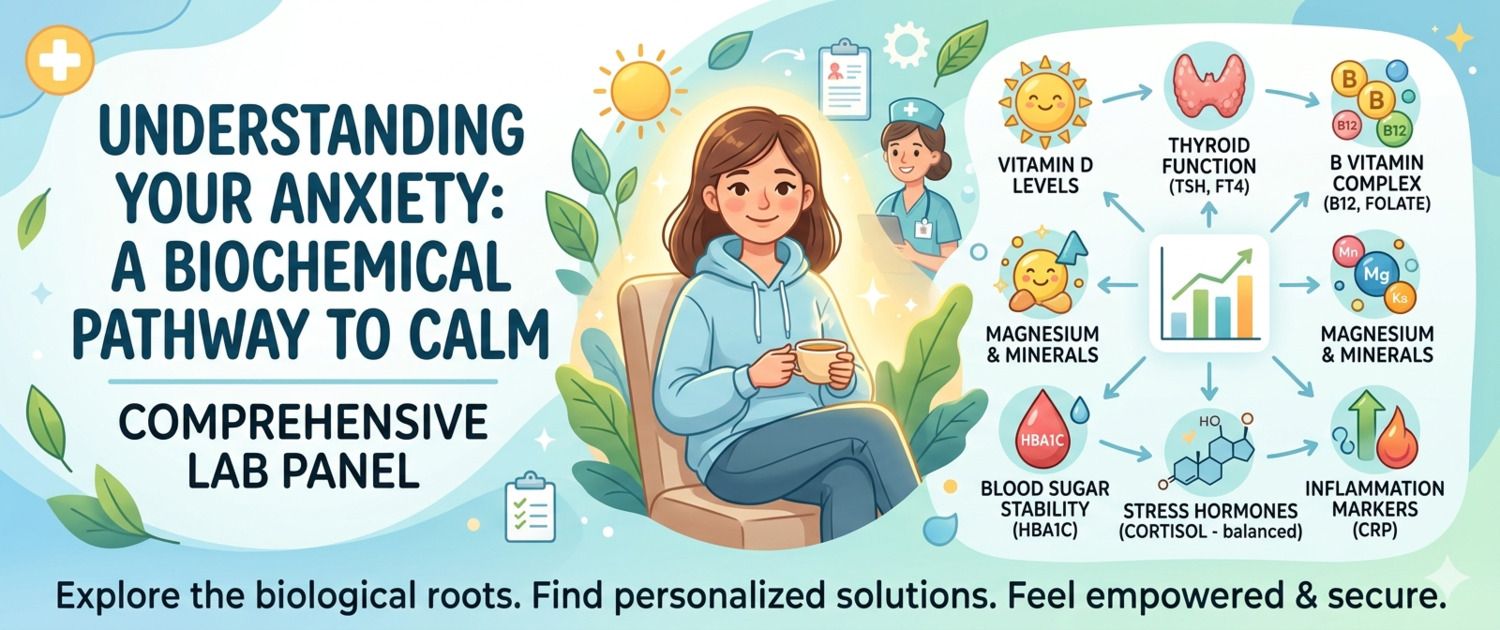
Anxiety is a diagnosis made by a psychiatrist from symptoms, but in 30–40% of cases anxiety has a biochemical basis: iron, B12, or vitamin D deficiency, thyroid dysfunction, hypoglycemia, chronic hypercortisolism, or subclinical inflammation. Prescribing medication or psychotherapy without ruling these out is treating the consequence while leaving the source untouched. The anxiety causes panel is a laboratory "filter" that screens out the 10 most common somatic causes of anxiety in a single blood draw.
What the Anxiety Lab Panel Is
The anxiety causes panel is a set of tests covering all the principal biochemical factors known to cause or amplify anxiety: hormonal, nutritional, metabolic, and inflammatory. The idea is to check the full spectrum in one visit and avoid two-week return cycles for new tests.
Unlike a basic screen or a focused adrenal stress panel (HPA axis), the anxiety causes panel is a wide net across recognized anxiety drivers. After it, work can be targeted to the actual abnormalities.
A particular feature: some markers (red-cell magnesium, holotranscobalamin, methylmalonic acid) provide a more nuanced picture of deficiency than standard "serum magnesium" and "total B12." For anxiety, this precision matters.
Which Lab Tests and Markers Are Included
Thyroid block:
TSH + free T4 + anti-TPO — hyperthyroidism and autoimmune thyroiditis cause anxiety, tachycardia, and tremor that mimic panic attacks. The target TSH for well-being is 1.0–2.5 mIU/L.
Stress block:
Cortisol morning (8:00–10:00 AM) — HPA-axis activity assessment. Chronically elevated cortisol sustains an anxious background.
Nutrient block:
Vitamin B12 — critical for myelin and neurotransmitter synthesis. Ideally complemented by holotranscobalamin (active B12) and methylmalonic acid for suspected deficiency.
Vitamin D (25-OH) — receptors are present in the hypothalamus and emotion regulation centers. The target for anxiety is 40–60 ng/mL, not just "> 30."
Magnesium — a GABA and melatonin synthesis cofactor and an NMDA-receptor antagonist. Red-cell magnesium is more accurate than serum.
Ferritin — low iron reduces dopamine synthesis. Target for anxiety is > 50 ng/mL, optimally 70–100.
Metabolic block:
Insulin fasting + glucose — for HOMA-IR calculation and hypoglycemia tendency. Reactive hypoglycemia produces symptoms identical to a panic attack.
Inflammation block:
C-reactive protein (hs-CRP) — a marker of subclinical inflammation. With CRP > 3 mg/L, SSRI antidepressants work less effectively.
Extended versions may include: red-cell folate, homocysteine (for suspected methylation issues), calprotectin (with concurrent GI symptoms), prolactin (in female anxiety); in men — total and free testosterone; in women — day-21 progesterone.
When the Anxiety Panel Is Indicated
The lab "filter" is meaningful when several of the following coexist:
- Anxiety lasting more than 1–3 months without an obvious psychotraumatic trigger
- Anxiety with physical symptoms (palpitations, tremor, sweating, shaking)
- Anxiety combined with other symptoms: fatigue, sleep disturbance, weight change, hair loss, cycle disruption
- Seasonal worsening (especially autumn/winter)
- Anxiety after meals or on an empty stomach (hypoglycemia suspicion)
- Anxiety unresponsive to standard measures (psychotherapy, sleep, exercise)
- Before initiating antidepressant therapy — to rule out correctable causes
- With antidepressant resistance (SSRIs not working at 6–8 weeks)
If anxiety is tied to a specific trigger with a clear psychological picture — the panel is not required and psychotherapy is the priority. But for "unexplained" anxiety, this is the best starting diagnostic point.
How to Prepare
General rules:
- Morning draw, fasting (8:00–10:00 AM)
- 8–14 hours fast, water only
- Avoid alcohol for 24 hours, caffeine after 2 PM the day before
- No smoking for 1 hour before the draw
- Sit/lie quietly for 15–30 minutes before the draw — cortisol and prolactin are stress-sensitive
- Disclose medications: antidepressants, benzodiazepines, oral contraceptives, hormonal medications, metformin (lowers B12), PPIs (lower B12), statins
Marker specifics:
Cortisol: strictly between 8:00 and 10:00 AM, no later.
Magnesium: preferably red-cell, not serum. Avoid magnesium supplements 5 days before testing.
B12: hold B12 supplements for 7 days before testing; for long-term users, test holotranscobalamin and methylmalonic acid.
Vitamin D: preferably tested at the same season each year, since it varies seasonally.
Glucose + insulin: strictly fasting — water only for 8–12 hours.
Anti-TPO: stable; timing not critical.
Ferritin: with a current viral illness, chronic disease flare, or recent vaccination — wait 2–4 weeks; ferritin is artifactually elevated as an acute-phase marker.
Targets vs Formal Norms
Most interpretation problems come from the gap between "the lab's formal range" and "the optimum for the nervous system." Targets for anxiety patients are often narrower than the formal range.
| Marker | Formal range | Anxiety target |
|---|---|---|
| TSH | 0.4–4.0 mIU/L | 1.0–2.5 |
| Free T4 | 10.3–24.5 pmol/L | middle third of range |
| Anti-TPO | < 35 IU/mL | < 9 (negative) |
| Morning cortisol | 138–690 nmol/L | 200–500 |
| Total B12 | 191–663 pg/mL | > 400 |
| Holotranscobalamin | > 35 pmol/L | > 70 |
| Vitamin D 25-OH | 30–100 ng/mL | 40–60 |
| Red-cell magnesium | 1.65–2.65 mmol/L | upper half |
| Ferritin | 20–250 ng/mL | > 50 |
| Fasting glucose | 4.1–5.9 mmol/L | 4.5–5.2 |
| Fasting insulin | 2.6–24.9 µIU/mL | 3–8 |
| hs-CRP | < 5 mg/L | < 1 |
The target is not "disease above/below" but a benchmark for optimal well-being. Many anxiety patients show "formally normal" values with significant deviations from optimum — and those deviations often account for symptoms.
Interpretation: Biochemical Causes of Anxiety
Once results are in, review in this order:
1. Thyroid function. TSH < 0.4 + free T4 upper-normal or above → hyperthyroidism suspicion → urgent endocrinology. TSH > 4 + elevated anti-TPO → autoimmune thyroiditis, may cause anxiety in the thyrotoxic phase.
2. Hypoglycemia. Fasting glucose normal but insulin > 10 µIU/mL and HOMA-IR > 2.5 → insulin resistance with reactive hypoglycemia → meal stabilization, reduced fast carbs.
3. Iron deficiency. Ferritin < 50 ng/mL (even at "formally normal" 30–50) → iron repletion, effect at 6–10 weeks.
4. B12 deficiency. Total B12 < 400, or holotranscobalamin < 70, or elevated methylmalonic acid → methylcobalamin repletion.
5. Vitamin D deficiency. < 40 ng/mL → repletion, target 50–60 ng/mL.
6. Magnesium deficiency. Red-cell magnesium in the lower third of range → glycinate or taurate repletion 300–400 mg/day.
7. Hypercortisolism. Morning cortisol > 600 + stress symptoms → deeper workup via the adrenal stress panel.
8. Inflammation. hs-CRP > 3 mg/L → search for inflammation source, limited response to SSRIs.
This order reflects frequency and reversibility of causes: iron, B12, and vitamin D most often deliver the most tangible benefits.
Connections to Other Panels
The anxiety causes panel is a starting point. Depending on findings, deeper testing may follow:
- With hypercortisolism → adrenal stress panel with two cortisol time points, DHEA-S, and ACTH
- With thyroid dysfunction → thyroid panel with antibodies and T3
- With anxiety + insomnia → sleep disorders panel with melatonin
- With multiple hormonal complaints → hormone panel
- In perimenopausal female anxiety → sex hormone panel with day-21 progesterone
These layered assessments turn the panel from a list of tests into a real diagnostic tool for asking the right clinical questions.
When to See a Specialist
- Any abnormality in hormonal markers (TSH, cortisol) — endocrinologist
- Nutrient deficiencies (B12, vitamin D, magnesium, ferritin) — primary care + supervised repletion
- Elevated hs-CRP — search for inflammation source, gastroenterology with GI symptoms
- Normal panel + persistent anxiety — psychotherapist (CBT) and/or psychiatrist
- Anxiety with depressive component and suicidal ideation — emergency psychiatric consultation
This article is for informational purposes only and does not replace professional medical advice. Anxiety panel interpretation requires combined evaluation of all markers.
For informational purposes only
This article is for informational purposes only and does not constitute medical advice, diagnosis, or treatment. Please consult a healthcare professional for medical guidance.