Hypothyroidism: Symptoms, TSH Diagnosis and Treatment
Reviewed by the LabReadAI medical team
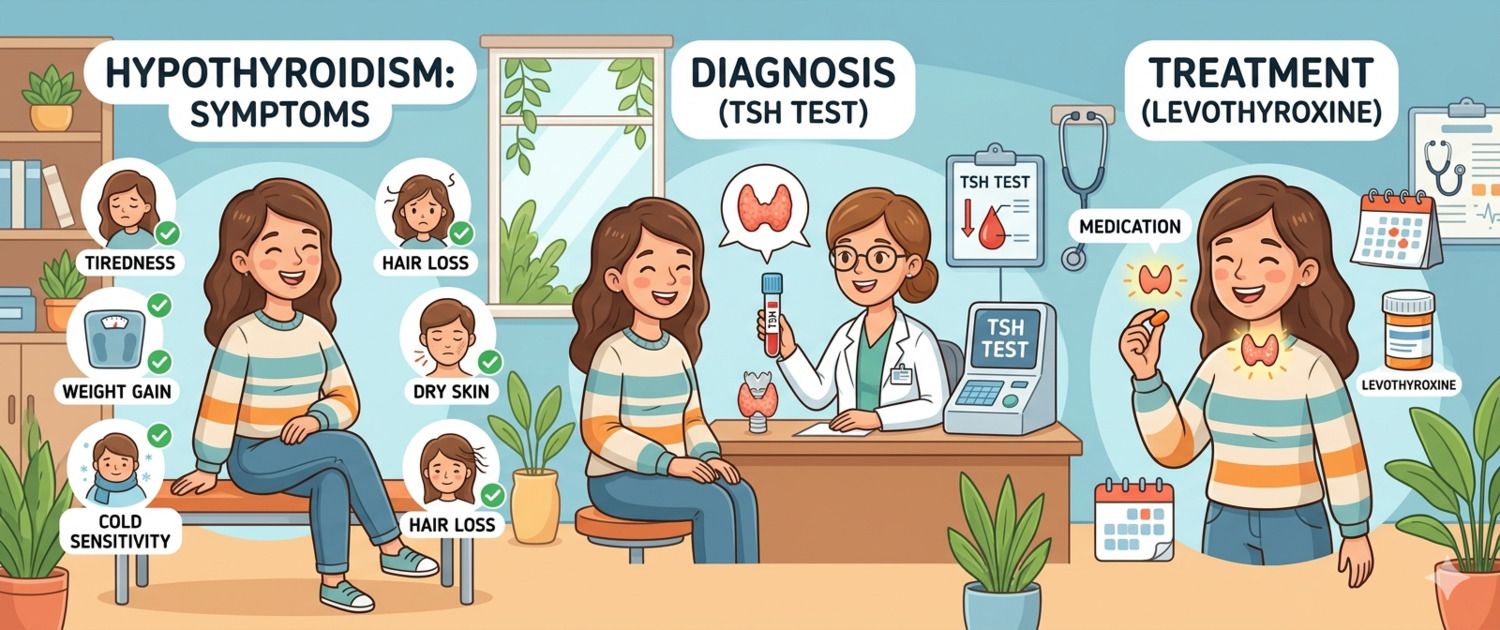
Unexplained fatigue, weight gain without any change in diet, feeling cold even in summer, depression that has no obvious trigger — these symptoms are written off as "burnout" for years. Yet in one in ten women over 40 they have a specific laboratory cause: hypothyroidism. Let's look at how the thyroid works, why its failure stays hidden for so long, and what tests reveal it.
What Is Hypothyroidism and Why It Goes Unnoticed
Hypothyroidism means the thyroid gland produces less T4 and T3 than the body needs. Thyroid hormones set the metabolic pace for every cell: heart rate, how fast food is converted to energy, body temperature, thinking speed.
When hormone levels drop, everything slows — gradually and uniformly. This gradual onset is precisely what makes hypothyroidism so easy to miss: people adapt to their new lower energy baseline.
Causes of Hypothyroidism
Hashimoto's thyroiditis — the leading cause in developed countries. The immune system mistakenly attacks thyroid tissue, progressively destroying it.
Treatment of hyperthyroidism — radioiodine therapy and thyroid surgery frequently result in hypothyroidism requiring lifelong replacement therapy.
Iodine deficiency — relevant in endemic goiter regions.
Congenital hypothyroidism — detected by newborn screening in the first days of life.
Central hypothyroidism — rare: the thyroid is healthy but the pituitary produces insufficient TSH to stimulate it.
Symptoms of Hypothyroidism
Metabolic: weight gain without dietary changes; cold intolerance; constipation.
Neurological and psychological: chronic fatigue; slowed thinking, memory impairment; depression, apathy.
Cardiovascular: bradycardia (heart rate below 60); elevated diastolic blood pressure.
Skin and hair: dry skin; hair loss; facial puffiness — especially around the eyes in the morning.
Reproductive: menstrual cycle irregularities; difficulty conceiving.
Diagnosis: TSH Is the Key Test
Diagnosis uses a thyroid panel, with TSH (thyroid-stimulating hormone) at its center.
TSH is the pituitary hormone that controls the thyroid. When T4 drops, the pituitary pumps out more TSH — like a thermostat turning up the heat when temperature falls. This is why TSH rises before T4 drops below normal.
| Marker | Normal | Subclinical hypothyroidism | Overt hypothyroidism |
|---|---|---|---|
| TSH | 0.4–4.0 mIU/L | > 4.0 mIU/L | > 10 mIU/L |
| Free T4 | 9–20 pmol/L | Normal | Low |
| Free T3 | 3.5–6.5 pmol/L | Normal | Low or normal |
If Hashimoto's is suspected, anti-TPO antibodies are added.
Subclinical Hypothyroidism: Treat or Watch
Clear indications for treatment: pregnancy or planning pregnancy; pronounced symptoms; significantly elevated anti-TPO antibodies; TSH above 10 mIU/L. Otherwise — individualized decision by the physician.
Treatment: Levothyroxine
The standard is levothyroxine (L-T4), taken daily in the morning on an empty stomach 30–60 minutes before food. Target: TSH 0.5–2.5 mIU/L. TSH is checked 6–8 weeks after any dose change.
Hypothyroidism in Pregnancy
Untreated hypothyroidism in pregnancy poses serious risks to fetal brain development. TSH is checked at the first prenatal visit. First-trimester target: below 2.5 mIU/L.
When to See a Doctor Urgently
TSH above 10 mIU/L — schedule an endocrinologist appointment. Hypothyroid symptoms + pregnancy — without delay. Myxedema coma (loss of consciousness, hypothermia, bradycardia) — call emergency services immediately.
Summary
One test — TSH — gives the answer. If you have characteristic symptoms or risk factors (female sex, age over 35, family history of thyroid disease) — it's worth checking. Treatment is simple, safe, and effective.
In children one reason to check the thyroid is persistent constipation — see constipation in children.
This article is for informational purposes only. Interpretation of test results and treatment decisions are the responsibility of a physician.
For informational purposes only
This article is for informational purposes only and does not constitute medical advice, diagnosis, or treatment. Please consult a healthcare professional for medical guidance.