Dizziness: Causes, When It Is Dangerous and Which Tests to Take
Reviewed by the LabReadAI medical team
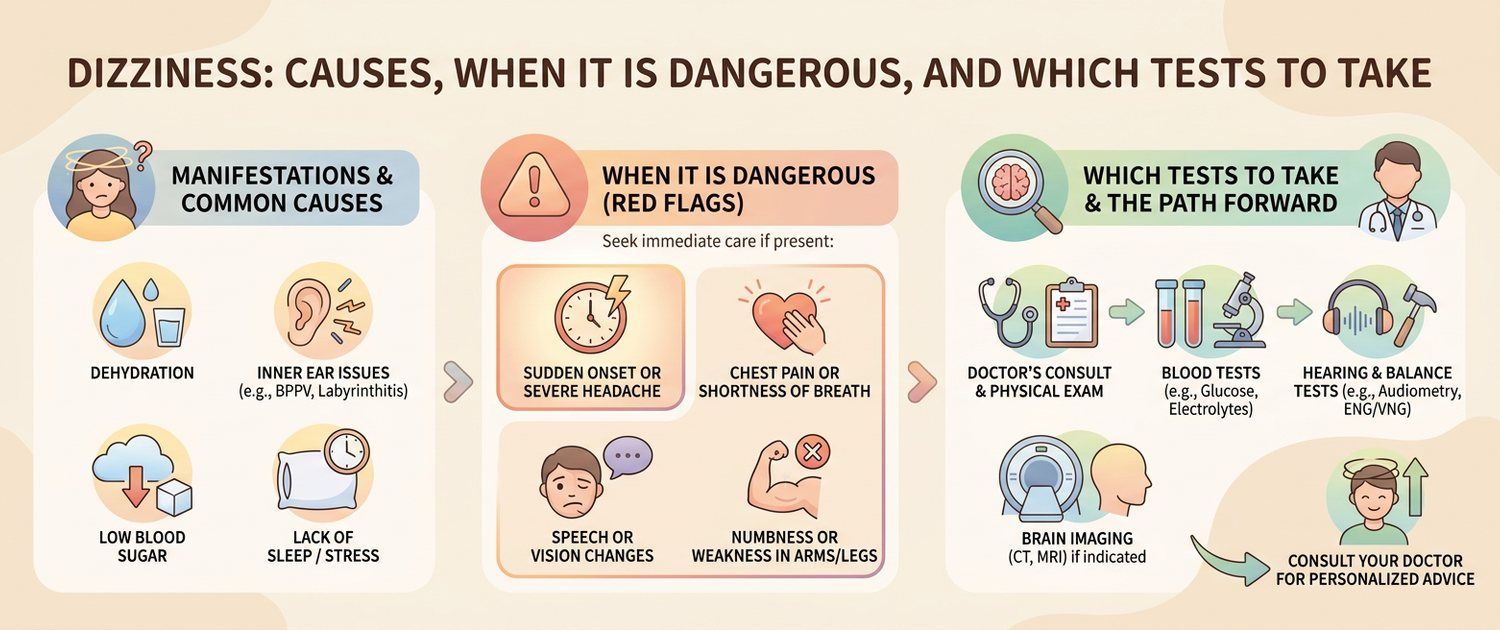
"Feeling dizzy" is one of the most common yet vaguest complaints: people use it for a sense of spinning, for unsteadiness and for near-faint lightheadedness. Which kind of dizziness it is determines both the cause and the tests needed. Most often it comes from harmless, fixable causes — anemia, blood-pressure swings, low sugar, dehydration — but sometimes it is a signal that needs urgent care. Let us go through it.
Types of Dizziness: What "Feeling Dizzy" Can Mean
It matters for the doctor to understand what exactly you feel: a sense of the room spinning (vertigo — more often an inner-ear problem), a near-faint state with darkening vision (presyncope — more often a vascular, cardiac or anemic cause), unsteadiness when walking, or non-specific "wooziness". This distinction sets the direction: some cases lead to an ENT specialist and neurologist, others to blood tests and blood-pressure checks.
Anemia and Low Hemoglobin
With anemia, the tissues and brain get too little oxygen — dizziness, weakness, pallor and breathlessness on exertion appear. It is one of the most common "test-detectable" causes, especially in women. The basic check is hemoglobin on a complete blood count and ferritin (iron stores); more detail in the article on iron deficiency anemia.
Blood Pressure: Low, High and Orthostatic
Low blood pressure and a sharp drop on standing (orthostatic hypotension) cause near-faint lightheadedness — "my vision darkened when I stood up". High blood pressure can also be a cause — see the article on hypertension. It is important to measure blood pressure at rest and standing; assessing electrolytes also helps. Many blame lightheadedness on the weather and geomagnetic storms — what actually affects wellbeing and what is a myth, we cover in geomagnetic storms.
Blood Sugar and Dehydration
Low sugar (hypoglycemia) causes wooziness, sweating and trembling, especially when meals are skipped or in people on glucose-lowering drugs — it is worth checking glucose. Dehydration and salt loss (heat, vomiting, diarrhea, diuretics) reduce blood volume and also cause dizziness — blood chemistry with electrolytes is informative here.
Inner Ear and Vestibular Causes
If the head truly "spins", especially when turning in bed, vestibular causes are likely: benign positional vertigo, vestibular neuritis, Meniere's disease. They do not show on blood tests and need a neurologist's or ENT's exam; tests here serve to rule out systemic causes.
When Dizziness Comes with Weakness and Palpitations
Dizziness together with persistent fatigue often points to anemia or a thyroid problem. If it comes with bouts of a racing heartbeat, the heart should also be assessed. Such symptom "pairings" help narrow the range of causes.
Which Tests to Take for Dizziness
A sensible starting set when dizziness is not clearly vestibular:
- Complete blood count and ferritin — anemia.
- Glucose — hypoglycemia and diabetes.
- Electrolytes — dehydration; plus blood pressure at rest and standing.
If you are not sure where to begin, you can describe your symptoms — the service suggests likely causes and which tests to discuss with your doctor.
When to Seek Urgent Care
Call emergency services if dizziness comes with weakness or numbness in an arm or leg, facial asymmetry, slurred speech, double vision or the worst-ever headache (signs of stroke); chest pain, fainting, or a very fast or irregular pulse. A routine work-up is needed for persistent or recurrent dizziness without a clear cause.
This article is for informational purposes only and does not replace a doctor's consultation. The set of tests and any treatment are chosen by a specialist.
For informational purposes only
This article is for informational purposes only and does not constitute medical advice, diagnosis, or treatment. Please consult a healthcare professional for medical guidance.