Prediabetes: Symptoms, Diagnosis and How to Prevent Diabetes
Reviewed by the LabReadAI medical team
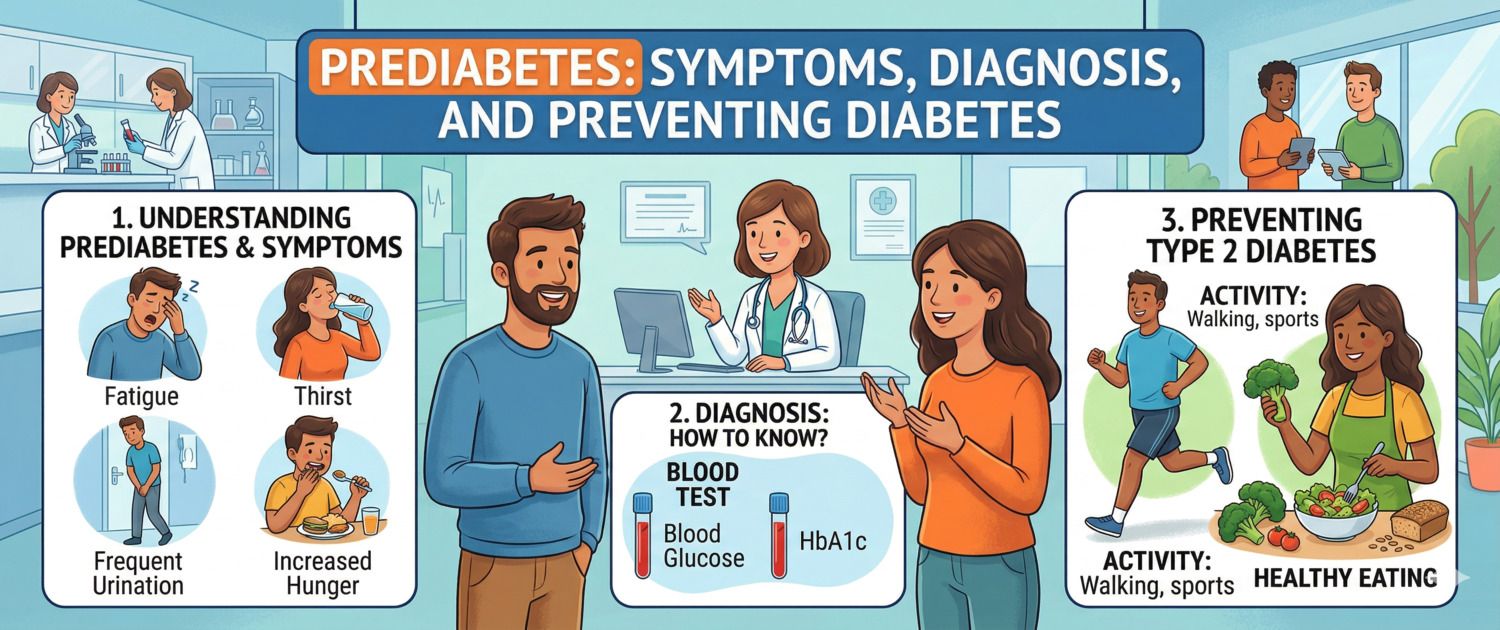
Prediabetes is called "the last chance": glucose is already above normal but has not yet reached the diagnostic threshold for diabetes. This is the only moment when the trajectory can be reversed — without medication, through lifestyle alone. The Diabetes Prevention Program demonstrated that a 7% weight reduction and 150 minutes of moderate physical activity per week reduce the risk of progression to T2DM by 58%. This outperforms metformin (31%). Prediabetes is not a verdict — it is a motivation.
What Prediabetes Is and Why It Matters
Prediabetes is an intermediate metabolic state in which glucose levels are above normal but below the diagnostic criteria for type 2 diabetes. The pancreas is still coping — but struggling: β-cells are working at capacity, and tissues are responding less and less to insulin (insulin resistance is increasing).
Why this matters:
- Without intervention, prediabetes progresses to T2DM in 25–40% of people within 3–5 years
- Cardiovascular risk is already elevated in prediabetes — before diabetes develops
- Early neuropathy and retinopathy can begin in the prediabetes stage
- With active lifestyle change, prediabetes is reversible in 50–70% of cases
Prevalence: approximately 7–9% of the world population has prediabetes; the majority are unaware — prediabetes is typically asymptomatic.
Diagnostic Criteria for Prediabetes
Prediabetes is diagnosed when at least one of the following is present:
| Marker | Normal | Prediabetes | Diabetes |
|---|---|---|---|
| Fasting glucose | < 5.6 mmol/L | 5.6–6.9 mmol/L | ≥ 7.0 mmol/L |
| 2-hour glucose (OGTT) | < 7.8 mmol/L | 7.8–11.0 mmol/L | ≥ 11.1 mmol/L |
| HbA1c | < 5.7% | 5.7–6.4% | ≥ 6.5% |
Two variants of prediabetes:
Impaired fasting glucose (IFG) — fasting glucose 5.6–6.9 mmol/L with normal postprandial glycaemia. The primary defect is hepatic: excess nocturnal hepatic glucose output. More common in men; higher risk of T2DM progression (especially at ≥ 6.1 mmol/L).
Impaired glucose tolerance (IGT) — normal or borderline fasting glucose but 2-hour OGTT value of 7.8–11.0 mmol/L. The primary defect is in peripheral tissues (muscle, adipose): reduced postprandial glucose uptake. More common in women with obesity; higher cardiovascular risk.
Combined IFG + IGT — the most unfavourable pattern: highest risk of T2DM progression.
Symptoms of Prediabetes: Why It Goes Undetected
Prediabetes is almost always asymptomatic — which is why most cases remain undiagnosed.
Occasionally, non-specific signs may be present:
- Mild thirst and slightly increased urination — less pronounced than in diabetes
- Chronic fatigue, reduced stamina
- Blurred vision during glucose fluctuations
- Slow healing of minor wounds
- Frequent fungal infections
Acanthosis nigricans — darkening and thickening of skin in body folds (neck, armpits, groin) — is a marker of significant insulin resistance. A visible sign that should prompt investigation.
The diagnosis of prediabetes is made exclusively on laboratory data — symptoms are unreliable.
Risk Factors: Who Should Be Screened
Screening for prediabetes and T2DM is recommended with any of the following:
- Overweight or obesity (BMI ≥ 25 kg/m²)
- Age ≥ 35 — regardless of BMI
- Hypertension (BP ≥ 140/90 mmHg)
- Dyslipidaemia: HDL < 0.9 mmol/L and/or triglycerides > 2.8 mmol/L
- Diabetes in a first-degree relative
- History of gestational diabetes
- PCOS
- Metabolic syndrome
- Physical inactivity
- Family history of T2DM
With risk factors: screening every 1–3 years; without risk factors: every 3 years from age 35.
Prediabetes and Associated Conditions
Prediabetes rarely exists in isolation. It is typically part of a metabolic cluster:
- Metabolic syndrome: abdominal obesity + dyslipidaemia + hypertension + hyperglycaemia. IGT is one of the criteria for metabolic syndrome.
- Dyslipidaemia: insulin resistance → elevated triglycerides, reduced HDL, mildly elevated LDL — atherogenic dyslipidaemia.
- Hypertension: insulin stimulates renal sodium reabsorption and activates the sympathetic nervous system.
- NAFLD (non-alcoholic fatty liver disease): insulin resistance → excess fat accumulation in hepatocytes.
Treating prediabetes simultaneously addresses this entire cluster.
How to Prevent Progression to Diabetes: Evidence-Based Methods
Lifestyle change — the first and primary line
Weight loss: the key intervention. Losing 5–7% of body weight reduces T2DM risk by 50–58%. Mechanism: reduced visceral fat → decreased insulin resistance → relief of β-cell burden. For practical strategies to lower blood sugar, see the dedicated guide.
Physical activity: 150 minutes of moderate aerobic exercise per week (walking, swimming, cycling) + resistance training 2–3 times per week. Physical activity reduces muscle insulin resistance independently of weight loss — through GLUT4 transporters.
Diet:
- Limit rapid carbohydrates and refined foods
- Mediterranean diet or DASH diet — strongest evidence base
- Increase fibre (≥ 30 g/day): soluble fibre slows glucose absorption
- Limit saturated and trans fats
- Reduce sugar-sweetened beverages — one of the most significant dietary risk factors
Sleep normalisation: chronic sleep deprivation (< 6 hours) raises insulin resistance by 30–40%. Treat sleep apnoea when present.
Pharmacological prevention
For high-risk progression (IFG + IGT + BMI > 35 + age < 60), a physician may consider:
- Metformin — reduces T2DM risk by 31%; safe for long-term use; primarily controls fasting glucose
- Acarbose, orlistat — used in some countries for prediabetes
- GLP-1 receptor agonists (semaglutide) — reduce weight and glucose; being studied in prediabetes
Metformin is not a substitute for lifestyle change: it is less effective (31% vs 58%) and does not reverse insulin resistance.
When to See a Doctor
- Fasting glucose 5.6–6.9 mmol/L on first detection — routine visit to GP or endocrinologist within 2–4 weeks
- HbA1c 5.7–6.4% — discuss a structured lifestyle change programme
- Risk factors present without screening in the past 3 years — check fasting glucose
- Rapid weight gain + thirst + fatigue — rule out progression to diabetes; measure glucose
This article is for informational purposes only and does not replace consultation with a qualified physician.
For informational purposes only
This article is for informational purposes only and does not constitute medical advice, diagnosis, or treatment. Please consult a healthcare professional for medical guidance.