How to Lower Blood Sugar: Diet, Exercise and Medication
Reviewed by the LabReadAI medical team
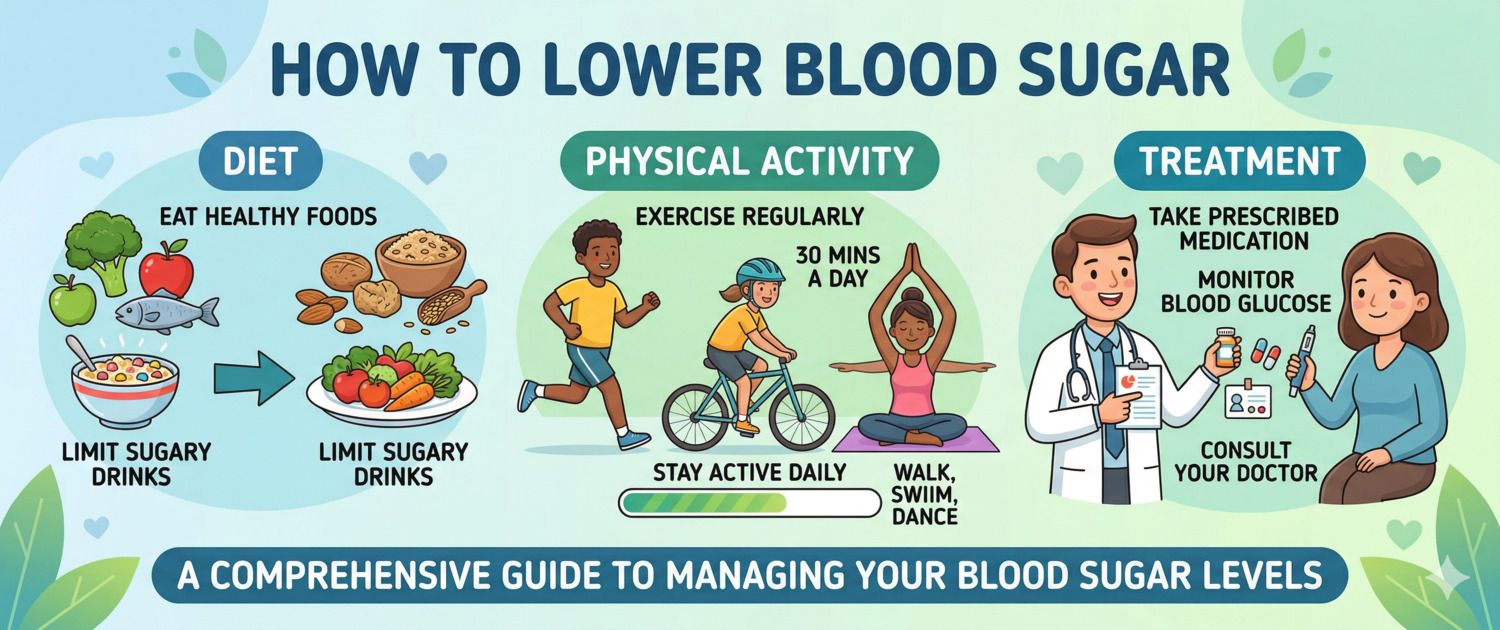
Your test came back with elevated blood sugar — and now you need to know what to do. Or your sugar has been high for a while and you are hoping to manage it through food alone. The good news: in prediabetes and early type 2 diabetes, non-pharmacological methods work very well — when applied consistently and correctly. The less welcome news: "lowering sugar fast" addresses an acute episode, not the underlying cause. This article is a step-by-step breakdown — from the mechanism of elevation to the concrete tools for bringing it down.
Why Blood Sugar Rises and Why It Matters
Glucose is the primary fuel for cells. For glucose to enter a cell, insulin is required — a hormone that acts as a key, unlocking cellular receptors. When this mechanism breaks down, glucose stays in the blood instead of nourishing tissue.
Two fundamentally different failures exist. In insulin resistance, insulin is produced in sufficient or even excessive amounts, but cells respond to it poorly — the locks have seized. The pancreas compensates by producing more and more insulin until it is exhausted. This is the progression from normal glucose to prediabetes and then to type 2 diabetes. In type 1 diabetes the mechanism is different: the immune system destroys beta cells; insulin is critically absent and injections are essential from the outset.
Chronically elevated glucose destroys the body slowly and silently. Excess sugar glycates proteins in vessel walls, nerve fibres, and the lens of the eye — producing the classic diabetic complications: nephropathy, retinopathy, neuropathy, and a dramatically elevated risk of heart attack and stroke. These develop over years, invisibly — which is exactly why lowering blood sugar should begin when a test first shows an abnormality, not when symptoms appear.
Which Tests Are Needed for High Blood Sugar
A fasting glucose level is only an instant snapshot. Two key measurements provide a complete picture.
Glycated haemoglobin (HbA1c) reflects the average blood glucose over the previous 2–3 months. It "remembers" everything that happened with blood sugar, is unaffected by the most recent meal, and cannot be manipulated by a single good reading. It is the primary metric for diagnosis and treatment monitoring: normal — below 5.7%; prediabetes — 5.7–6.4%; diabetes — 6.5% and above. The treatment target in established type 2 diabetes is generally below 7.0% (individualised with the treating physician).
C-peptide shows how much insulin the pancreas is producing on its own. This is critical for choosing the right approach: if C-peptide is normal or elevated, the gland is functioning and non-pharmacological strategies have real potential. If C-peptide is markedly low, beta cells are depleted and insulin or secretagogues will be needed regardless of lifestyle effort.
The doctor may additionally order a glucose tolerance test (75 g oral glucose load) — particularly when fasting values are borderline. To screen for end-organ damage: urine microalbumin, serum creatinine, and an eye examination are standard.
Diet for Lowering Blood Sugar: Glycaemic Index in Practice
Nutrition is the most powerful of the non-pharmacological tools. The right diet lowers HbA1c by an average of 1.0–1.5% — comparable to the effect of metformin at its starting dose.
The core principle — managing glycaemic response. Not all carbohydrates are equal. The glycaemic index (GI) indicates how quickly a food raises blood sugar: high GI produces a sharp spike; low GI a gradual, manageable rise. White bread, white rice, mashed potatoes, sweet drinks — GI above 70, causing glucose and insulin peaks. Legumes, most vegetables, whole grains, nuts, berries — GI below 55, stable glucose without spikes.
What lowers blood sugar over the long term. Dietary fibre (vegetables, legumes, whole grains) slows carbohydrate absorption and reduces post-meal glucose peaks. Protein (fish, poultry, eggs, cottage cheese) raises glucose minimally and creates satiety. Unsaturated fats (olive oil, avocado, nuts) reduce insulin resistance with regular consumption. Vinegar and acidic foods slow gastric emptying and lower post-meal glucose by 20–30%.
What sharply raises blood sugar — eliminate or strictly limit. Sugar and all its "natural" equivalents (honey, maple syrup, cane sugar) raise glucose identically. Sweetened drinks — including juices: 200 mL of orange juice contains as much sugar as three oranges but without the fibre that slows absorption. White flour and refined grains. Alcohol — initially causes hypoglycaemia (blocks hepatic glucose release), then hyperglycaemia — unpredictable swings that are especially dangerous in patients on insulin.
The plate method in practice. Half the plate — non-starchy vegetables (cucumber, tomatoes, greens, broccoli, cabbage). A quarter — protein (fish, chicken, eggs, cottage cheese). A quarter — complex carbohydrates (buckwheat, bulgur, legumes, wholegrain bread). This simple structure, without calorie counting, reliably reduces post-meal glucose spikes when used consistently.
In obesity — the primary risk factor for type 2 diabetes — weight loss of just 5–10% of starting body weight reduces HbA1c by 0.5–1.0% and meaningfully restores insulin sensitivity. It is one of the most powerful tools available without a prescription.
Physical Activity: How Exercise Lowers Blood Sugar
Muscles are the body's primary glucose consumers. During exercise, muscle tissue absorbs glucose directly, without insulin — via the GLUT4 transporter, which is mechanically activated by muscle contraction. This means: even in the presence of significant insulin resistance, physical activity lowers blood sugar.
Aerobic exercise (walking, cycling, swimming, Nordic walking) lowers glucose during the session and for several hours afterwards. Meta-analyses show that regular aerobic activity reduces HbA1c by 0.7% on average — comparable to an individual pharmacological agent. The recommended minimum is 150 minutes of moderate exercise per week, distributed across 3–5 sessions.
Resistance training builds muscle mass — and every kilogram of muscle continuously consumes glucose, even at rest. The combination of aerobic and resistance training reduces HbA1c more than either type alone.
The practical post-meal rule. A 15–20-minute walk after eating reduces the post-meal glucose peak by 20–30%. This is one of the simplest and most accessible tools — particularly for anyone who finds it difficult to schedule formal workouts.
In metabolic syndrome — the combination of abdominal obesity, elevated triglycerides, low HDL, and high blood pressure — regular exercise simultaneously corrects multiple components of the syndrome, not only blood sugar.
An important caution. When baseline glucose is very high (above 13–14 mmol/L), intense exercise can paradoxically raise blood sugar: stress hormones (adrenaline, cortisol) release stored hepatic glucose. Before beginning vigorous training at high blood sugar levels, discuss the approach with your doctor.
Medications to Lower Blood Sugar: When They Are Needed
Non-pharmacological measures are the foundation. But if HbA1c remains above target after 3 months of intensive lifestyle change — medications are needed. This is not a failure: the pancreas has already sustained damage, and its recovery capacity is limited.
Metformin is the first-line agent for type 2 diabetes and high-risk prediabetes. It reduces hepatic glucose production, improves tissue sensitivity to insulin, and modestly slows intestinal glucose absorption. It lowers HbA1c by 1.0–1.5%. It does not cause hypoglycaemia or weight gain — a rare combination in a glucose-lowering drug. The only common side effect is gastrointestinal discomfort at initiation, which resolves with gradual dose escalation.
SGLT-2 inhibitors (empagliflozin, dapagliflozin) excrete glucose in urine, lowering blood levels independently of insulin. They additionally reduce weight, blood pressure, and the risk of cardiovascular events. Particularly indicated when diabetes coexists with heart failure or chronic kidney disease.
GLP-1 receptor agonists (semaglutide, liraglutide) amplify the insulin response after meals, suppress appetite, and slow gastric emptying. They lower HbA1c by 1.0–1.8% and body weight by 3–5 kg. The most effective drugs for simultaneously reducing blood sugar and weight.
Insulin is prescribed when beta-cell function is substantially impaired (low C-peptide), in type 1 diabetes, and when glucose targets cannot be met by other means. Needing insulin does not mean diabetes is "end stage" — it is simply the next instrument in the toolkit when earlier options are insufficient.
The choice of a specific agent or combination is always individualised, depending on HbA1c level, comorbidities, weight, age, and hypoglycaemia risk. Selecting or adjusting a treatment regimen independently is not appropriate or safe.
How to Lower Blood Sugar in Gestational Diabetes
Gestational diabetes — elevated blood sugar first detected during pregnancy — requires a specific approach: many medications are contraindicated in pregnancy or lack sufficient safety data for the foetus.
The primary and essential tool is diet. The principles are the same: restrict fast carbohydrates, use the plate method, eat in smaller portions across 5–6 meals per day. A pregnancy-specific note: even fruit with a high GI (bananas, grapes, melon) should be limited. Self-monitoring of blood glucose 4–7 times daily is mandatory.
Moderate physical activity during an uncomplicated pregnancy is both safe and effective: a walk after each meal significantly blunts post-meal glucose peaks.
If target glucose values are not reached within 1–2 weeks of dietary intervention, insulin therapy is initiated. Metformin is used as an alternative in some countries, but its use during pregnancy is always discussed individually with the treating physician. After delivery, blood sugar typically normalises, but the 10-year risk of developing type 2 diabetes in these women is 7–10 times higher — making regular glucose monitoring an ongoing priority.
When to See a Doctor Urgently
Call emergency services or go to an emergency department immediately if:
- Glucose is above 16–17 mmol/L with nausea, vomiting, abdominal pain, or an acetone smell on the breath — signs of diabetic ketoacidosis, a life-threatening emergency.
- Glucose is above 20–25 mmol/L without ketoacidosis symptoms but with severe weakness and confusion — hyperosmolar hyperglycaemic state, also requires emergency care.
- Sudden weakness, sweating, tremor, hunger, palpitations — signs of hypoglycaemia (blood sugar below 3.9 mmol/L). If mild: take 15–20 g of fast-acting carbohydrates (four sugar lumps, half a glass of juice). If consciousness is impaired — call emergency services; do not attempt to give food or drink.
- Fasting glucose above 7.0 mmol/L or HbA1c above 6.5% on first detection — diagnostic criteria for diabetes, requiring confirmation and a management plan with an endocrinologist.
- High blood sugar combined with weight loss, constant thirst, and frequent urination in a young, non-obese person — possible type 1 diabetes, requiring urgent initiation of insulin therapy.
This article is for informational purposes only and does not replace medical consultation. Result interpretation and diagnosis are made by a qualified physician.
For informational purposes only
This article is for informational purposes only and does not constitute medical advice, diagnosis, or treatment. Please consult a healthcare professional for medical guidance.