Gestational Diabetes: Symptoms, Diagnosis and Treatment in Pregnancy
Reviewed by the LabReadAI medical team
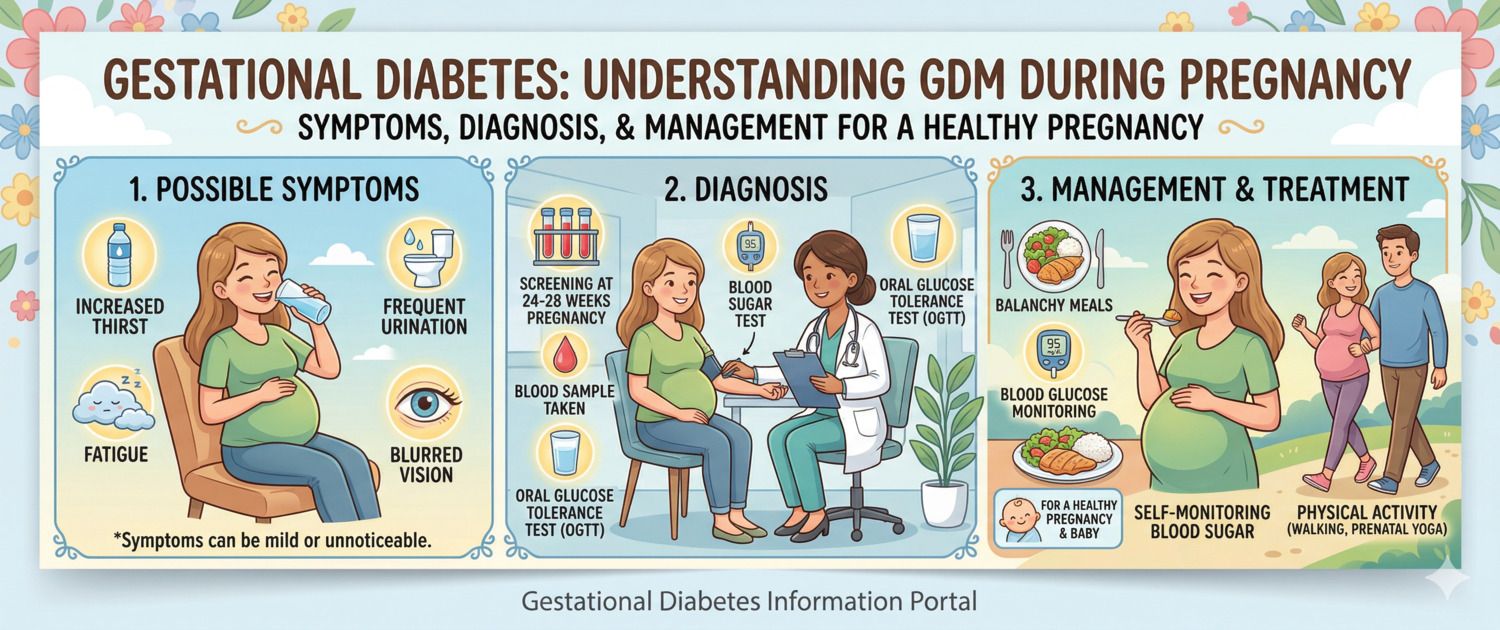
Gestational diabetes is a condition that produces almost no symptoms — yet its consequences for the baby can be serious. This is precisely why screening at 24–28 weeks of pregnancy is not optional but a global standard of care. Gestational diabetes identified in time and properly managed allows a healthy pregnancy and a healthy baby.
What Gestational Diabetes Is
Gestational diabetes mellitus (GDM) is a disorder of carbohydrate metabolism first detected during pregnancy that does not meet criteria for overt (pre-existing) diabetes mellitus. This distinction is critical: if a fasting glucose ≥ 7.0 mmol/L or HbA1c ≥ 6.5% is found at the first antenatal visit, this represents overt diabetes that predated the pregnancy — a different condition requiring different management.
Mechanism: the placenta synthesises counter-regulatory hormones — human placental lactogen, progesterone, cortisol, prolactin. As the placenta grows (particularly in the second and third trimester), physiological insulin resistance increases: the pregnant woman's body requires 2–3 times more insulin than usual. Most women meet this demand. When β-cell reserve is insufficient or baseline insulin resistance is present, GDM develops.
Prevalence: 7–14% of all pregnancies (varying by country and diagnostic criteria); rising in parallel with the obesity epidemic.
Risk factors:
- BMI > 25 kg/m² before pregnancy
- GDM in a previous pregnancy
- Previous delivery of a baby weighing > 4 kg
- Diabetes mellitus in a first-degree relative
- Polycystic ovary syndrome (PCOS)
- Age > 35 years
- Multiple pregnancy
- Glucocorticoid use
Gestational Diabetes Effects on Baby and Mother
GDM poses risks primarily to the fetus — which is what makes active screening justified.
Risks for the fetus and newborn:
- Macrosomia (birth weight > 4 kg) — the most common complication. Excess maternal glucose → fetal hyperinsulinaemia → excessive growth. Complicates delivery: shoulder dystocia, birth trauma.
- Neonatal hypoglycaemia — after birth, fetal hyperinsulinaemia persists while maternal glucose supply ceases → sharp glucose drop in the first hours of life.
- Respiratory distress syndrome — hyperinsulinaemia impairs fetal lung maturation.
- Perinatal asphyxia, stillbirth with severe uncontrolled hyperglycaemia.
- Long-term consequences for the child: increased risk of obesity and T2DM in later life.
Risks for the mother:
- Pre-eclampsia and gestational hypertension
- Preterm birth
- Caesarean section due to macrosomia
- T2DM after delivery: 50% of women with GDM develop type 2 diabetes within 10 years
Gestational Diabetes Diagnosis: the Glucose Tolerance Test (OGTT)
When and how screening is performed
Screening for gestational diabetes is built into the overall work-up — see what tests are done in pregnancy and pregnancy screening.
First antenatal visit (before 24 weeks): fasting glucose is measured in all pregnant women. If ≥ 7.0 mmol/L — overt diabetes. If 5.1–6.9 mmol/L — GDM diagnosed without proceeding to OGTT (the glucose tolerance test, GTT).
24–28 weeks — standard screening: all pregnant women without previously identified abnormalities undergo an oral glucose tolerance test (OGTT) with 75 g glucose.
OGTT procedure:
- Blood draw fasting (≥ 8 hours)
- Ingestion of 75 g glucose dissolved in 250–300 mL water
- Blood draw at 1 hour
- Blood draw at 2 hours
GDM diagnostic thresholds (IADPSG/WHO)
GDM is diagnosed when at least one of the following is exceeded:
| Time point | Venous plasma glucose |
|---|---|
| Fasting | ≥ 5.1 mmol/L |
| 1 hour | ≥ 10.0 mmol/L |
| 2 hours | ≥ 8.5 mmol/L |
HbA1c in GDM: used with limitations — physiological changes in red cell turnover during pregnancy can produce falsely lower HbA1c values. It is not used for GDM diagnosis but is used for monitoring compensation once the diagnosis is established. Target HbA1c in GDM: < 6.0%.
Self-monitored glucose targets in GDM:
- Fasting: < 5.1 mmol/L
- 1 hour after meals: < 7.0 mmol/L
- 2 hours after meals: < 6.7 mmol/L
Treatment of Gestational Diabetes
The goal of treatment is maintaining normoglycaemia to protect the fetus. Management begins with diet and lifestyle change; insulin is added when glycaemic targets are not achieved.
Diet therapy — the cornerstone of treatment
- Limit rapid carbohydrates: eliminate sugar, honey, fruit juice, sugary drinks, white bread, pastries — these sharply elevate postprandial glucose
- Frequent small meals: 5–6 meals per day in small portions; breakfast is particularly important to control (morning insulin resistance peaks at this time)
- Carbohydrates: 40–45% of daily calories from complex carbohydrates with a low glycaemic index (vegetables, legumes, whole grains)
- Protein: 25–30% — meeting normal pregnancy requirements
- Fat: 30–35%; limit saturated fat
- Fibre: at least 28 g/day — reduces postprandial glucose peaks
- Caloric intake: no less than 1,800 kcal/day — severely restrictive diets are unsafe in pregnancy
Physical activity
Moderate aerobic exercise — walking, swimming, pregnancy-specific gymnastics — reliably lowers blood glucose and reduces insulin requirements. 30 minutes of moderate activity after meals reduces the postprandial glucose peak.
Insulin therapy
Initiated when glycaemic targets cannot be achieved with diet alone within 1–2 weeks:
- Fasting glucose ≥ 5.1 mmol/L despite diet
- Postprandial glucose ≥ 7.0 mmol/L at 1 hour despite diet
- Fetal macrosomia or polyhydramnios on ultrasound even with borderline maternal glucose values
Approved agents: human insulin and analogues — glargine, detemir, aspart, lispro. Metformin is used in some countries but is not the first-line standard in all guidelines.
Glucose self-monitoring: at least 4–6 times daily (fasting and 1 hour after each main meal).
After Delivery: What Comes Next
GDM typically resolves after delivery but requires follow-up.
Immediately after delivery: insulin is usually discontinued or sharply reduced.
6–12 weeks postpartum: repeat OGTT with 75 g glucose to exclude persistent diabetes or impaired glucose tolerance.
Long-term: 50% of women with GDM develop T2DM within 10 years. Annual fasting glucose or HbA1c monitoring is recommended. Breastfeeding reduces the mother's risk of T2DM and the child's risk of metabolic disorders. Weight normalisation and physical activity after delivery are the key preventive measures.
When to Seek Urgent Medical Attention
- Fasting glucose ≥ 5.1 mmol/L at any point in pregnancy — referral to endocrinologist or GDM management centre
- Glucose > 10–11 mmol/L in pregnancy — urgent consultation; ketoacidosis is possible
- Hypoglycaemia symptoms during insulin therapy (tremor, sweating, palpitations) — take carbohydrates immediately, measure glucose
- Fetal macrosomia or polyhydramnios on ultrasound despite apparently controlled glucose — reassess management
This article is for informational purposes only and does not replace consultation with an obstetrician-gynaecologist and endocrinologist.
For informational purposes only
This article is for informational purposes only and does not constitute medical advice, diagnosis, or treatment. Please consult a healthcare professional for medical guidance.