Blood Glucose Test: How to Read Your Results Independently
Reviewed by the LabReadAI medical team
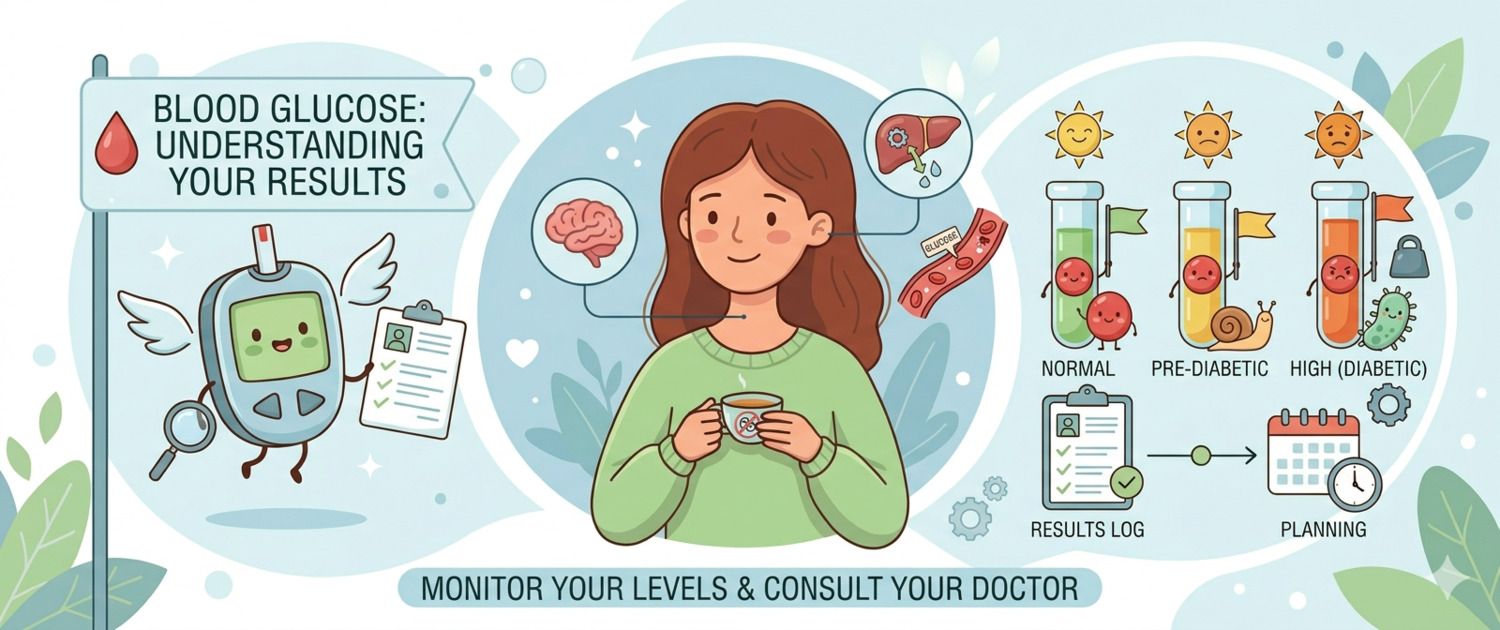
"Glucose 6.1 — is that already diabetes?" is one of the most common questions after a blood test. The answer depends on whether blood was drawn from a vein or a fingertip, whether it was fasting, and which reference range applies. Let's break down all three glucose measurement methods, why vein and fingertip norms differ, what prediabetes means, and when a result genuinely warrants attention.
Three Testing Methods: How They Differ
When people say "blood sugar test," they may mean three fundamentally different tests — each looking at carbohydrate metabolism through a different window.
Fasting glucose — an instant snapshot: blood sugar right now, after 8–12 hours without food. Reflects basal insulin secretion and hepatic gluconeogenesis. Simple and fast, but cannot detect what happens after meals.
Glycated haemoglobin (HbA1c) — a 2–3 month archive. Reflects what average glucose has been over that period. Independent of what was eaten the day before. The gold standard for monitoring type 2 diabetes treatment and one of the diagnostic criteria.
Oral glucose tolerance test (OGTT) — the dynamic response to a sugar load. Glucose is measured fasting and 2 hours after drinking 75 g of glucose solution. It detects impaired glucose tolerance — a prediabetes stage that a single fasting test cannot reveal.
Capillary vs Venous Blood: Why the Norms Differ
This is one of the most common sources of confusion. A glucometer and a laboratory give different readings — and that is expected.
| Blood source | Normal fasting | Prediabetes | Diabetes |
|---|---|---|---|
| Venous plasma (laboratory) | < 6.1 mmol/L | 6.1–6.9 mmol/L | ≥ 7.0 mmol/L |
| Capillary blood (glucometer, fingertip) | < 5.6 mmol/L | 5.6–6.0 mmol/L | ≥ 6.1 mmol/L |
Venous plasma and whole capillary blood give different values because of differences in water content and analytical method. WHO diagnostic criteria and most national standards are based on venous plasma — which is what laboratories use.
Practical rule: if blood was drawn from a vein at a laboratory, compare with venous plasma norms. If measured with a glucometer (fingertip), compare with capillary blood norms. Comparing a glucometer reading to laboratory reference ranges is incorrect.
Fasting Glucose Norms and Their Clinical Meaning
| Level (venous plasma) | Interpretation |
|---|---|
| < 6.1 mmol/L | Normal |
| 6.1–6.9 mmol/L | Impaired fasting glucose (prediabetes) |
| ≥ 7.0 mmol/L (single) | Suspected diabetes — requires confirmation |
| ≥ 7.0 mmol/L (twice) | Diabetes |
A reading of 6.1 mmol/L from a vein is already prediabetes, not normal. This range must not be ignored: at this stage, lifestyle change is most effective and can fully normalise blood sugar.
A common question: "I got 5.8 — is that too high?" From a fasting venous sample — yes, that is impaired fasting glucose. Time to check HbA1c and consider an OGTT, rather than waiting for the number to climb.
HbA1c: Normal Ranges and Diagnostic Thresholds
| HbA1c | Interpretation |
|---|---|
| < 5.7% | Normal |
| 5.7–6.4% | Prediabetes |
| ≥ 6.5% | Diabetes (confirmed once) |
| < 7.0% | Treatment target in diabetes |
HbA1c is independent of recent food — it can be drawn any time of day. Limitations: unreliable in haemolytic anaemia, certain haemoglobinopathies, and pregnancy (accelerated red cell turnover lowers the result). In iron deficiency anaemia, HbA1c may be falsely elevated — check ferritin when results don't match the clinical picture.
Glucose Tolerance Test: What the Results Mean
The OGTT is the primary test for detecting impaired glucose tolerance (IGT): a state where fasting glucose is still normal but glucose clears too slowly after a carbohydrate load.
| 2 hours after 75 g glucose | Interpretation |
|---|---|
| < 7.8 mmol/L | Normal |
| 7.8–11.0 mmol/L | Impaired glucose tolerance (prediabetes) |
| ≥ 11.1 mmol/L | Diabetes |
OGTT is indicated when: fasting glucose is 6.1–6.9 mmol/L; fasting glucose is normal but risk factors are present (obesity, family history, previous gestational diabetes); in pregnancy at weeks 24–28 for gestational diabetes screening.
Insulin Resistance and HOMA-IR
Glucose can be normal while insulin resistance is already significant. The HOMA-IR index is used to detect it:
HOMA-IR = (fasting glucose mmol/L × fasting insulin µIU/mL) ÷ 22.5
| HOMA-IR | Interpretation |
|---|---|
| < 2.5 | Normal |
| 2.5–5.0 | Insulin resistance |
| > 5.0 | Significant insulin resistance |
Insulin resistance without diabetes is an important early marker of metabolic syndrome. It is often accompanied by elevated triglycerides, reduced HDL, and abdominal obesity. This is why a lipid panel is indicated when insulin resistance is found.
Hypoglycaemia: When Glucose Is Too Low
Hyperglycaemia gets most of the attention, but low blood sugar can be equally dangerous.
Hypoglycaemia — glucose below 3.9 mmol/L (in people without diabetes, symptoms typically appear below 3.5 mmol/L).
Symptoms: trembling, sweating, palpitations, anxiety, pallor — these are adrenergic symptoms from the initial fall. With greater decline — impaired concentration, confusion; in severe cases, loss of consciousness.
Reactive (postprandial) hypoglycaemia — glucose drop 2–4 hours after eating. The person feels weakness, trembling, and intense hunger a few hours after a meal. Common in insulin resistance, after bariatric surgery, and with high simple carbohydrate intake.
Causes of fasting hypoglycaemia require medical investigation: insulinoma (pancreatic tumour), adrenal insufficiency, severe liver disease.
How to Prepare for a Blood Glucose Test
- Strict fasting — 8–12 hours without food. Even unsweetened coffee or chewing gum can affect the result
- Avoid intense exercise the day before
- Do not test during acute illness — stress and infection transiently elevate glucose
- For OGTT — eat normally for 3 days beforehand (do not restrict carbohydrates before the test — this distorts the result)
- HbA1c — any time of day, no fasting required
What Else Is Checked Alongside Glucose
When carbohydrate metabolism abnormalities are found, comprehensive assessment includes:
HbA1c — to understand average glycaemia over 3 months.
Fasting insulin — to calculate HOMA-IR and assess insulin resistance.
Lipid panel — in type 2 diabetes, lipid abnormalities are almost universal: elevated triglycerides and reduced HDL.
Kidney function test — diabetic nephropathy develops in a third of patients; microalbuminuria is an early marker.
Ferritin — to exclude iron deficiency as a cause of falsely elevated HbA1c.
When to Seek Urgent Medical Attention
Immediately: glucose above 16–17 mmol/L with nausea and vomiting — possible ketoacidosis; symptoms of severe hypoglycaemia (loss of consciousness, seizures).
Within a few days: fasting glucose ≥ 7.0 mmol/L on first measurement — confirm with a repeat test; glucose 6.1–6.9 mmol/L — consultation to assess risk and decide on OGTT; symptoms of reactive hypoglycaemia (weakness 2–3 hours after meals).
Summary
A blood glucose test is not a single number but a system of tests with different time horizons: fasting shows now, HbA1c shows the past 3 months, OGTT shows the response to a load. Norms for venous and capillary blood differ — always compare with the correct reference. Prediabetes (6.1–6.9 mmol/L from a vein) is not "almost normal" — it is a clear signal where lifestyle change can genuinely reverse the trajectory. For more on the mechanism of diabetes development, see the type 2 diabetes article.
This article is for informational purposes only. Interpretation of test results and treatment decisions are the responsibility of a physician.
For informational purposes only
This article is for informational purposes only and does not constitute medical advice, diagnosis, or treatment. Please consult a healthcare professional for medical guidance.