Blood Glucose: What It Is, How It Is Regulated and Why It Matters
Reviewed by the LabReadAI medical team
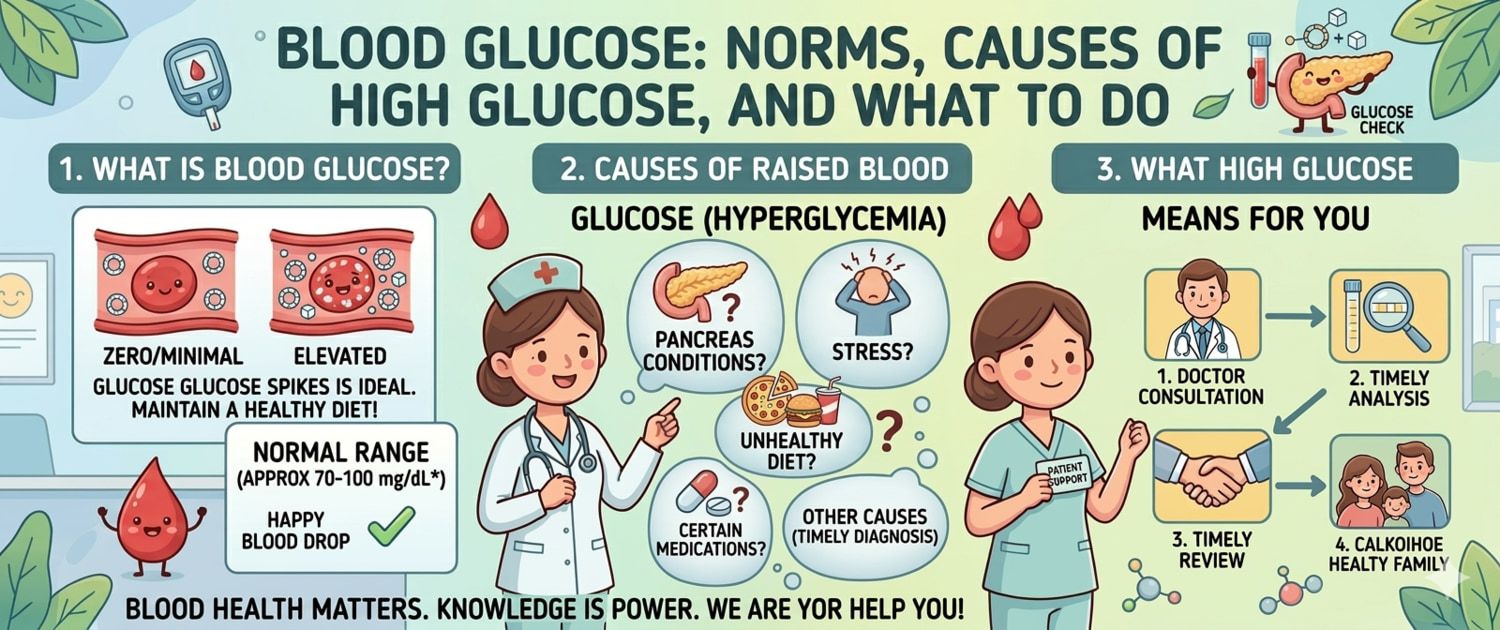
Understanding why blood glucose matters is fundamental to health. Glucose is a molecule without which life as we know it is impossible. The brain consumes around 120 grams of glucose per day and has almost no capacity to switch to an alternative fuel source. This is why the body maintains blood glucose within a very narrow range — 3.9 to 5.5 mmol/L — with the precision of a finely tuned regulator. Let's look at how this system works, what disrupts it, and what a blood glucose test tells us.
What Glucose Is and Why the Body Needs It
Glucose is a simple monosaccharide and the universal energy source for all cells. Through glycolysis and oxidative phosphorylation, one glucose molecule yields 36–38 ATP molecules — the primary "energy currency" of the cell.
The brain occupies a unique position. Neurons have virtually no glycogen stores of their own and are completely dependent on a continuous glucose supply from the blood. When glucose falls below 2.5–3.0 mmol/L, consciousness is impaired. This is why the body never allows glucose to drop below a critical threshold — powerful protective mechanisms are engaged immediately.
Other important roles of glucose: glycogen synthesis (the reserve energy storage form in liver and muscle); fatty acid synthesis when in excess (hence the link between carbohydrate overconsumption and fat accumulation); and as a building block for certain amino acids and nucleic acids.
How Glucose Is Regulated: Four Key Hormones
Blood glucose is the result of a constant balance between its input (from food and hepatic synthesis) and consumption (by all organ cells). Four hormones govern this balance.
Insulin — the principal glucose-lowering hormone. Produced by pancreatic β-cells in response to rising blood glucose after meals. Insulin opens the "gates" for glucose entry into muscle and fat cells, stimulates glycogen synthesis in the liver, and inhibits hepatic glucose release. Without insulin, glucose cannot enter most cells — which is what happens in type 1 diabetes.
Glucagon — insulin's antagonist. Produced by pancreatic α-cells when glucose falls. Stimulates glycogen breakdown in the liver (glycogenolysis) and glucose synthesis from non-carbohydrate substrates (gluconeogenesis), releasing glucose into the blood.
Cortisol — the stress hormone. Raises blood glucose by stimulating gluconeogenesis and reducing tissue insulin sensitivity. This is why chronic stress and chronically elevated cortisol can push fasting glucose above normal even without diabetes.
Adrenaline — the acute stress hormone. Instantly raises glucose through glycogenolysis in liver and muscle — "fuel for flight." A significant spike in adrenaline before a blood draw (anxiety, argument) can transiently elevate the result.
Where Blood Glucose Comes From
Glucose enters the blood from three sources:
Food — after digestion of carbohydrates (starch, sucrose, lactose are broken down to glucose and other monosaccharides) absorbed in the small intestine. Blood glucose peaks 30–60 minutes after a meal and normalises within 2 hours.
Glycogen — the polysaccharide stored in the liver (~100 g) and muscles (~400 g). When glucose falls or during exercise, liver glycogen is broken down and glucose enters the blood. Muscle glycogen is used only by the muscles themselves.
Gluconeogenesis — glucose synthesis in the liver from amino acids, lactate, and glycerol. Active during fasting, intense exercise, and stress.
The balance between these three sources and cellular glucose consumption determines blood glucose at any given moment. How tightly glucose is regulated becomes clear when any one source is disrupted.
Glucose Normal Ranges: Quick Reference
| State | Normal (venous plasma) |
|---|---|
| Fasting (8–12 hours without food) | 3.9–6.0 mmol/L |
| 2 hours after a meal | < 7.8 mmol/L |
| Random (any time of day) | < 11.1 mmol/L |
Norms for capillary blood (fingertip) differ from venous plasma. For full details on norms, prediabetes thresholds, and interpretation rules, see how to read a blood glucose test.
Causes of Elevated Glucose
Hyperglycaemia signals a disruption in carbohydrate metabolism regulation. This is why knowing the causes matters for timely intervention.
Type 2 diabetes — the most common cause. Cells lose insulin sensitivity (insulin resistance); the pancreas produces more and more insulin, but eventually exhausts its capacity. Glucose rises gradually over years.
Type 1 diabetes — autoimmune destruction of β-cells; absolute insulin deficiency. Develops rapidly, more often in young people.
Stress and acute illness — cortisol and adrenaline transiently elevate glucose. This is physiological and is not diabetes.
Chronically elevated cortisol — Cushing's syndrome, prolonged glucocorticoid use.
Pancreatic dysfunction — pancreatitis, pancreatic cancer impair insulin production.
Hormonal disorders — acromegaly (growth hormone excess), hyperthyroidism, phaeochromocytoma.
Prediabetes — fasting glucose 6.1–6.9 mmol/L or 7.8–11.0 mmol/L after a glucose load. A reversible stage where lifestyle change alters the outcome.
Causes of Low Glucose
Hypoglycaemia is no less important than hyperglycaemia — and understanding it matters just as much.
Reactive hypoglycaemia — glucose drop 2–4 hours after a meal rich in simple carbohydrates. Linked to insulin resistance and excessive insulin release.
Insulin or hypoglycaemic drug overdose — the most common cause of clinically significant hypoglycaemia.
Alcohol — blocks gluconeogenesis in the liver. Alcohol-induced hypoglycaemia is particularly dangerous overnight and on an empty stomach.
Prolonged fasting with depleted glycogen stores.
Insulinoma — a rare pancreatic tumour secreting insulin autonomously.
Adrenal insufficiency — cortisol deficiency reduces gluconeogenesis.
Glucose and Related Lab Markers
Blood glucose does not exist in isolation — it is tightly regulated and linked to several other laboratory markers.
HbA1c — reflects average glucose over the past 2–3 months. Fasting glucose and HbA1c together give the full picture: the first is an instant snapshot, the second is a 3-month archive.
Insulin and HOMA-IR — reveal insulin resistance before glucose becomes elevated. Normal glucose with high fasting insulin is an early sign of metabolic dysregulation.
Triglycerides — in insulin resistance and type 2 diabetes, triglycerides are almost always elevated: excess carbohydrates are converted to fat.
LDL and HDL — glucose metabolism disorders alter the lipid panel: LDL rises, HDL falls.
Cortisol — chronic elevation from stress or Cushing's syndrome impairs glucose metabolism by reducing insulin sensitivity.
What Affects Blood Glucose in Daily Life
Understanding these factors explains result fluctuations:
Diet — fast carbohydrates (white bread, sugar, juices) produce a sharp glucose peak and rapid fall. Slow carbohydrates (whole grains, legumes, vegetables) give a gradual rise without a spike.
Physical activity — working muscles absorb glucose independently of insulin. Regular exercise increases long-term insulin sensitivity — lowering baseline glucose and triglycerides.
Stress — acute adrenaline and cortisol release transiently raises glucose. Testing after an argument or in a state of anxiety produces a falsely elevated result.
Sleep — sleep deprivation raises cortisol and reduces insulin sensitivity. Chronic poor sleep is an independent risk factor for type 2 diabetes.
Time of day — the "dawn phenomenon": in some people, fasting glucose is higher in the morning from pre-waking cortisol and growth hormone release. This is why fasting tests are drawn in the morning.
When to Get a Blood Glucose Test
Annual fasting glucose screening is recommended for: age over 40; obesity (BMI > 25); family history of diabetes; hypertension; lipid panel abnormalities; previous gestational diabetes; polycystic ovary syndrome.
Immediately for symptoms: thirst + frequent urination + unexplained weight loss (hyperglycaemia); trembling, sweating, intense hunger, confusion (hypoglycaemia).
Summary
Blood glucose is not simply "sugar." It is a central metabolic marker reflecting the balance between carbohydrate intake, pancreatic function, tissue insulin sensitivity, and hormonal status. A single fasting number provides orientation but not the full picture — for that, HbA1c and when needed a glucose tolerance test are required. For detailed interpretation rules and diagnostic thresholds, see how to read a blood glucose test.
This article is for informational purposes only. Interpretation of test results and treatment decisions are the responsibility of a physician.
For informational purposes only
This article is for informational purposes only and does not constitute medical advice, diagnosis, or treatment. Please consult a healthcare professional for medical guidance.