Obesity: Causes, Classification and Treatment in Adults
Reviewed by the LabReadAI medical team
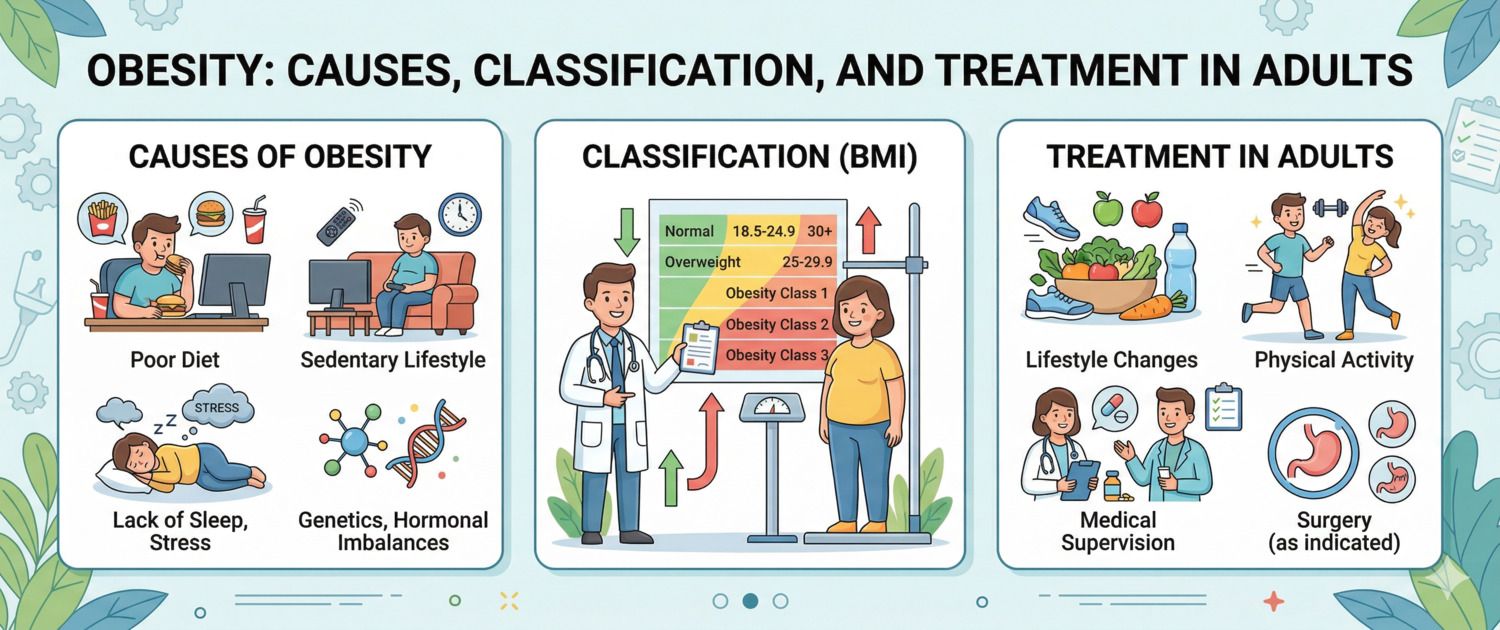
More than 650 million adults worldwide are living with obesity. Many more have excess weight that already activates the same pathological processes, just more slowly. Obesity has long ceased to be a problem of appearance — it is a chronic disease with clearly defined diagnostic criteria, serious complications and evidence-based treatments that work. The key is an accurate assessment and timely action.
What Is Obesity: Definition and Diagnostic Criteria
Obesity is a chronic metabolic disease characterised by excess fat accumulation that impairs health. The word "disease" is deliberate: it is not a failure of willpower or insufficient effort, but a pathological condition with well-understood biological mechanisms.
Body mass index (BMI) is the primary screening tool, calculated as weight in kilograms divided by height in metres squared.
| Category | BMI (kg/m²) |
|---|---|
| Normal | 18.5–24.9 |
| Overweight | 25.0–29.9 |
| Obesity grade I | 30.0–34.9 |
| Obesity grade II | 35.0–39.9 |
| Obesity grade III (morbid) | ≥ 40.0 |
BMI is convenient but imperfect: it does not distinguish between muscle and fat mass. This is why waist circumference is measured alongside BMI: above 94 cm in men and 80 cm in women indicates elevated metabolic risk regardless of BMI. Visceral fat — the fat inside the abdomen around internal organs — is metabolically the most active and most dangerous type.
Fat distribution matters: abdominal (android) obesity ("apple shape") carries higher cardiovascular risk than gynoid ("pear shape") obesity with fat deposited predominantly around the hips and thighs.
Why Obesity Develops: Causes and Risk Factors
Obesity results from a sustained positive energy balance — more calories consumed than expended. But behind this simple formula lies complex biology.
Genetics accounts for 40–70% of individual susceptibility to obesity. More than 1000 genetic loci are associated with BMI. Genes influence hunger and satiety signalling, basal metabolic rate and fat distribution. Heredity is not destiny, but it determines how easily a person gains weight under the same lifestyle conditions.
Lifestyle — the primary modifiable factor: excess ultra-processed, energy-dense foods; sedentary behaviour; curtailed sleep. Sleep restriction (below 6 hours) disrupts leptin and ghrelin — the satiety and hunger hormones — within one to two weeks, increasing appetite and cravings for calorie-dense foods.
Hormonal causes are frequently overlooked. Hypothyroidism reduces basal metabolic rate and drives weight gain. Insulin resistance creates a vicious cycle: elevated insulin stimulates fat deposition, which intensifies insulin resistance. Cushing's syndrome, polycystic ovary syndrome and other endocrine conditions commonly present with weight gain.
Medications that cause weight gain: antipsychotics, antidepressants (especially tricyclics), corticosteroids, some glucose-lowering agents (insulin, sulphonylureas), and beta-blockers.
Gut microbiome — an actively studied factor: the composition of intestinal bacteria influences the efficiency of energy extraction from food and the degree of systemic inflammation.
Psychoemotional factors: chronic stress, through cortisol activation, drives visceral fat accumulation. Binge eating disorder and emotional eating are distinct clinical conditions requiring psychological intervention.
Symptoms of Obesity
Obesity is one of the few diseases visible at a glance, but behind the obvious sign lie symptoms that reduce quality of life well before serious complications develop.
Physical symptoms:
- breathlessness on minimal exertion — adipose tissue compresses the diaphragm, reducing respiratory volumes;
- joint pain in knees, hips and the lumbar spine — mechanical overloading;
- excessive sweating, skin fold intertrigo;
- varicose veins of the lower limbs;
- disturbed sleep — from simple snoring to apnoea episodes.
Metabolic symptoms (often asymptomatic until detected by blood tests):
- elevated fasting glucose;
- abnormal lipid profile;
- elevated blood pressure.
Psychological symptoms: low self-esteem, depression, social withdrawal, stigmatisation. The psychological burden of obesity is frequently underestimated, yet it substantially undermines treatment adherence.
Acanthosis nigricans — darkening and thickening of skin in body folds (neck, armpits) — is a visible marker of significant insulin resistance.
Blood Tests Ordered in Obesity
Initial laboratory assessment in obesity serves two goals: detect existing metabolic disorders and exclude hormonal causes.
Carbohydrate metabolism screening:
- Fasting plasma glucose — baseline; ≥ 7.0 mmol/L indicates diabetes, 5.6–6.9 mmol/L prediabetes
- Glycated haemoglobin HbA1c — reflects average glucose over 2–3 months; more reliable than a single fasting glucose for diabetes screening
Lipid profile: total cholesterol, LDL, HDL, triglycerides — dyslipidaemia is present in 60–70% of people with obesity.
Liver function tests: ALT, AST, GGT — to exclude and monitor hepatic steatosis; fatty liver disease is present in 75–90% of patients with obesity.
Hormonal screening: TSH — to exclude hypothyroidism as a cause; fasting insulin and HOMA-IR — to detect insulin resistance.
Uric acid — elevated in obesity due to enhanced urate synthesis; a baseline reference for gout risk assessment.
A full blood count rounds out the picture: mild leukocytosis reflects the chronic low-grade inflammation of adipose tissue that accompanies obesity.
Complications of Obesity
It is the complications that make obesity a life-threatening condition rather than a cosmetic concern.
Type 2 diabetes mellitus — the most tightly linked complication. 80–90% of patients with type 2 diabetes have excess weight or obesity. A 5–7% weight loss in prediabetes reduces progression to diabetes by 58%.
Cardiovascular disease. Obesity is an independent risk factor for arterial hypertension, present in 60–70% of people with obesity. Atherosclerosis is simultaneously accelerated by dyslipidaemia and chronic inflammation.
Fatty liver disease. Non-alcoholic fatty liver disease (NAFLD) is a direct consequence of visceral obesity. Without weight correction it progresses from steatosis to steatohepatitis and cirrhosis.
Sleep apnoea. Sleep apnoea affects 40–70% of people with obesity: excess adipose tissue in the neck narrows the upper airway. Apnoea in turn worsens insulin resistance and makes weight loss harder — a vicious cycle.
Cancer. Obesity is associated with elevated risk of breast, colorectal, endometrial, renal and several other cancers. The WHO estimates obesity causes 13% of all cancer cases globally.
Musculoskeletal damage. Osteoarthritis of the knee and hip joints is a direct consequence of mechanical overloading. Each additional 10 kg of body weight adds approximately 40 kg of force to the knee joint during walking.
Metabolic syndrome — obesity is its central component, clustering all the above disorders into a single high cardiovascular-risk phenotype.
Treatment of Obesity: Current Approaches
Obesity treatment is a long-term process requiring a comprehensive approach. There is no single "correct" diet or exercise — there are principles that work.
Lifestyle modification — the foundation:
- A caloric deficit of 500–750 kcal/day leads to 0.5–0.75 kg/week weight loss — a realistic and safe pace
- Prioritising whole foods rich in protein and fibre; limiting refined carbohydrates and ultra-processed products
- Aerobic exercise 150–300 minutes of moderate intensity per week combined with resistance training twice weekly
- Sleep normalisation (7–9 hours) — a non-negotiable requirement; without it any dietary intervention is substantially less effective
Pharmacological treatment is indicated at BMI ≥ 30, or at BMI ≥ 27 with complications, when lifestyle changes are insufficient:
- GLP-1 receptor agonists (semaglutide, liraglutide) — the most effective agents currently available; weight reduction of 10–15% with semaglutide, up to 20% with tirzepatide; acting through appetite suppression and delayed gastric emptying
- Orlistat — blocks intestinal fat absorption; modest additional efficacy (~3–5% beyond diet), but a good safety profile
Bariatric surgery is indicated at BMI ≥ 40, or BMI ≥ 35 with serious complications. Procedures (sleeve gastrectomy, gastric bypass) achieve 25–35% weight loss and frequently produce remission of type 2 diabetes.
When to See a Doctor
With obesity, there is no "right moment" to wait for, and self-treatment through the latest internet diet is not advisable. See a doctor (endocrinologist, GP) when BMI is ≥ 30, or at BMI ≥ 27 with co-existing conditions such as hypertension, diabetes or sleep apnoea. A physician will investigate for hormonal causes and design an individualised treatment plan.
Weight is just one biomarker of health. A 5–10% weight loss already meaningfully improves metabolic markers, reduces blood pressure and relieves joint load — even when the goal of a "normal" BMI remains distant. Do not interpret symptoms independently — consult a doctor for a comprehensive assessment.
This content is for informational purposes only and does not replace professional medical advice.
For informational purposes only
This article is for informational purposes only and does not constitute medical advice, diagnosis, or treatment. Please consult a healthcare professional for medical guidance.