How to Prepare for a Blood Test: Rules for Accurate Results
Reviewed by the LabReadAI medical team
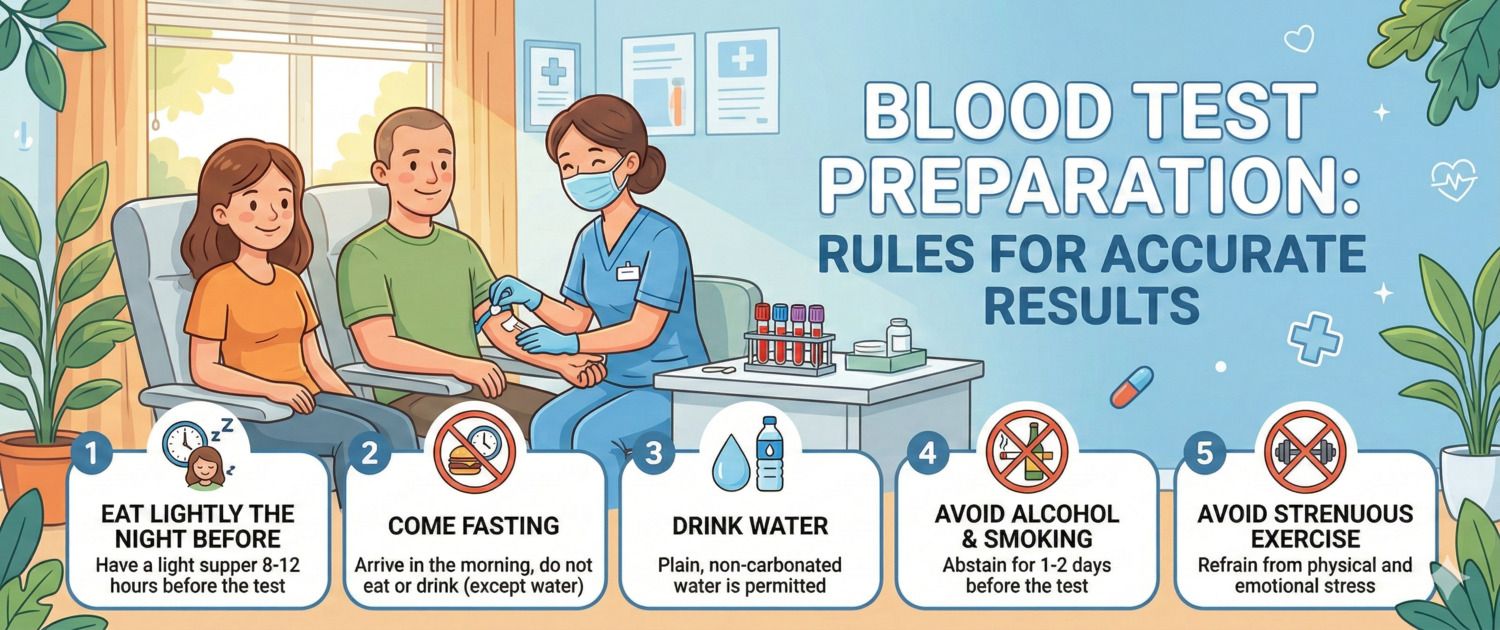
You had a cholesterol test done — and the numbers came back alarming. It turned out there was a large dinner with wine the evening before. Or the opposite: your TSH result was "normal" despite clear hypothyroid symptoms — and it emerged later that you had taken your levothyroxine tablet two hours before the blood draw. Preparation for a blood test is not bureaucratic box-ticking. It is the condition that makes the result diagnostically meaningful in the first place. This guide covers everything: how long to fast, what you can and cannot drink, which medications affect results, and how to prepare for different panels.
Why Blood Test Preparation Affects Results
Blood is not a static fluid. Its composition changes hour by hour in response to food, movement, stress, body temperature, and dozens of other inputs. Drink a coffee — cortisol rises for 20–30 minutes. Run for the bus — white cell count spikes transiently, so does creatinine. Eat a fatty meal — triglycerides increase several-fold and remain elevated for 8–10 hours.
The laboratory measures whatever is in the blood at the moment of collection — with no adjustment for what you did an hour before. Reference ranges are calculated under specific standard conditions: morning, fasting, at rest, without acute illness. Drawing blood outside these conditions produces a result outside the normal range for a perfectly healthy person — or, conversely, within the normal range for a sick person whose abnormality has been masked by food.
Preparation rules exist precisely to bring the body to those standard conditions under which the reference ranges were established. Knowing how to prepare properly is the foundation of accurate diagnostics — this is not excessive caution but physiology.
How Long to Fast Before a Blood Test
The answer depends on exactly which test you are having. Different analytes respond differently to food intake.
8–12 hours is the standard requirement for most biochemical tests: glucose, cholesterol, triglycerides, ALT, AST, urea, creatinine, proteins, and enzymes. This is "classic" fasting: last meal the previous evening, blood drawn in the morning.
Strictly 12 hours — for the lipid profile (cholesterol, LDL, HDL, triglycerides). Dietary fats circulate as chylomicrons for 10–12 hours after eating — a shorter gap gives falsely elevated triglycerides.
At least 8 hours — for hormones, coagulation tests, and immunological assays (including rheumatoid factor and anti-CCP).
No strict restriction — a complete blood count can technically be drawn at any time of day because the cellular composition of blood is not directly affected by food. In practice, morning fasting is still recommended for reproducibility and comparability over time.
Fasting beyond 16–18 hours is also harmful. Prolonged starvation triggers catabolism: ketones, bilirubin, and free fatty acids rise in the blood. The result will again fall outside reference ranges — for the opposite reason.
The optimal regime for most planned tests: a light dinner the evening before, no later than 8 pm, and blood drawn the next morning between 7 and 11 am. Following this schedule helps prepare the body for the most accurate result.
What You Can and Cannot Drink Before a Blood Test
The most common misconception is that "fasting" means "no fluids at all." It does not.
Water may and should be drunk — freely, right up to the moment of blood collection. Water does not change analyte concentrations in serum. Good hydration also improves venous filling, makes blood collection easier, and reduces the risk of sample haemolysis.
Tea and coffee — no, even without sugar. Caffeine stimulates cortisol and adrenaline release, accelerates heart rate, and influences platelet aggregation. Tea contains tannins that can interfere with some immunological assays.
Juices, fruit drinks, squash — no. These are liquid food: their simple sugars are absorbed immediately and raise glucose. Even a small amount of a sweet drink makes a glucose result unreliable.
Alcohol — exclude entirely for 24 hours before standard tests and 48 hours before liver enzyme tests (ALT, AST, GGT). Alcohol elevates hepatic enzyme activity even after modest intake.
Energy drinks and sports formulas — same rule as juice: not permitted.
Still or sparkling mineral water — acceptable in reasonable amounts.
Which Medications Affect Blood Test Results
This is one of the most underestimated variables. Many patients conscientiously fast for 12 hours but "forget" to mention drugs they take daily.
Anticoagulants (warfarin, rivaroxaban, heparin) directly alter coagulation panel results. This is expected — but the laboratory must know, as results will be interpreted in the context of therapy.
Oral contraceptives and hormone therapy affect levels of sex hormones, prolactin, SHBG, triglycerides, and coagulation parameters.
NSAIDs (ibuprofen, diclofenac, aspirin) affect platelet function and can falsely reduce inflammatory markers.
Thyroid medications (levothyroxine, carbimazole) taken before the test produce falsely shifted TSH and thyroid hormone values. The standard rule: have blood drawn for TSH before taking the morning dose.
Metformin and other glucose-lowering drugs taken before the test can falsely lower fasting glucose.
Immunosuppressants (methotrexate, biologics) reduce autoantibody levels including anti-CCP and rheumatoid factor.
The cardinal rule: never stop medications on your own, especially essential ones (antihypertensives, antidiabetics, antiepileptics). Inform the laboratory about all medications — the clinician will factor this into interpretation. For planned diagnostic tests (not treatment monitoring), ask the requesting doctor in advance whether a temporary pause is needed.
Preparation Specifics for Different Types of Blood Tests
Complete Blood Count
A complete blood count is the least demanding in terms of preparation. That said: draw blood in the morning, after rest, with no strenuous exercise in the preceding 24 hours. Physical stress transiently raises white cells (physiological leukocytosis), platelets, and haemoglobin (through haemoconcentration). For women, the day of the menstrual cycle matters for interpreting haemoglobin and haematocrit.
Biochemistry and Lipid Panel
Liver function tests — strictly 8–12 hours fasting; alcohol excluded for 48 hours. Fatty food elevates ALT, AST, and alkaline phosphatase.
Lipid panel — the strictest requirements. A full 12 hours of fasting is needed (10 hours risks falsely elevated triglycerides). For 3 days before the test, eat a normal balanced diet — do not go on a special diet, as short-term dietary restriction can artificially improve the result.
Thyroid Hormones
A thyroid panel — TSH can be drawn at any time of day as it has no significant circadian rhythm. For reproducibility on follow-up testing, however, draw consistently in the morning. Take levothyroxine after the blood draw, not before.
If calcitonin is included in the panel — strictly fasting and no smoking from the previous evening: both factors meaningfully stimulate C-cell secretion.
Coagulation Panel
A coagulation panel — 12 hours fasting, fatty food excluded. Fibrinogen responds to lipid load and alters plasma rheology. The tourniquet should be released promptly: prolonged venous compression activates local fibrinolysis and falsely lowers fibrinogen. All anticoagulant medications must be disclosed.
Hormone and Vitamin Panels
Hormone panels — most require morning collection between 8 and 10 am, as sex hormones and cortisol follow a strong circadian pattern. Prolactin should be drawn 2–3 hours after waking, at rest: stress and physical activity sharply elevate prolactin.
Vitamin panels — strictly fasting. This is especially important for vitamin D: taking a vitamin D supplement the day before the test will falsely elevate the result. When monitoring treatment, vitamin D should be drawn 3 days after the last dose.
Iron Studies
An iron panel — morning, strictly fasting. Iron supplements must be stopped 5–7 days before the test (unless advised otherwise): a single dose of an iron-containing preparation raises serum iron 3–4 fold, rendering the result meaningless. Menstruation lowers serum iron — draw blood after the period ends where possible.
When to Reschedule: Temporary Contraindications
In some circumstances a result is predictably unreliable — and it is better to postpone than to obtain an inaccurate result that triggers unnecessary further investigation.
Acute viral or bacterial infection. Any infection elevates white cells, ESR, C-reactive protein, and fibrinogen, and depresses haemoglobin and albumin. Planned tests drawn during a cold or flu will reflect acute inflammation, not the patient's baseline. Wait two weeks after full recovery.
Vaccination. In the 2–3 weeks following any vaccine, the immune system is activated — white cells, lymphocytes, and immunoglobulins may be elevated, ESR mildly raised. Postpone planned immunological tests (anti-CCP, rheumatoid factor, thyroid antibodies) for three weeks after vaccination.
Menstruation. Standard biochemical and clinical tests are unaffected. However, sex hormone tests (FSH, LH, oestradiol, progesterone) have strict cycle-day requirements — the requesting clinician will specify these.
Physiotherapy, X-ray, MRI. These do not directly affect blood chemistry, but drawing blood before rather than after procedures is good practice.
Psychological stress. Acute stress (conflict, poor sleep, an exam) raises cortisol, adrenaline, glucose, platelets, and white cells. If the previous day was particularly stressful, postponing a non-urgent test by 1–2 days is reasonable.
What to Do on the Day of the Blood Draw
Correct preparation does not end at waking up — a few details on the day of collection also matter.
In the morning: wake up calmly, drink a glass of water, avoid rushing. Do not smoke — at least 2 hours before the draw (nicotine affects calcitonin, prolactin, and haemodynamics). Most medications should be taken after blood is drawn — confirm this with your doctor beforehand.
Getting to the clinic: if you arrived hurried or stressed, sit in the waiting area for 10–15 minutes before the draw. This brief rest normalises heart rate, lowers adrenaline, and meaningfully improves accurate hormonal results.
Before the procedure: tell the phlebotomist about all medications taken in the last 24–48 hours. Ask whether you should clench your fist — for some tests (potassium, lactate) this is prohibited, as local muscle activity alters ion concentrations in the drawn sample.
After the draw: press the puncture site with the cotton swab for 3–5 minutes. Do not flex the arm sharply — this increases the risk of bruising. If you feel faint or dizzy, tell the phlebotomist immediately and do not stand up on your own.
When results arrive, compare them with the reference ranges printed on your own report — different laboratories may use slightly different intervals. Any concerning deviation warrants a conversation with your doctor, not a search engine.
This article is for informational purposes only and does not replace medical consultation. Result interpretation and diagnosis are made by a qualified physician.
For informational purposes only
This article is for informational purposes only and does not constitute medical advice, diagnosis, or treatment. Please consult a healthcare professional for medical guidance.