Vitamin and Mineral Panel: What It Includes and How to Prepare
Reviewed by the LabReadAI medical team
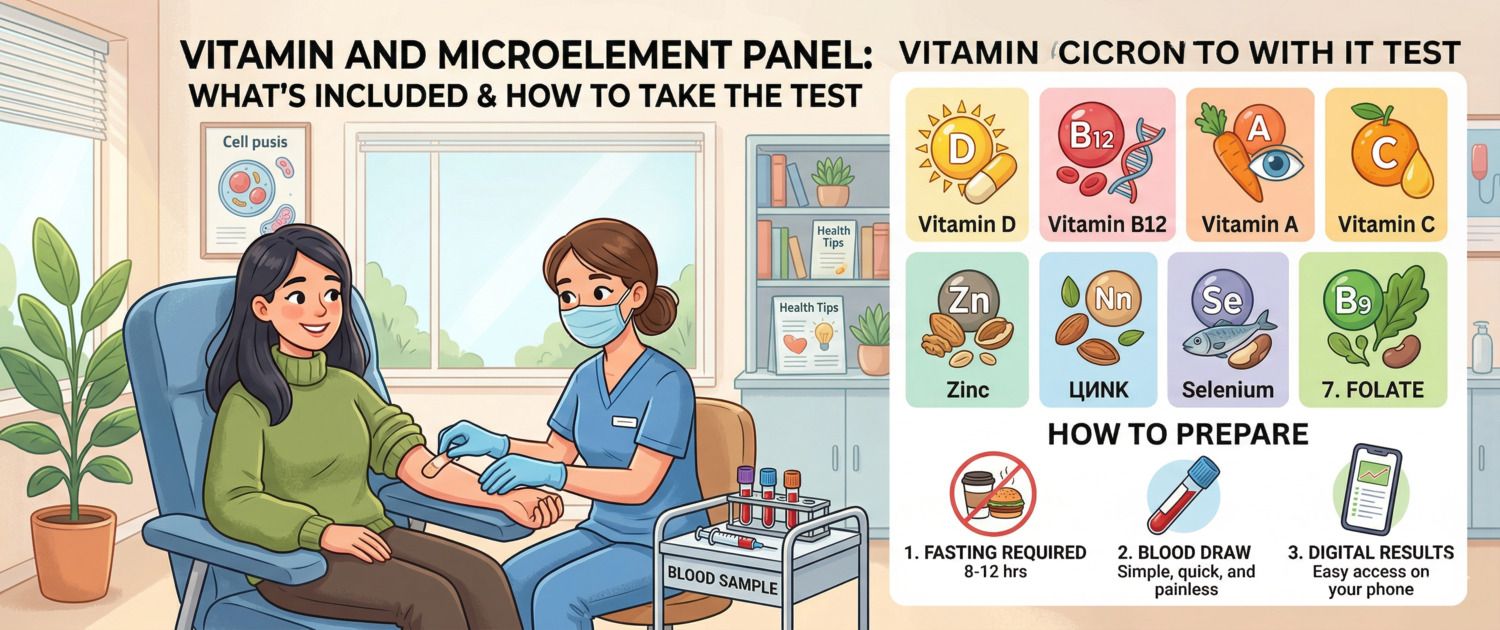
Persistent fatigue with no clear explanation. Hair thinning, brittle nails, immunity that weakens with every passing season. Tests come back "normal" — yet the symptoms remain. Behind this picture, in many cases, lies not one but several simultaneous micronutrient deficiencies that cannot be detected by a single measurement. The vitamin and mineral panel resolves this: one blood draw, one comprehensive picture of nutritional status.
What a Vitamin Panel Is and Why Testing Together Matters
A vitamin panel is a set of laboratory tests that simultaneously measures the levels of multiple vitamins and minerals in blood. Unlike isolated individual tests, the combined assessment solves a fundamentally different problem: it reveals interdependent deficiencies that reinforce each other and remain invisible when tested separately.
The logic is straightforward. Vitamins and minerals do not act in isolation — they form functional networks. Zinc is required for vitamin A transport. Vitamin D cannot be properly activated without adequate magnesium. Vitamin B12 and folate operate in the same metabolic cycle and their deficiencies produce overlapping symptoms. Assessing one marker without the others yields an incomplete picture that can easily mislead.
Moreover, correcting a single deficiency while a co-existing one goes untreated is ineffective. A patient may take vitamin D for months without benefit simply because, without adequate magnesium, the kidneys cannot activate it. A panel identifies exactly these situations.
There is also a practical preanalytical advantage. One blood draw under identical conditions — strictly fasting, with appropriate light protection — generates reliable results across all markers simultaneously. This is more accurate than ordering each vitamin separately on different days with varying preparation and inevitable preanalytical variability.
What a Standard Vitamin and Mineral Panel Includes
Panel composition varies between laboratories. The following is a standard comprehensive set covering the most clinically relevant markers.
Fat-soluble vitamins: — Vitamin D (25-OH) — the principal marker of calcium-phosphate metabolism and immune status. Deficiency affects 40–80% of people in northern latitudes. — Vitamin A (retinol) — regulator of vision, immunity and cell differentiation. Always interpreted alongside zinc — without it, retinol cannot leave the liver.
Water-soluble vitamins: — Vitamin B12 (cobalamin) — essential for DNA synthesis and myelin integrity. Deficiency develops silently over months to years, particularly in vegetarians and older adults. — Folate (vitamin B9) — B12's partner in the one-carbon metabolic cycle. Their deficiencies are always assessed together. — Vitamin C (ascorbic acid) — antioxidant and cofactor for collagen synthesis. Among the most analytically unstable markers in the panel — correct preanalytical handling is critical.
Minerals and trace elements: — Zinc — transporter of vitamin A, regulator of immunity and testosterone. The second most common elemental deficiency after iron. — Selenium — antioxidant protection via glutathione peroxidase, regulation of thyroid hormone activation. Critically important during pregnancy. — Magnesium — cofactor for 300+ enzymes and an essential precondition for vitamin D activation. Its deficiency negates the clinical benefit of cholecalciferol supplementation.
Some extended panels additionally include vitamin B6, vitamin B1 (thiamine), copper, manganese and iodine — based on clinical indications.
How to Prepare for a Vitamin Panel
A vitamin panel is a technically demanding investigation. Failure to follow preparation requirements produces false results across multiple markers simultaneously.
Food and supplements:
- Strictly fasting: 8–12 hours without food. Dietary fat immediately raises fat-soluble vitamins (A, D) in plasma within 2–4 hours — results will be falsely elevated if taken after eating.
- Stop all vitamin supplements and multivitamins 48–72 hours before the draw. Taking a supplement just before testing shows a transient plasma peak, not actual tissue status.
- Do not radically change your diet in the week before — for example, do not suddenly start drinking litres of carrot juice, or stop eating meat if you normally do.
On the day of the draw:
- Blood should be taken in the morning, ideally before 10:00 a.m. — several markers show circadian variation.
- No smoking for 2 hours: nicotine lowers plasma vitamin C by 30–40%.
- Avoid physical exertion the morning before the draw.
Critical laboratory conditions:
- Vitamin C and vitamin A are unstable in light: the tube must be shielded from ultraviolet exposure immediately after collection.
- Zinc requires trace-element collection tubes free of zinc contamination. Latex gloves must not contact the sample.
- All markers are drawn simultaneously from one vein into separate collection tubes.
Inflammation shifts multiple results at once: the acute-phase response lowers vitamin A, zinc and selenium while paradoxically normalising vitamin B12. Testing the vitamin panel during a respiratory infection, an active inflammatory flare or within two weeks of recovering from illness is uninformative and should be postponed.
How to Interpret Vitamin Panel Results
Panel results are interpreted as a connected set, not as isolated numbers — this is the fundamental difference from a random collection of separate tests.
Key interpretive principles:
A normal blood level does not always mean tissue sufficiency. Plasma vitamin B12 can be normal while tissue stores are already depleted — methylmalonic acid and homocysteine help clarify this. Serum zinc declines late, only after tissue reserves are substantially exhausted. Plasma magnesium is maintained at the expense of bone stores. Borderline values therefore require clinical interpretation, not a simple "all normal" dismissal.
An isolated deficiency in one marker is a reason to look for an explanation, not merely to supplement. Low vitamin A despite adequate dietary intake? Check zinc — without it retinol is trapped in the liver. Vitamin D failing to rise despite supplementation? Look at magnesium — its deficiency blocks renal activation of cholecalciferol. Low B12 in a young adult without dietary restrictions? Exclude coeliac disease — impaired small intestinal absorption is a common and overlooked cause.
Simultaneous deficiency of B12 and folate combined with elevated homocysteine and macrocytosis on a full blood count is the classic presentation requiring exclusion of megaloblastic anaemia.
Vitamin D deficiency together with low calcium, low phosphate and elevated parathyroid hormone in an older patient signals significant risk of osteoporosis and demands prompt treatment, not watchful waiting.
After deficiencies are identified and treatment is started, repeat testing is recommended after 2–3 months for water-soluble vitamins and 3–6 months for fat-soluble ones (vitamins D and A accumulate slowly). Repeating the full panel at every follow-up is unnecessary — retesting only the abnormal markers is sufficient.
Combined Deficiencies: Why They Occur Together
An isolated deficiency of one vitamin with all others normal is the exception rather than the rule. Most clinical situations involve clusters of deficiencies sharing a common underlying cause.
Fat malabsorption (coeliac disease, Crohn's disease, pancreatitis, bariatric surgery) — produces simultaneous deficiency of all fat-soluble vitamins: D, A, E and K. Zinc, magnesium and calcium absorption are impaired in parallel. Treating the downstream deficiencies without addressing the root cause is futile.
Strict veganism without dietary planning — classically depletes vitamin B12 (absent from plant foods), zinc (low bioavailability from plant sources), iron and vitamin D. Plasma vitamin A may appear normal due to circulating carotenoids while functional retinol status is reduced.
Older age — systemic decline in vitamin D (reduced cutaneous synthesis and less outdoor time), B12 (atrophic gastritis reduces intrinsic factor), magnesium (reduced absorption and increased urinary losses) and zinc (narrowing dietary variety).
Chronic alcoholism — B12, folate, thiamine (B1), magnesium, zinc and vitamin A are all affected. Alcohol impairs absorption, accelerates excretion and competes with nutrient metabolic pathways.
Pregnancy — physiologically elevated demand for iron, folate, zinc, iodine and vitamin D as the fetus actively draws on maternal stores for organ development. Without monitoring through a panel, these deficiencies develop silently and affect fetal growth.
Who Needs a Vitamin Panel and When
A vitamin panel is not a routine screen for the general population. But for specific groups it is essential diagnostics.
Indications for initial testing:
- Chronic fatigue, cognitive impairment and reduced work capacity without an organic explanation on standard investigation
- Diffuse hair loss, brittle nails, dry skin — particularly when several signs coexist
- Frequent infections and prolonged recovery from common illnesses
- Suspected malabsorption: coeliac disease, Crohn's disease, pancreatitis, intestinal surgery
- Strict vegetarianism and veganism — check every 1–2 years even without symptoms
- Pregnancy and preconception planning
- Age above 60 — preventively every 1–2 years
- Long-term use of metformin (lowers B12), proton pump inhibitors (lower B12 and magnesium), or oral contraceptives (lower B6, B12, folate and zinc)
- Current or prior oncological illness — chemotherapy disrupts nutrient metabolism
Monitoring frequency:
- After a deficiency is identified: retest 2–3 months after starting treatment
- With ongoing risk factors (veganism, chronic disease): annually
- With normal results and no risk factors: every 2–3 years is sufficient
When to See a Doctor
Self-interpreting vitamin panel results is unreliable. Results depend on health status at the time of collection, current medications, the presence of inflammation and individual metabolic variation. A number outside the reference range is not a diagnosis — it is an indication for clinical review.
Consult a GP or dietitian with the panel results whenever any abnormality is found, and also when the symptoms described above are present even if all values appear "normal" — borderline figures in the right clinical context deserve the same attention as frank deficiency.
Do not self-prescribe high-dose supplements. Excess fat-soluble vitamins A and D are toxic. Excess zinc causes copper deficiency. Unmonitored high-dose folic acid in undetected B12 deficiency corrects the blood count while neurological damage progresses silently. Correcting nutrient deficiencies is a medical procedure requiring calculated dosing and follow-up.
Vitamin D is a key marker in the panel. For its role in longevity, immunity and the link with testosterone, see the article what vitamin D does and longevity.
This content is for informational purposes only and does not replace professional medical advice.
For informational purposes only
This article is for informational purposes only and does not constitute medical advice, diagnosis, or treatment. Please consult a healthcare professional for medical guidance.