Vitamin C Blood Test: Normal Levels, Deficiency and Symptoms
Reviewed by the LabReadAI medical team
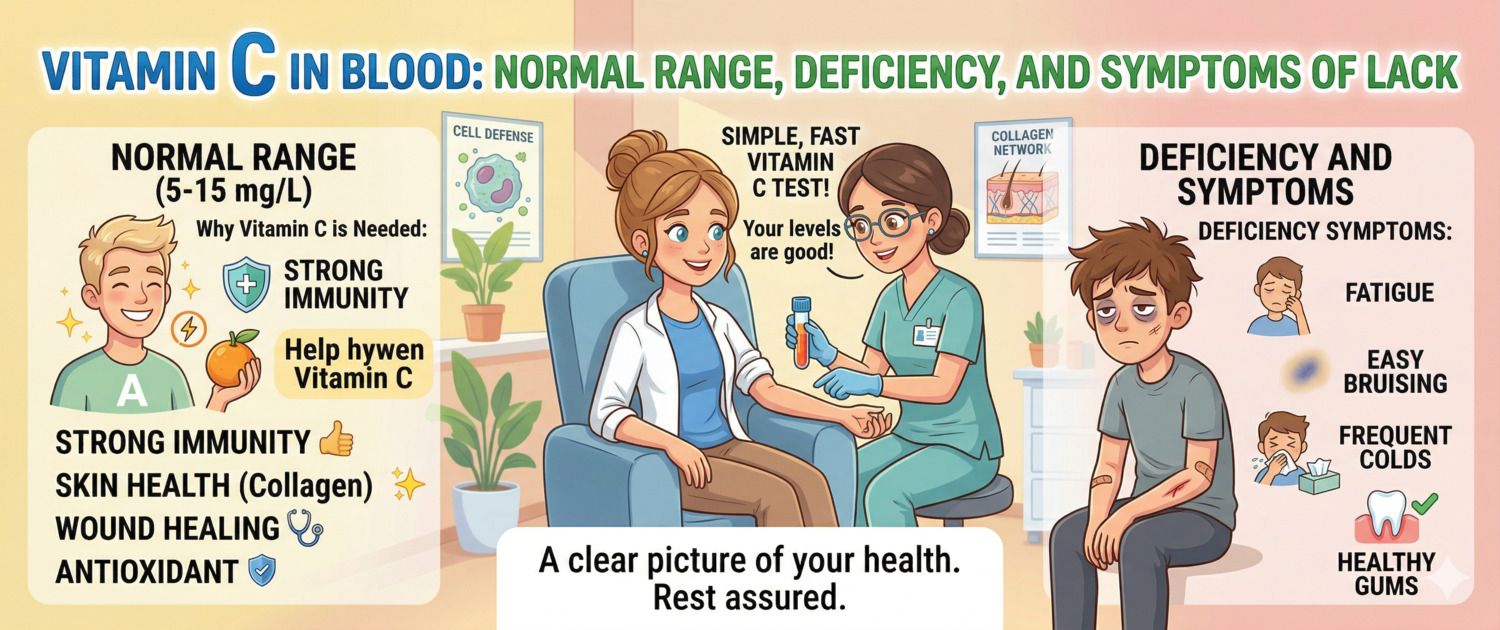
A bruise appears from the lightest touch. Gums bleed during toothbrushing. A small cut that should heal in two days stays open for a week. These are the classic signs of vitamin C deficiency — ascorbic acid that the human body cannot synthesise on its own. A blood test for vitamin C reveals the actual absorbed level: not what is printed on a multivitamin label, but what is genuinely circulating in the plasma.
What Vitamin C Does and Why It Matters
Vitamin C (ascorbic acid) is a water-soluble vitamin and one of the primary intracellular antioxidants. Humans and other primates lost the gene for the enzyme required to synthesise ascorbic acid from glucose — without daily dietary intake, reserves deplete rapidly.
The central biochemical role is collagen synthesis. Vitamin C serves as a cofactor for the hydroxylation of proline and lysine, without which collagen molecules cannot form stable cross-links. This is precisely why deficiency first affects tissues with high collagen turnover: gums, vessel walls and skin lose structural integrity and begin to bleed long before other symptoms appear.
A second critical function is enhancing the absorption of non-haem iron in the intestine. Ascorbic acid converts ferric iron (Fe³⁺) to ferrous iron (Fe²⁺), which is absorbed two to four times more efficiently. This underpins the practical recommendation to take iron supplements alongside vitamin C-rich foods.
Vitamin C is also required for the synthesis of noradrenaline and carnitine, activates neutrophils — the first-line cells of the immune response — and regenerates oxidised vitamin E: two antioxidants work as a pair, mutually maintaining and restoring each other. This synergy explains why supplementing one antioxidant in isolation is often insufficient.
Normal Vitamin C Blood Levels
Reference values depend on the analytical method — high-performance liquid chromatography (HPLC) is the most accurate. Results are expressed in µmol/L.
| Status | Plasma level |
|---|---|
| Normal | 28–85 µmol/L |
| Suboptimal | 11–28 µmol/L |
| Deficient | < 11 µmol/L |
| Scurvy risk | < 6 µmol/L |
| Potentially toxic | > 85 µmol/L |
Ranges vary between laboratories — always compare against the reference interval on your own report.
Smoking is the most important factor lowering levels: in smokers, vitamin C is on average 30–40% lower than in non-smokers at equivalent dietary intake, because oxidative stress from tobacco smoke accelerates ascorbic acid degradation. The recommended daily intake for smokers is 35 mg/day above the standard. Pregnancy, lactation and chronic inflammatory disease also sharply increase consumption.
An important interpretive point: plasma vitamin C reflects short-term status (the preceding one to two weeks), while leucocyte levels more accurately represent long-term tissue stores. Plasma is the standard clinical measurement — more accessible and better standardised.
How to Prepare for a Vitamin C Blood Test
Vitamin C is one of the most analytically unstable laboratory measurements: ascorbic acid oxidises rapidly in light and on contact with oxygen. Failure to follow preanalytical protocols produces falsely low results.
Preparation:
- Stop vitamin C supplements and multivitamins 24–48 hours before the test
- Blood should be drawn fasting (8–12 hours without food)
- No smoking for 2 hours before the draw
The laboratory must process the sample within 30 minutes of collection: blood is immediately shielded from light and placed on ice. Delays or sunlight exposure on the tube can halve the measured level — this reflects a handling error, not impaired metabolism. When several micronutrients need to be assessed simultaneously, identical preanalytical conditions for all analytes are best achieved with a combined panel. A standalone result without dietary context and clinical assessment is unreliable.
Causes and Symptoms of Vitamin C Deficiency
Suboptimal ascorbic acid status is more prevalent than commonly assumed: population studies find levels below the normal range in 13–23% of adults in high-income countries.
Main causes:
- A diet low in fresh fruit and vegetables — the primary cause; heat processing destroys 40–60% of vitamin C in food
- Smoking: oxidative stress from tobacco accelerates degradation and increases requirements
- Chronic alcoholism: impaired absorption and reduced dietary quality
- Older age: narrowing of food variety and declining intestinal absorptive function
- Inflammatory bowel disease: impaired micronutrient absorption
- Haemodialysis: vitamin C is removed during each session; dialysis patients require supplementation
- Serious illness or major surgery: requirements rise sharply for tissue repair
Clinical stages:
At the subclinical stage (11–28 µmol/L): non-specific complaints — chronic fatigue, irritability, reduced concentration and increased susceptibility to infections. The person does not connect these symptoms to a vitamin deficiency, which is why suboptimal levels often go undetected for years.
At overt deficiency (< 11 µmol/L): characteristic signs emerge — bleeding and spongy gums, perifollicular haemorrhages (pin-point bleeds around hair follicles), delayed wound healing, joint and muscle pain, hair loss and skin hyperkeratosis. Worsening anaemia at this stage reflects both impaired iron absorption and ongoing blood loss from mucosal bleeding.
Scurvy: The Extreme Stage of Ascorbic Acid Deficiency
Scurvy develops when plasma vitamin C falls below 6 µmol/L — typically when intake is below 10 mg/day for four to twelve weeks. Historically it killed more sailors on long voyages than storms and battles combined: fresh produce ran out rapidly.
Modern scurvy is not a historical curiosity. It is regularly identified in elderly people with monotonous diets, patients with severe depression and eating disorders, chronic alcoholics, and children on inadequate nutrition. Classic presentation: extensive gum haemorrhage, tooth loss, widespread skin bruising, severe limb pain, and progressive anaemia.
Diagnosis is straightforward: plasma vitamin C level. Treatment is ascorbic acid supplementation; clinical symptoms begin to resolve within days and full recovery occurs over two to four weeks.
Causes of Elevated Vitamin C Levels
High vitamin C in plasma is almost exclusively caused by megadose supplementation (1000 mg/day or more). The vitamin is water-soluble and the kidneys actively excrete the surplus, but sustained megadoses carry real clinical risks.
The principal risk is oxalate kidney stone formation: excess ascorbic acid is metabolised to oxalate, which crystallises in the urinary tract in predisposed individuals. The risk is clinically meaningful at regular intakes above 1000–2000 mg/day, particularly when fluid intake is inadequate.
A second hazard is laboratory interference: high doses falsely lower blood glucose when measured by the glucose oxidase method, and can produce false-positive results on faecal occult blood tests. Vitamin C supplements should be stopped 24–48 hours before any blood or stool tests.
Antioxidant defence functions as an interdependent network. Without sufficient zinc, selenium and other cofactors, megadoses of ascorbic acid cannot compensate for systemic micronutrient deficiency — and in some conditions (haemochromatosis, G6PD deficiency) may cause harm.
When to See a Doctor
Testing for vitamin C is warranted when one or more of the following apply:
- bleeding gums or pin-point skin haemorrhages without a clear cause;
- slow or failed wound healing;
- marked fatigue despite adequate sleep and nutrition;
- membership of a risk group: smoking, alcoholism, older age, inflammatory bowel disease, haemodialysis.
Do not self-prescribe high-dose ascorbic acid: megadoses provide no additional benefit in people with normal levels but increase kidney stone risk in predisposed individuals. For a comprehensive assessment of vitamin and mineral status, ask your doctor for a vitamin panel — a single test that evaluates the full picture.
This content is for informational purposes only and does not replace professional medical advice.
For informational purposes only
This article is for informational purposes only and does not constitute medical advice, diagnosis, or treatment. Please consult a healthcare professional for medical guidance.