Zinc Blood Test: Normal Levels, Deficiency Symptoms and Causes
Reviewed by the LabReadAI medical team
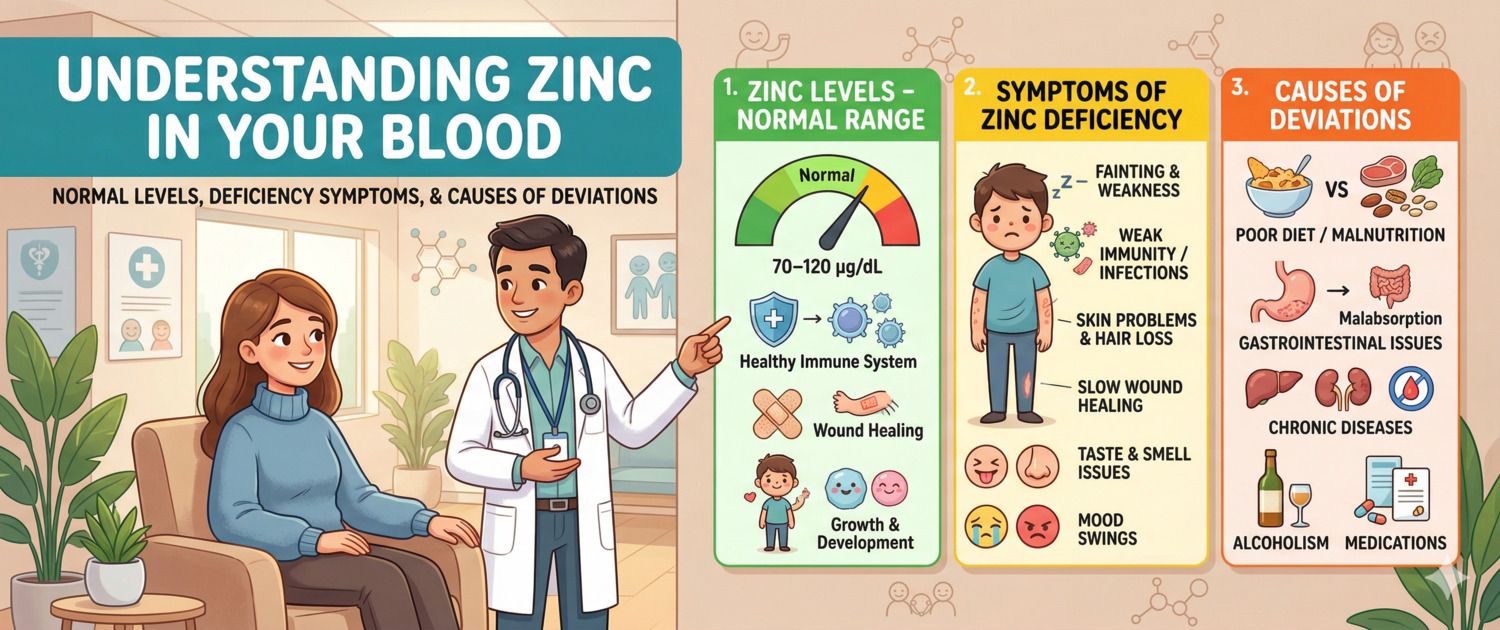
Hair is shedding more than usual. Small cuts take longer to heal than they should. Food has lost some of its flavour — as though someone turned the dial down. These symptoms are easy to attribute to stress or tiredness, yet behind them often lies zinc deficiency — a shortfall of the mineral without which hundreds of enzymes cannot function and DNA cannot be synthesised. A zinc blood test reveals the actual circulating level before symptoms become unmistakable.
What Zinc Does in the Body
Zinc is an essential trace element: it is not synthesised in the body and must be supplied daily through food. It is the second most abundant trace element in the body after iron. Approximately 85% of total zinc is stored in muscle and bone; the remainder is distributed across the liver, kidneys, retina, prostate and red blood cells.
Zinc is a structural or catalytic component of more than 300 enzymes and influences the activity of over 1000 transcription factors. This is not an exaggeration — virtually every foundational biochemical process depends on zinc: DNA and RNA synthesis, cell division, carbohydrate metabolism, protein synthesis and DNA repair.
Immune function is among the most studied roles. Zinc is required for the development and maturation of T-lymphocytes, neutrophils and natural killer cells. In deficiency, the thymus — where T-cells mature — shrinks and produces less thymulin. This is why zinc deficiency in children is associated with a marked rise in infectious disease susceptibility.
Wound healing is another key domain. Zinc participates in all three phases: inflammation, proliferation and tissue remodelling. Surgeons have long noted that patients with zinc deficiency show slower post-operative wound closure and higher infection rates.
The link with vitamin A is direct and practically important: zinc is required for the synthesis of retinol-binding protein (RBP), which transports vitamin A from the liver to peripheral tissues. When zinc is insufficient, RBP cannot be produced in adequate quantities — and plasma vitamin A falls even when hepatic retinol stores are intact. This is a classic example of one nutrient deficiency masquerading as another.
Finally, zinc regulates testosterone: it inhibits aromatase, the enzyme that converts testosterone to oestradiol. Significant zinc deficiency in men independently lowers testosterone, manifesting as reduced libido, impaired sperm quality and increasing fatigue.
Normal Zinc Blood Levels
Zinc in blood is measured by atomic absorption spectrometry or inductively coupled plasma mass spectrometry (ICP-MS). Results are reported in µmol/L or µg/dL.
| Status | Serum level |
|---|---|
| Normal | 11.5–18.5 µmol/L (75–120 µg/dL) |
| Suboptimal | 9.0–11.5 µmol/L |
| Deficient | < 9.0 µmol/L |
| Potentially toxic | > 30 µmol/L |
Reference ranges vary between laboratories — always compare against the values on your own report. Men have slightly higher levels than women; in pregnancy, zinc physiologically declines from the first trimester onwards as the fetus actively draws on maternal supplies.
A critical interpretive limitation: serum zinc is an unreliable marker of total body stores. The body tightly defends blood zinc levels by mobilising tissue reserves, so a fall in serum zinc occurs late — only after tissue stores are already substantially depleted. A normal result does not guarantee tissue adequacy, and borderline values require clinical interpretation.
A further limitation: acute infection, trauma and inflammation redistribute zinc from serum to the liver as part of the acute-phase response, producing a falsely low result. Zinc should not be interpreted during active inflammatory illness.
How to Prepare for a Zinc Blood Test
Serum zinc is exceptionally vulnerable to contamination. Zinc is present in rubber stoppers, latex gloves and some antiseptics — any contact with the sample produces a falsely elevated result.
Patient preparation:
- Strict fasting: 8–12 hours without food; water is permitted
- Stop zinc supplements and multivitamins 24 hours before the draw
- No smoking for 2 hours beforehand
Laboratory preanalytics:
- Trace-element tubes (zinc-free collection tubes)
- Metal or plastic needles only — not rubber
- Latex gloves must not contact the sample
Failure to meet any of these conditions renders the result unreliable. If there is doubt about preanalytical quality, repeat the test at a laboratory specialising in trace elements. For a comprehensive assessment of nutritional status, a vitamin panel provides simultaneous measurement of zinc alongside magnesium, selenium and vitamins — revealing co-existing deficiencies that reinforce each other's symptoms and are invisible when tested in isolation.
Causes and Symptoms of Zinc Deficiency
The WHO estimates approximately 17% of the global population has suboptimal zinc status. In high-income countries, severe deficiency is uncommon but mild to moderate deficiency is substantially more prevalent than diagnosed.
Main causes:
Dietary insufficiency is the most widespread cause. Red meat, seafood (oysters are outstanding — 74 mg per 100 g) and poultry provide zinc in a highly bioavailable form. In vegetarians and vegans, zinc from grains and legumes has markedly reduced bioavailability due to phytates — they form insoluble complexes with zinc in the intestinal lumen.
Impaired absorption: coeliac disease, Crohn's disease, short bowel syndrome and post-bariatric surgery. An inflamed or surgically altered intestinal mucosa loses its capacity for adequate zinc uptake.
Increased losses: chronic diarrhoea (especially in children), extensive exudative skin conditions (burns, widespread psoriasis), and chronic renal failure. Haemodialysis actively removes zinc across the dialysis membrane.
Competitive inhibition: high-dose iron supplementation (> 25 mg/day elemental iron) competes with zinc for the intestinal transporter DMT-1 and impairs zinc absorption. This is particularly relevant for pregnant women receiving large iron doses without zinc supplementation.
Alcoholism: ethanol impairs intestinal zinc absorption and increases urinary losses.
Clinical symptoms:
Early signs are non-specific: impaired taste and smell (hypogeusia and hyposmia), reduced twilight vision, increased susceptibility to infection, and slower healing of wounds and skin fissures.
Moderate deficiency adds: diffuse hair shedding (telogen effluvium), dry and flaky skin, brittle nails with white spots (leukonychia), reduced libido and — in men — impaired sperm quality. In children, moderate chronic deficiency impairs linear growth and delays puberty, making it one of the leading mechanisms of growth stunting in nutritionally deprived populations.
Severe deficiency — typically in acrodermatitis enteropathica, a rare inherited disorder of zinc absorption — produces a florid picture: vesicular and pustular dermatitis around the mouth, on the extremities and perianally, alopecia, chronic diarrhoea and severe immunodeficiency with recurrent infections. Without treatment the condition is life-threatening.
Causes of Elevated Zinc Levels
True zinc excess is rare in clinical practice and almost always iatrogenic: prolonged high-dose zinc supplementation (> 40–50 mg/day of elemental zinc), occupational exposure to zinc oxide fumes (metal fume fever — an acute inflammatory condition), or accidental ingestion of zinc-containing objects by children or in psychiatric illness.
Chronic zinc excess is harmful primarily through antagonism with other trace elements. The principal victim is selenium: excess zinc impairs intestinal selenium absorption and reduces activity of selenium-dependent enzymes (glutathione peroxidase, thioredoxin reductase). Simultaneously, copper status falls: zinc induces intestinal metallothionein, which binds copper with high affinity and blocks its absorption. Copper deficiency secondary to zinc excess presents as anaemia, peripheral neuropathy and neutropenia.
Acute high-dose intoxication causes nausea, vomiting, abdominal pain and diarrhoea. Prolonged intake above 100 mg/day without medical indication produces an adverse lipid profile (reduced HDL cholesterol) and paradoxical immune suppression — the opposite of zinc's normal immunostimulatory role.
Zinc and Other Trace Elements
Trace elements are not isolated actors but participants in a tightly interconnected network. Understanding these interactions is essential for rational supplementation.
Zinc and copper are classical antagonists. At physiological concentrations they compete for intestinal absorption; the optimal dietary Zn:Cu ratio is 8–15:1. Long-term zinc supplementation without monitoring copper levels predictably lowers copper to levels sufficient to cause anaemia and neurological dysfunction.
Zinc and iron: high-dose iron (> 25 mg/day) suppresses zinc absorption via DMT-1 competition. For pregnant women with iron-deficiency anaemia and concurrent zinc deficiency, taking the two supplements separately — with a 2–3 hour interval — avoids mutual interference.
Zinc and selenium interact at the level of antioxidant defence: both neutralise reactive oxygen species but through different mechanisms and in different cellular compartments. Their co-deficiency substantially impairs immune response and oxidative stress resistance compared with either isolated deficiency alone.
Vitamin A and zinc: as established above, without adequate zinc the liver cannot release stored vitamin A into the bloodstream via RBP. In patients deficient in both (typical in regions with poor dietary diversity), correcting vitamin A without first correcting zinc fails to resolve the visual symptoms. Zinc must be restored first.
When to See a Doctor
Testing for zinc is warranted when one or more of the following apply:
- unexplained diffuse hair shedding;
- slow wound healing, chronic skin ulcers;
- reduced sense of taste or smell;
- frequent infections with prolonged recovery;
- growth delay or delayed puberty in children;
- membership of a risk group: vegetarianism, fat malabsorption, haemodialysis, alcoholism.
Do not self-prescribe zinc supplements without a blood test. Zinc at 25–45 mg/day already competes with copper and can cause secondary copper deficiency with prolonged use. For a complete picture of nutritional status — including zinc, copper, selenium and vitamins — ask your doctor for a combined vitamin panel.
This content is for informational purposes only and does not replace professional medical advice.
For informational purposes only
This article is for informational purposes only and does not constitute medical advice, diagnosis, or treatment. Please consult a healthcare professional for medical guidance.