Celiac Disease: Symptoms, Diagnosis and Gluten-Free Diet
Reviewed by the LabReadAI medical team
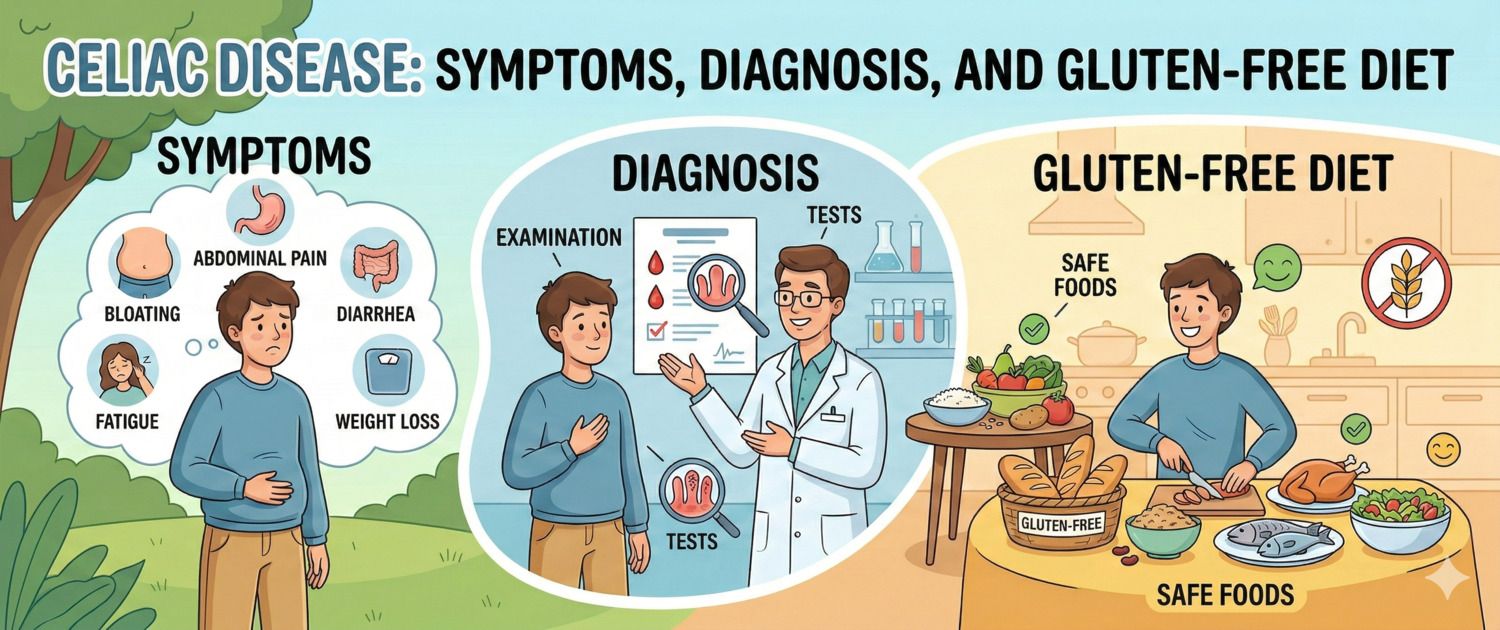
Bloating after meals, chronic fatigue, and anaemia that refuses to respond to iron supplements — each of these complaints can share one overlooked cause. Celiac disease affects about 1% of the global population, yet only one in five sufferers has ever received a diagnosis. The rest continue treating the consequences without knowing the root cause.
What Is Celiac Disease and How Does Gluten Damage the Intestine
Celiac disease is an autoimmune condition in which gluten consumption triggers an immune attack on the lining of the small intestine. Gluten is a protein found in wheat, rye, and barley. In a healthy person it is digested without consequence. In someone with celiac disease, one of its fragments — gliadin — is misread by the immune system as a threat.
Think of the intestinal villi as the pile of a carpet: their purpose is to maximise the surface area available to absorb nutrients. With each exposure to gluten, the immune system attacks those villi; they gradually flatten and eventually disappear. The intestine is transformed from a thick carpet into bare floor — and nutrient absorption collapses.
The key distinction from food allergy or lactose intolerance is the autoimmune nature of the damage: even microscopic amounts of gluten continue to destroy the mucosa even when there are no symptoms. Without a gluten-free diet, the harm accumulates silently over years.
Celiac disease has a strong genetic basis: nearly all patients carry the HLA-DQ2 or HLA-DQ8 genes. Having these genes does not mean the disease will develop — they create a susceptibility that may be triggered by infection, stress, pregnancy, or surgery.
Symptoms of Celiac Disease in Adults: Typical and Hidden
In children, celiac disease typically presents with classic malabsorption: diarrhoea, bloating, growth failure, weight loss. In adults, atypical presentations dominate — and they are the ones that go unrecognised for years.
Intestinal symptoms: chronic diarrhoea or constipation, flatulence, abdominal pain, nausea after gluten-containing meals. Stools are often fatty and foul-smelling due to impaired fat absorption.
Extra-intestinal symptoms are actually more common in adults than gut symptoms:
- Anaemia — the most frequent extra-intestinal manifestation. Most often iron deficiency anaemia resistant to iron supplements, because iron cannot be absorbed from the damaged mucosa.
- Fatigue and weakness — consequence of iron, B-vitamin deficiency, and impaired tissue nutrition.
- Bone and joint pain — result of calcium and vitamin D deficiency.
- Neurological symptoms: peripheral neuropathy (numbness, tingling in hands and feet), cerebellar ataxia (unsteady gait).
- Reproductive problems: irregular periods, infertility, recurrent miscarriage.
- Depression and anxiety — frequent companions of chronic intestinal hypersensitivity and nutrient deficiency.
- Dermatitis herpetiformis — the skin form of celiac disease: intensely itchy blisters on elbows, knees, buttocks, and shoulders.
A particularly difficult form is silent celiac disease: no symptoms, but serological markers are elevated and biopsy shows villous atrophy. These patients discover their diagnosis by accident during workup for something else.
Blood Tests for Celiac Disease Diagnosis
Diagnosis rests on three levels: serology, genetics, and histology. One critical rule: do not start a gluten-free diet before completing the workup — antibodies will fall and the biopsy will normalise, making diagnosis impossible.
Serological tests — first step:
- Anti-tTG IgA (anti-tissue transglutaminase) — the primary screening test, sensitivity 95%, specificity 98%. A positive result makes celiac disease highly likely.
- Total IgA — measured alongside anti-tTG: IgA deficiency occurs in 2–3% of celiac patients and causes false-negative results. When IgA is deficient, IgG-class tests are used instead.
- Anti-DGP IgG (deamidated gliadin peptides) — used in IgA deficiency or children under 2 years.
Genetic testing (HLA-DQ2/DQ8) is used primarily to rule out celiac disease: if both alleles are absent, the condition is extremely unlikely. The presence of these genes does not confirm the diagnosis — they are found in 30% of healthy people.
Small intestinal biopsy is the gold standard. During upper endoscopy, at least 4–6 biopsies are taken from the duodenum. The pathologist grades villous atrophy on the Marsh scale (0 = normal, 3 = complete atrophy).
A complete blood count is essential in the initial workup: it reveals the degree of anaemia, the type of red cell changes, and the overall state of blood cell production.
Which Blood Tests Are Abnormal in Celiac Disease
Impaired absorption affects many parameters simultaneously. The typical laboratory picture in celiac disease includes:
| Parameter | Change | Cause |
|---|---|---|
| Haemoglobin | ↓ | Iron, B12, folate deficiency |
| Ferritin | ↓ | Impaired iron absorption |
| Folate | ↓ | Absorbed in proximal jejunum — zone of maximal damage |
| Vitamin B12 | ↓ (in severe atrophy) | Impaired absorption in ileum |
| Vitamin D | ↓ | Fat-soluble — depends on normal fat absorption |
| Calcium | ↓ | Consequence of vitamin D deficiency + direct absorption impairment |
| Albumin | ↓ (severe cases) | Overall protein deficiency |
The anaemia pattern in celiac disease can be mixed: simultaneous iron and folate deficiency means red cells are neither clearly small nor clearly large — MCV lands in the normal range despite genuine anaemia. This is one of the reasons celiac disease stays undetected for so long.
After starting a strict gluten-free diet, blood parameters begin to recover: iron and haemoglobin within 3–6 months; vitamin D and bone metabolism significantly more slowly.
Gluten-Free Diet: What to Eliminate and What to Watch For
A gluten-free diet is the only effective treatment for celiac disease. No medication yet exists that can switch off the immune reaction to gluten. With strict adherence, the intestinal villi recover over 1–2 years in adults (faster in children).
Absolutely prohibited: wheat in all forms (including spelt, kamut, semolina, bulgur, couscous), rye, barley, triticale. Derivatives: regular bread, pasta, baked goods, most instant cereals, beer.
Permitted: rice, maize, buckwheat, millet, quinoa, potatoes, legumes, meat, fish, eggs, dairy, vegetables, and fruit — provided there is no cross-contamination.
Hidden gluten is the biggest trap. It lurks in soy sauce, most condiments and marinades, processed meats, imitation seafood, some medications, and even oats (due to cross-contamination during production). The rule: read every ingredient label without exception and look for certified gluten-free marking.
Cross-contamination during cooking is another real risk. A shared chopping board, the same pan, one toaster used for both gluten-containing and gluten-free foods — enough to trigger an immune response in sensitive patients.
In untreated celiac disease or with repeated diet lapses, serious complications develop — including megaloblastic anaemia from sustained folate and vitamin B12 deficiency driven by chronic malabsorption.
Complications of Celiac Disease When Left Untreated
Unrecognised or deliberately ignored celiac disease accumulates damage, some of it irreversible.
Osteoporosis is one of the most serious long-term consequences. Chronic calcium and vitamin D deficiency in celiac disease reduces bone mineral density even in young patients. Fracture risk in unrecognised celiac disease is 2–3 times higher than average.
Infertility and obstetric complications. Women with unrecognised celiac disease have higher rates of delayed menstruation, anovulation, and early recurrent miscarriage. Men may have reduced sperm quality. After starting a gluten-free diet, fertility often recovers.
T-cell lymphoma of the small intestine — rare but serious in long-standing unrecognised celiac disease. This is why even the silent form requires strict dietary adherence.
Refractory celiac disease — a state in which symptoms and mucosal damage persist despite a strict gluten-free diet. Rare; requires management at a specialist gastroenterology centre.
When to See a Doctor and What to Expect
See a general practitioner or gastroenterologist if you have a combination of several of the following:
- anaemia unresponsive to iron treatment;
- chronic diarrhoea or bloating without an identified cause;
- unexplained weight loss;
- bone pain and frequent fractures without obvious risk factors;
- peripheral neuropathy without diabetes or another explanation;
- skin rash — blisters on extensor surfaces of the limbs;
- infertility or recurrent pregnancy loss;
- a first-degree relative with confirmed celiac disease — screening is recommended even without symptoms.
Remember: self-initiated trial of a gluten-free diet before testing is a poor strategy. It can normalise antibodies and make diagnosis impossible. Tests first, diet second. Do not interpret your results independently — consult a doctor who can guide the workup.
In children coeliac disease is often first suspected from a departure from the growth curve — see child growth and weight by age.
For informational purposes only
This article is for informational purposes only and does not constitute medical advice, diagnosis, or treatment. Please consult a healthcare professional for medical guidance.