Blood Selenium: Normal Levels, Deficiency and Test Results
Reviewed by the LabReadAI medical team
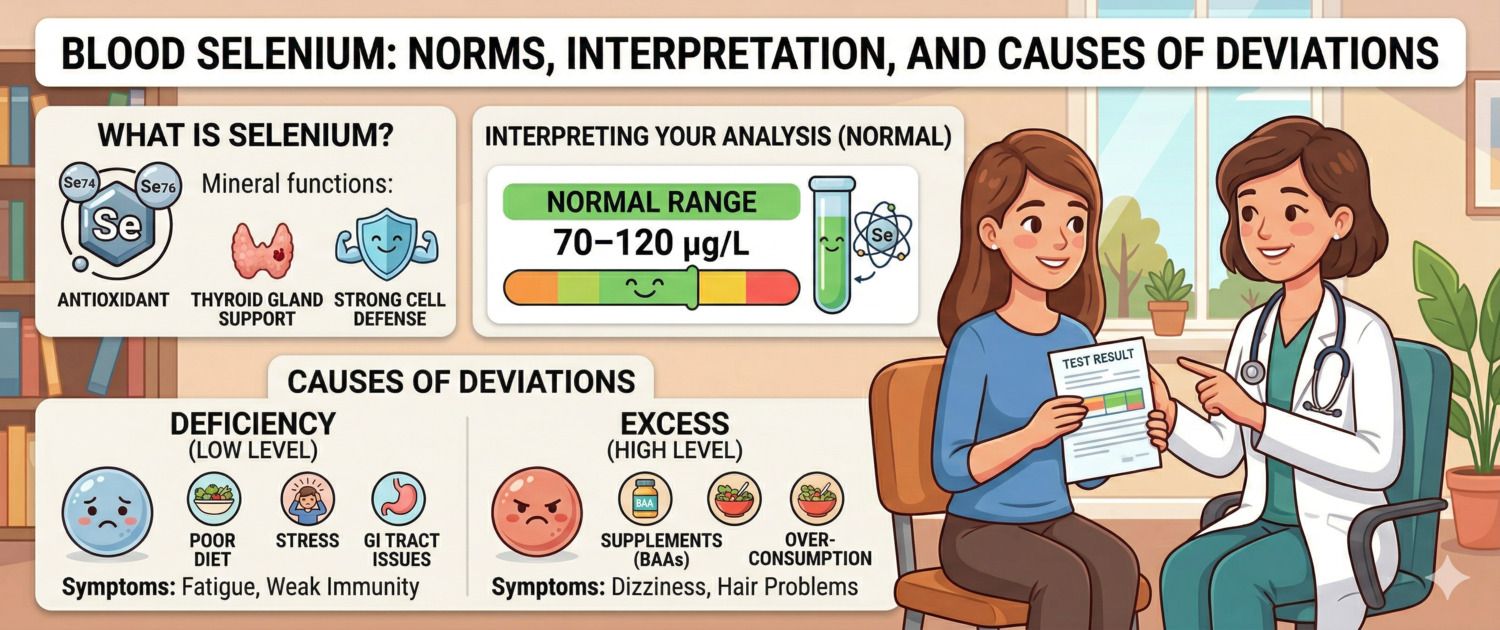
Fatigue, hair loss, frequent infections — these symptoms are rarely linked to a specific micronutrient deficiency. Yet blood selenium below the normal range can simultaneously weaken immunity, impair thyroid hormone activation and reduce the cell's antioxidant defences. This article explains what selenium does in the body, how to interpret your test result and when a low level requires medical attention.
Why the Body Needs Selenium
Selenium is an essential trace element that the body cannot synthesise — it must be obtained entirely from food. Its biological functions are carried out through selenoproteins, specialised proteins that incorporate the amino acid selenocysteine. Twenty-five selenoproteins have been identified in humans.
Key selenium functions: antioxidant defence through glutathione peroxidases, enzymes that neutralise lipid peroxides and protect cell membranes; activation of thyroid hormones — deiodinases that convert inactive T4 into active T3 contain selenium at their active sites; immune support for both innate and adaptive responses; anti-inflammatory activity through regulation of oxidative stress.
Picture a cell as a workshop where candles constantly burn — free radicals are the dripping wax. Selenium-containing glutathione peroxidases act as the cleaning crew, preventing a fire. Without them, oxidative stress accumulates and gradually damages proteins, DNA and cell membranes.
Selenium Normal Ranges for Adults and Children
Most laboratories measure selenium in plasma or serum using inductively coupled plasma mass spectrometry (ICP-MS) or atomic absorption spectrophotometry.
| Group | Normal range (µg/L) |
|---|---|
| Adults 18–60 years | 70–150 |
| Men over 60 years | 65–145 |
| Women over 60 years | 60–140 |
| Pregnant women | 60–130 |
| Children 1–14 years | 55–120 |
| Infants under 1 year | 40–100 |
Reference intervals vary between laboratories and methods — always compare your result against the range printed on your own report. Plasma selenium reflects current dietary intake, while erythrocyte selenium indicates long-term status over the preceding three to four months. When chronic deficiency is suspected, both measurements may be ordered.
How to Prepare for a Selenium Blood Test
The test requires fasting for at least eight hours before the blood draw. Avoid alcohol for 24 hours and strenuous exercise on the day of the test. If you are already taking selenium supplements, take them after the test — if you have completed a course, inform your doctor, as the result will reflect supplemented rather than baseline levels.
An important pre-analytical detail: blood must be collected into certified metal-free tubes. Standard rubber-stoppered tubes can contaminate the sample and artificially raise the result. Confirm with your laboratory that they use trace-element-grade collection tubes.
Causes and Symptoms of Selenium Deficiency
Selenium deficiency is the most clinically relevant finding when results fall outside the reference range.
Dietary deficiency is the leading cause in regions where soil selenium content is low — Central Asia, parts of Europe and certain areas of China. Crops grown on selenium-poor soil contain little of the element regardless of the plant species.
Malabsorption — inflammatory bowel disease, short bowel syndrome and chronic enteropathies impair micronutrient uptake. Low selenium often accompanies low vitamin D and other nutrients, which points to an absorption problem rather than diet alone.
Thyroid connection. Selenium deficiency slows the deiodinase-mediated conversion of T4 to active T3 and reduces antioxidant protection of thyroid cells, creating conditions for autoimmune inflammation. The link with Hashimoto's thyroiditis is well established: clinical trials have shown that selenium supplementation lowers anti-TPO antibody levels. In established hypothyroidism, correcting selenium deficiency does not replace levothyroxine but may improve wellbeing.
Symptoms. Selenium deficiency has no pathognomonic signs. The typical picture includes chronic fatigue and muscle weakness, diffuse hair loss and brittle nails, frequent infections with prolonged recovery, and cognitive fog. In severe endemic deficiency, dilated cardiomyopathy (Keshan disease) can develop — rare and geographically restricted.
Selenium Toxicity: Risks and Signs
Selenium is toxic in excess — its therapeutic window is considerably narrower than that of most vitamins. Plasma levels above 400 µg/L are considered a risk zone; above 1000 µg/L, frank toxicity is possible.
Causes of excess: uncontrolled high-dose supplementation, particularly with organic forms (selenomethionine); regular consumption of large amounts of Brazil nuts — a single nut provides 70–90 µg, a full day's requirement.
Signs of selenosis: garlic-like breath and body odour (dimethylselenide); heavy hair loss progressing to alopecia; brittle nails with white transverse bands (Mees' lines); nausea, diarrhoea and fatigue. Chronic toxicity can cause peripheral neuropathy.
Who Should Have Their Selenium Checked
Selenium testing is not part of standard screening panels but is indicated in specific clinical scenarios. Consider testing if you have: an autoimmune thyroid disease — your doctor has likely already ordered TSH and free T4, and selenium fits naturally into this evaluation; malabsorption syndrome or inflammatory bowel disease; unexplained fatigue, hair loss and frequent infections with a normal thyroid panel; a vegan or vegetarian diet with a limited food variety; pregnancy with suboptimal nutrition.
Do not self-prescribe supplements without a test: the symptoms of deficiency and toxicity partially overlap, and supplementing when levels are already adequate can push them into the toxic range.
Conclusion
Blood selenium is a focused but clinically valuable test — ordered not routinely but when there is a genuine reason: thyroid autoimmunity, malabsorption or a persistent deficiency syndrome without another explanation. A normal result closes the question. A low result calls for identifying the underlying cause before prescribing supplements. A high result means reviewing the dose of any selenium-containing products immediately. All correction decisions are made by a physician based on the full clinical picture.
For informational purposes only
This article is for informational purposes only and does not constitute medical advice, diagnosis, or treatment. Please consult a healthcare professional for medical guidance.