Tests Before Surgery: The Full List and Validity Periods
Reviewed by the LabReadAI medical team
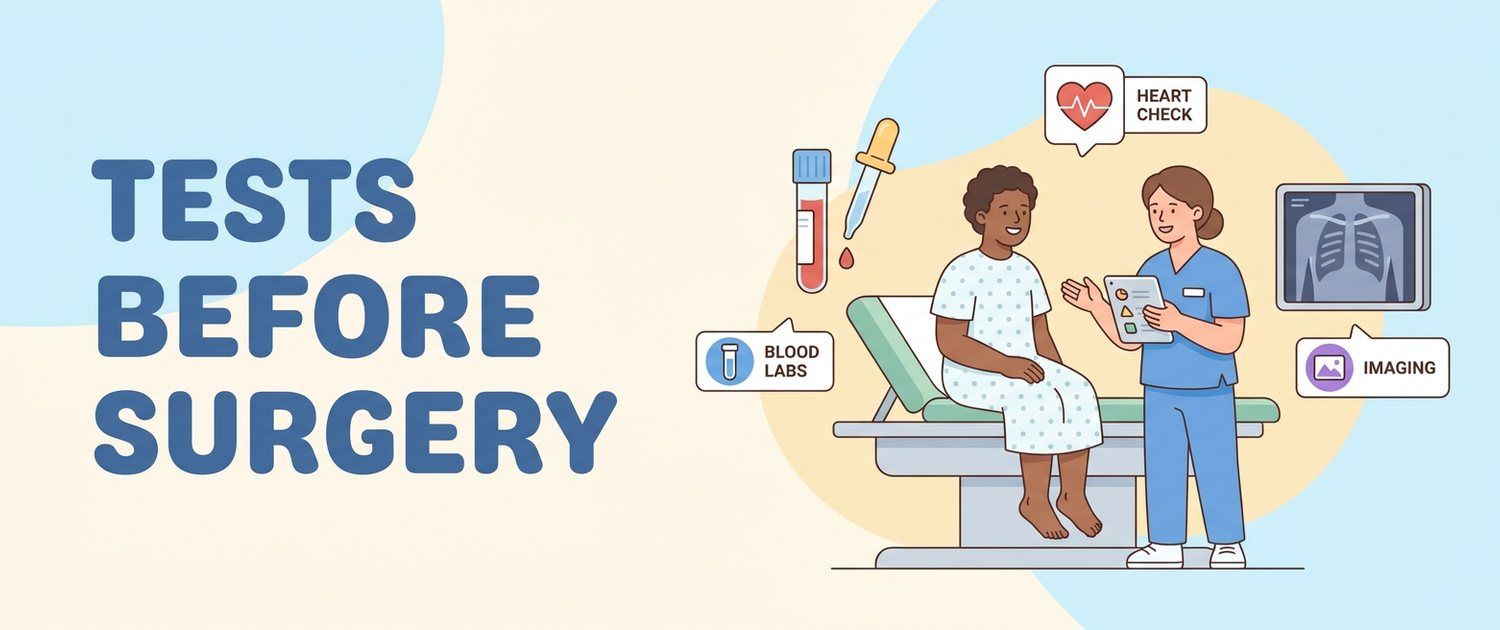
Before elective surgery a set of tests is always ordered — and that list can make your head spin. In fact the standard preoperative minimum is logical: it exists so that the surgery and anesthesia go safely. Let's go through which tests are taken before surgery, why each is needed and why they have different validity periods.
Why Tests Before Surgery Are Needed
The goal of the work-up is to confirm the body is ready for the operation and anesthesia: no hidden anemia or infection, normal blood clotting, working kidneys and liver, a stable heart. This lowers the risk of complications during and after surgery. So even when you feel well, tests before surgery are mandatory.
Complete Blood Count and Biochemistry
The core of the list is a complete blood count: it shows anemia, hidden inflammation and platelet levels. Biochemistry assesses glucose, creatinine (kidney function), liver values and electrolytes. These tests give an overall picture and help the anesthesiologist choose a safe approach.
Coagulation Panel and Blood Group
Before surgery it is important to know how the blood clots — for this a coagulation panel (coagulation test) is taken. Blood group and Rh factor are also determined in case a transfusion is needed. These data are part of the basic safety of any surgical operation.
Infection Screen: HIV, Hepatitis, Syphilis
As standard, blood is screened for HIV, hepatitis B and C, and syphilis. This is not about distrust of the patient but about safety: the operating room needs to know the infection status to organize the procedure correctly. More on the hepatitis B and C tests is in a separate article.
ECG, Chest Imaging and Urinalysis
Instrumental studies are added to the lab tests: an ECG (heart assessment, especially after a certain age), chest imaging or a chest X-ray, and a urinalysis (kidney function, hidden infection). The scope of instrumental studies depends on age, comorbidities and the type of surgery.
Validity Periods of Pre-Surgery Tests
Tests have different validity periods, and this is worth planning. Usually a complete blood count and urinalysis "live" about 10–14 days, biochemistry and the coagulation panel are also short-lived, while HIV, hepatitis and syphilis are often valid longer (frequently up to 3–6 months), and chest imaging up to a year. Exact periods are set by the clinic, so tests are not taken "far in advance".
Who Sets the List and What to Consider
The final list is approved by the surgeon and anesthesiologist based on the operation, age and chronic diseases — there is no universal "one-size" list. Some tests are taken fasting. If the reports are confusing, you can upload them for decoding, but the scope of the work-up and clearance for surgery are always decided by a doctor.
This article is for informational purposes only and does not replace a doctor's consultation. The exact list of tests before surgery and clearance are determined by the surgeon and anesthesiologist.
For informational purposes only
This article is for informational purposes only and does not constitute medical advice, diagnosis, or treatment. Please consult a healthcare professional for medical guidance.