D-dimer: What the Test Means and What the Result Shows
Reviewed by the LabReadAI medical team
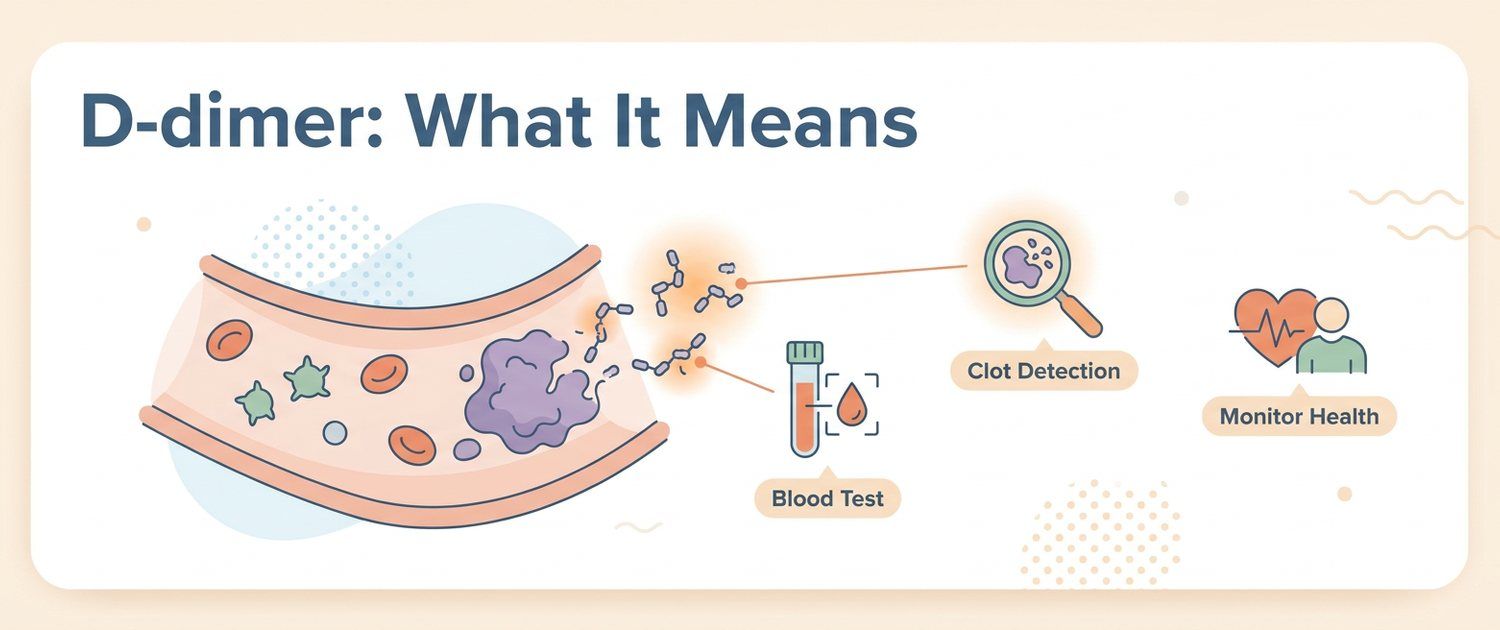
D-dimer often frightens: a result above normal is easy to mistake for "proof of a clot". In fact this test has a special nature — it rules out thrombosis well when the value is normal, but says little when high. Let's sort out what D-dimer means, what a high result shows and why a single number rarely decides the matter here.
What D-dimer Means and What It Shows
D-dimer is a fragment left after a fibrin clot breaks down. In other words, its appearance shows that somewhere in the body a clot formed and dissolved. But this process also happens normally and in many conditions, so the mere presence of D-dimer proves nothing yet.
What a High D-dimer Indicates
A high D-dimer indicates only that clotting activity is increased — and there are many causes for that. The test is sensitive (it reacts to almost any clot) but low-specificity (it reacts to much else too). So a "high D-dimer" is a signal to investigate, not a ready answer. It must be assessed together with symptoms and other tests.
Why the Test Rules Out Thrombosis Rather Than Confirms It
D-dimer's main value is in exclusion. If the value is normal, venous thrombosis (deep vein thrombosis, pulmonary embolism) is very unlikely — this is reliable. A high result, however, does not confirm a clot: imaging is needed (vascular ultrasound, CT). Doctors use this logic when weighing the probability of thrombosis.
Common Causes of a Rise Without a Clot
D-dimer naturally rises in pregnancy (more so as it progresses), in older age, with inflammation and infection, after surgery or injury, and with tumors. In all these cases a high value is not about a "hidden clot" but a background. So an isolated number without symptoms is almost never read as a diagnosis.
D-dimer in Pregnancy
In pregnancy D-dimer rises physiologically, so the usual "norms" apply poorly. A high value in a pregnant woman does not by itself mean thrombosis and is no cause for panic. The decision on whether extra tests are needed is made by a doctor accounting for gestational age and complaints.
How to Read the Result and What to Do Next
One looks not at the number itself but at the clinical situation: are there symptoms, pregnancy, recent surgery, inflammation. D-dimer is almost always interpreted together with fibrinogen and the rest of the coagulation panel, and the marker itself is described in the D-dimer section. If the report is confusing, you can upload it for decoding — the service explains the values in plain language.
When a D-dimer Test Is Ordered
The test is ordered when the probability of venous thrombosis must be assessed with matching symptoms, and in some other situations at a doctor's discretion. D-dimer is often part of the extended coagulation test panel. Testing "just in case" without indications is unwise — it causes many false alarms.
This article is for informational purposes only and does not replace a doctor's consultation. A D-dimer result is assessed by a specialist together with symptoms and other examinations.
For informational purposes only
This article is for informational purposes only and does not constitute medical advice, diagnosis, or treatment. Please consult a healthcare professional for medical guidance.