Preparing for a Colonoscopy: Diet, Prep and Bowel Cleansing
Reviewed by the LabReadAI medical team
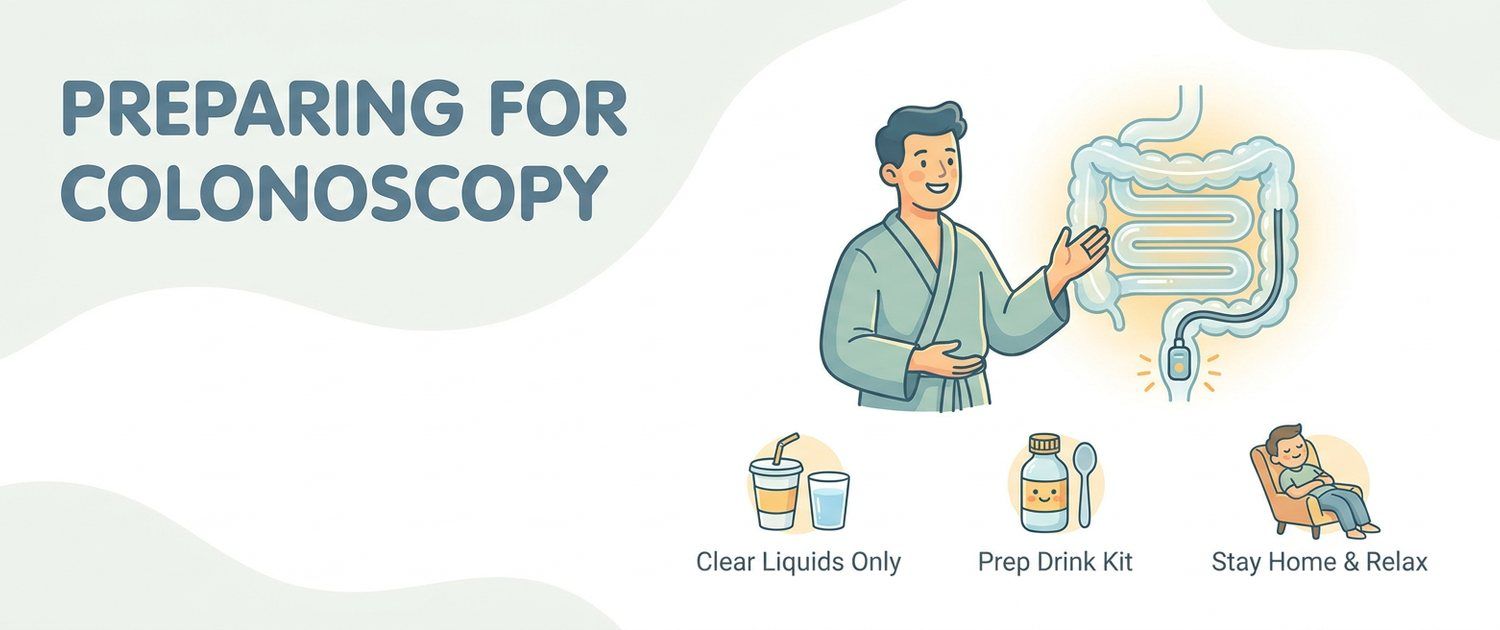
Preparing for a colonoscopy scares people more than the procedure itself: a confusing diet, liters of solution, the fear of "what if I'm not clean enough." In fact it is all logical, and once you understand each step, prep goes calmly. Let's go in order: the low-fiber diet, the bowel-cleansing prep, split-dose timing and how to know the prep worked.
Why Preparing for a Colonoscopy Matters
The doctor examines the bowel lining from the inside, and any food residue or stool blocks the view. Poor prep is the main reason an exam has to be stopped or repeated. So a clean bowel matters more than it seems: it decides whether the doctor sees a small polyp or an early change, including early signs of colorectal cancer. The good news is that correct prep almost always gives the result needed.
A Low-Fiber Diet 3 Days Before a Colonoscopy
Two to three days before, switch to a low-residue (low-fiber) diet — less fiber, which leaves "residue." Limit fresh vegetables and fruit with skins and seeds, greens, legumes, nuts, seeds, whole-grain bread and cereals, and mushrooms. This diet unloads the bowel in advance and makes the final cleansing easier. The diet prepares the ground, and the prep itself finishes the job.
What You May Eat and Drink Before the Procedure
The allowed list is what is easily digested and leaves no "traces": white bread and rusks, boiled lean meat, fish, eggs, low-fat broth, cottage cheese, rice, white-flour pasta, tea without milk. For drinks — water, light pulp-free juices, weak tea. Fluid intake during prep matters: drinking plenty helps both cleansing and how you feel. A colonoscopy differs from stool tests (for example for gut flora imbalance) — it is an inside view of the lining, not an assessment of the contents.
Bowel-Cleansing Prep: Polyethylene Glycol and Similar
The core of cleansing is a polyethylene-glycol-based prep: it is dissolved in a large volume of water and drunk to the schedule in the instructions. The solution is not absorbed but "flushes" the bowel, causing loose stool. The exact dose and schedule are always set by the doctor per the instructions — improvising here is pointless. It is best drunk cool, in small sips, with breaks.
Split Dose: Part in the Evening, Part in the Morning
The modern standard is a split dose: part of the prep is taken the evening before, and the second part in the morning on the day of the procedure, a few hours before it. This regimen is easier to tolerate and cleans better than the whole volume in one evening. The exact timing is calculated from the exam hour — check it in advance.
The Day Before a Colonoscopy: Only Clear Liquids
On the day before, solid food is replaced with clear liquids: water, light broth, tea without milk, light pulp-free juices, jelly without red or purple dye. Red and purple drinks are excluded — their color can be mistaken for blood. This "clear" day completes the unloading of the bowel before the prep. The logic of an "empty" organ links colonoscopy prep with preparing for an abdominal ultrasound.
How to Know the Prep Worked
The guide is simple: toward the end, the fluid from the bowel should be light and almost clear, without solid particles — like clean or slightly yellowish water. If the stool is still cloudy and full of residue, contact the clinic: sometimes extra fluid is needed. The report from the procedure is assessed by a doctor; if anything in it is unclear, you can upload the report for decoding and go through the wording in plain language.
This article is for informational purposes only and does not replace a doctor's consultation. The exact diet, prep and schedule are set by a specialist for your situation.
For informational purposes only
This article is for informational purposes only and does not constitute medical advice, diagnosis, or treatment. Please consult a healthcare professional for medical guidance.