Preparing for Ultrasound: How to Get Ready by Scan Type
Reviewed by the LabReadAI medical team
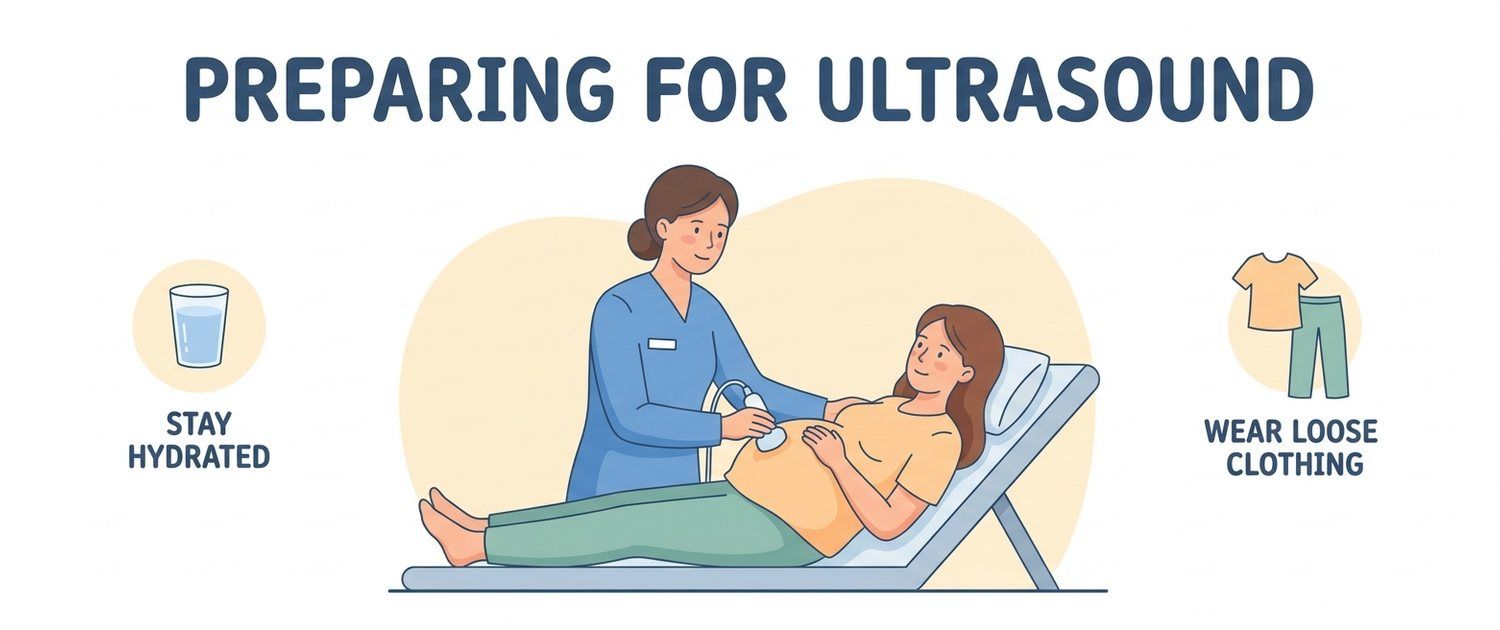
Ultrasound is a simple and safe study, but the result depends heavily on preparation. Gas in the bowel, an empty or overfull bladder can "hide" organs from the probe. The good news: the rules are simple and depend on the type of scan. Let's go through preparing for an ultrasound by type — abdomen, pelvis, thyroid and soft tissue.
Why Preparation for Ultrasound Matters
Ultrasound passes poorly through gas and well through fluid. So for some organs it is important to remove gas (bowel), and for others to fill the bladder so it "highlights" nearby structures. Correct preparation removes interference and makes the image clearer, and the doctor's read more accurate. It is worth spending a day on simple restrictions for this.
Preparing for Abdominal Ultrasound
This study needs the most noticeable preparation. An abdominal ultrasound is done fasting — no food for 8–12 hours, so the gallbladder is full and the stomach empty. For 2–3 days gas-forming foods (beans, cabbage, brown bread, fizzy drinks, milk) are limited. If you are prone to bloating, a doctor sometimes advises simethicone or sorbents.
Preparing for Pelvic Ultrasound: Full or Empty Bladder
Here it all depends on the approach. A transabdominal pelvic ultrasound is done with a full bladder — you drink about a liter of water an hour before and do not urinate, so the bladder "pushes aside" bowel loops. A transvaginal ultrasound, by contrast, is done with an empty bladder. Check in advance which approach is planned for you.
Thyroid and Soft-Tissue Ultrasound: No Preparation
The pleasant part: an ultrasound of the thyroid, lymph nodes, salivary glands, joints, muscles and soft tissue usually needs no preparation. You can eat, drink and come at a convenient time. The only thing — for a neck ultrasound, open-collar clothing is more comfortable. The same goes for a breast ultrasound and superficial structures.
What You Can and Cannot Eat and Drink Before an Ultrasound
Before an abdominal ultrasound, cut gas-forming food a couple of days ahead, and on the day do not eat or drink (water by agreement). Before a transabdominal pelvic ultrasound, on the contrary, you need to drink water and not urinate. For an ultrasound with no preparation there are no restrictions. Do not smoke before an abdominal ultrasound — it can make the gallbladder contract.
Practical Tips and What to Bring
Bring your referral, results of past ultrasounds (to compare over time) and a towel with wipes if not provided. Come a little early, wear comfortable clothes. If preparing for a pelvic ultrasound, time it to arrive with a full bladder. For a bowel study the preparation is more serious — like for a colonoscopy.
What to Do with the Ultrasound Result
An ultrasound report is a description, not a diagnosis: findings are assessed by the treating doctor together with complaints and other studies. Do not be alarmed by unfamiliar words in the report. If the image or report is unclear, you can upload the scan for decoding and come to the doctor with clear questions.
This article is for informational purposes only and does not replace a doctor's consultation. The exact preparation requirements depend on the type of ultrasound and the machine — check them with the clinic.
For informational purposes only
This article is for informational purposes only and does not constitute medical advice, diagnosis, or treatment. Please consult a healthcare professional for medical guidance.