Ovarian Cyst: Types, Symptoms and Pelvic Ultrasound
Reviewed by the LabReadAI medical team
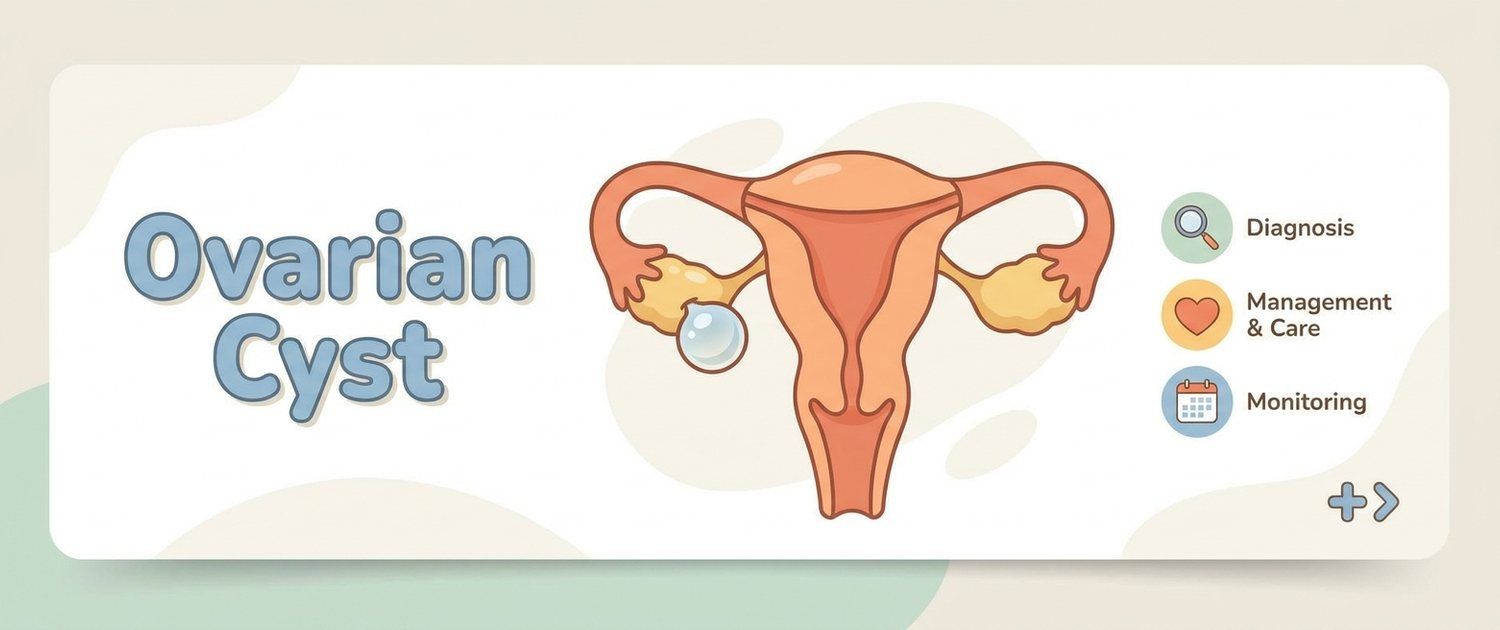
The words "ovarian cyst" on an ultrasound report sound alarming, but most often it is a harmless finding that resolves on its own. A cyst is a fluid-filled sac, and most such lesions in women of childbearing age are functional. Let's calmly go through the types of ovarian cyst, which symptoms and sizes matter, what an ultrasound shows and when you really do need to see a doctor quickly.
What an Ovarian Cyst Is
An ovarian cyst is a fluid-filled sac on or inside the ovary. Most cysts are functional: they form during the normal menstrual cycle, when a follicle does not burst or does not dissolve in time, and they resolve on their own within one to three cycles. This is not a tumor or cancer but a common and usually benign finding.
Types of Ovarian Cysts
Functional cysts are the most common: follicular (from an unburst follicle) and corpus luteum cysts. Separately there are cysts that do not resolve on their own: endometrioid ("chocolate", linked to endometriosis), dermoid (congenital, containing various tissues) and cystadenomas. The type of cyst determines management, and they are told apart by the ultrasound picture.
Ovarian Cyst Symptoms
Most often an ovarian cyst causes no symptoms and is found by chance on ultrasound. When symptoms are present, they are a dragging pain or heaviness in the lower abdomen on one side, discomfort during intimacy, sometimes cycle disturbances. Such sensations are common and do not by themselves mean danger. The concern is not the symptoms but their sudden worsening.
Pelvic Ultrasound for a Cyst
The main method is a pelvic ultrasound, usually transvaginal. It shows the size of the cyst, its structure (simple fluid or with solid components), blood flow, and lets a simple functional cyst be told from one that needs follow-up. Simple thin-walled cysts are usually safe; septa, solid growths and active blood flow are the concern. If the report is unclear, you can upload the scan for decoding — the service explains the wording in plain language.
Sizes and What Needs Attention
Small simple cysts (usually up to 3–5 cm) are most often watched: they are reviewed on ultrasound after one to three cycles and often disappear. Attention is needed for cysts that grow, are large, do not resolve over time or have a complex structure. The number of centimeters alone is not a verdict: a doctor assesses size together with structure, age and symptoms.
The CA-125 Marker for a Cyst
Sometimes, for complex cysts or after menopause, the CA-125 tumor marker is ordered. It is important to understand that it is non-specific and rises in many benign conditions — endometriosis, fibroids, inflammation, even during menstruation. So CA-125 is never read apart from the ultrasound and the clinical picture; on its own it neither confirms nor rules out danger.
Red Flags: When to See a Doctor Urgently
Sudden severe pain in the lower abdomen, especially with nausea, vomiting, dizziness or fever, may mean torsion or rupture of a cyst — an emergency requiring urgent help. See a gynecologist on a planned basis for persistent pain, a growing cyst or a mass after menopause. Similar symptoms are also caused by uterine fibroids and other conditions, so a doctor sorts it out.
This article is for informational purposes only and does not replace a doctor's consultation. The type of ovarian cyst and management are assessed by a specialist from the ultrasound, age and symptoms.
For informational purposes only
This article is for informational purposes only and does not constitute medical advice, diagnosis, or treatment. Please consult a healthcare professional for medical guidance.