Thyroid Nodules: TIRADS, Biopsy and When to Worry Guide
Reviewed by the LabReadAI medical team
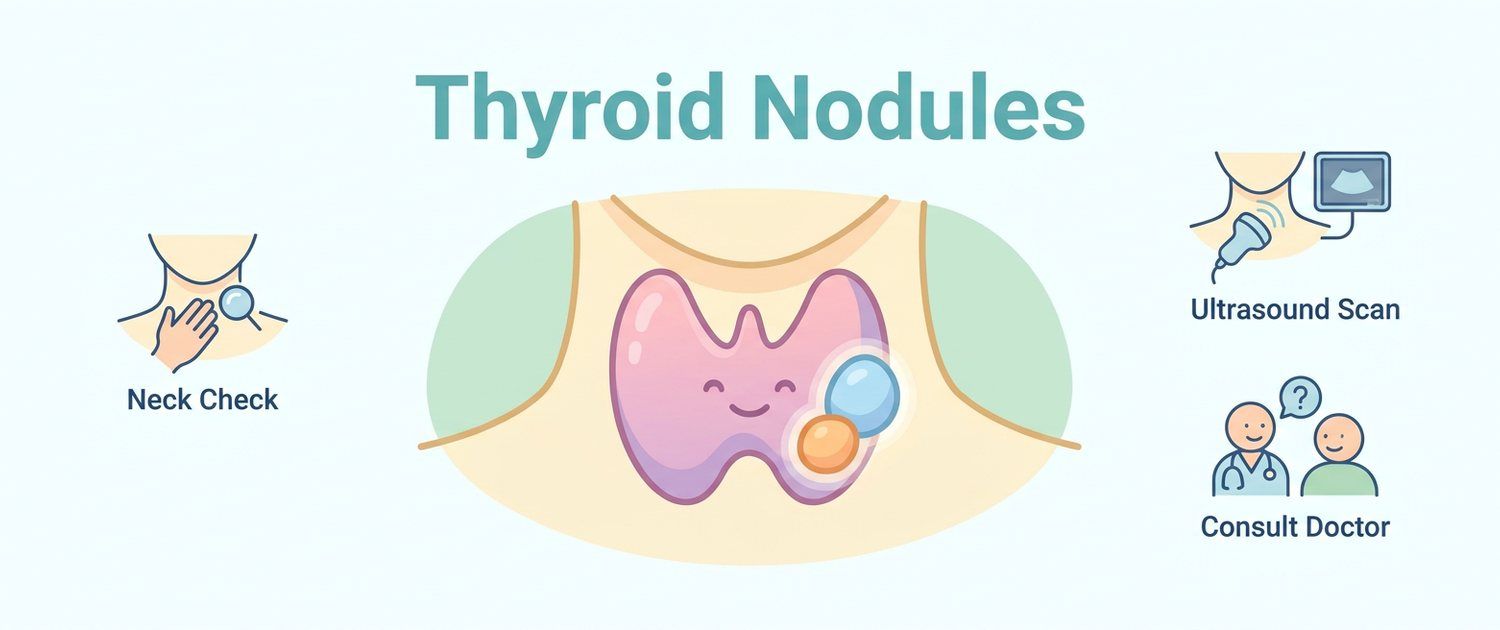
"You have a thyroid nodule" in an ultrasound report frightens nearly everyone. The good news to start with: nodules are found very often (in a large share of adults), and the vast majority are benign. Thyroid cancer among nodules is uncommon. Let's calmly go through how nodules are rated by the TIRADS system, when a biopsy is really needed, and why TSH is checked at the same time.
Thyroid Nodules: How Common Are They
A nodule is an area of tissue in the thyroid gland that differs from the surroundings. With age and high-resolution ultrasound such findings are very common, especially in women. Most are benign colloid nodules or cysts that pose no threat to health. The mere fact of a nodule is not yet a disease and almost never a verdict.
The TIRADS System on Ultrasound: Rating Risk
So as not to "fear every nodule", doctors use the TIRADS system. On ultrasound a nodule is rated by features: composition (fluid or solid), echogenicity, shape, margins, calcifications. Each feature scores points, and the sum sets a suspicion category — from clearly benign to needing attention. It is TIRADS together with size that hints whether a biopsy is needed. More on the examination itself is in the article on thyroid ultrasound.
When a Biopsy (Fine-Needle Aspiration) Is Needed
A biopsy (fine-needle aspiration, FNA) is not done for everyone. Indications combine the TIRADS category and nodule size: the higher the suspicion, the smaller the size that already warrants a biopsy, and vice versa — a large but clearly benign nodule can often just be monitored. It is an outpatient thin-needle procedure, not surgery. An endocrinologist makes the decision.
What a Nodule Biopsy Shows
The goal of a biopsy is to understand the nature of the nodule's cells: benign, suspicious, or needing further work-up. In most cases the result confirms benignity, and the person continues to live with the nodule under monitoring. Even an indeterminate result is not a cancer diagnosis but a reason for clarification. There is no need to panic while awaiting a biopsy — statistically the outcome is more often favorable.
Nodule and Gland Function: Why Check TSH
A nodule may not only "sit quietly" but also affect gland function. So when a nodule is found, TSH — the main function marker — is checked. If the nodule produces excess hormones, hyperthyroidism is possible; with reduced function — hypothyroidism. The full set of tests with a nodule is described in which tests to check the thyroid.
Monitoring: What Happens Next
For most nodules the approach is monitoring: a follow-up ultrasound at an interval set by the doctor to confirm the nodule is not growing or changing character. Active steps are needed only with significant growth, suspicious features, or a function disturbance. So "living with a nodule" under control is the norm, not a postponement of trouble.
What to Do with a Nodule Report
Do not conclude cancer from the word "nodule" on an ultrasound report. What matters is the TIRADS category, size, trend and gland function — an endocrinologist assesses them together. If the report is confusing, you can upload the scan for decoding — the service explains the category and features in plain language and suggests questions for your doctor.
This article is for informational purposes only and does not replace a doctor's consultation. Thyroid cancer among nodules is uncommon; a specialist decides on management of a nodule.
For informational purposes only
This article is for informational purposes only and does not constitute medical advice, diagnosis, or treatment. Please consult a healthcare professional for medical guidance.