Ultrasound for Dogs and Cats: What It Shows and How to Read It
Reviewed by the LabReadAI medical team
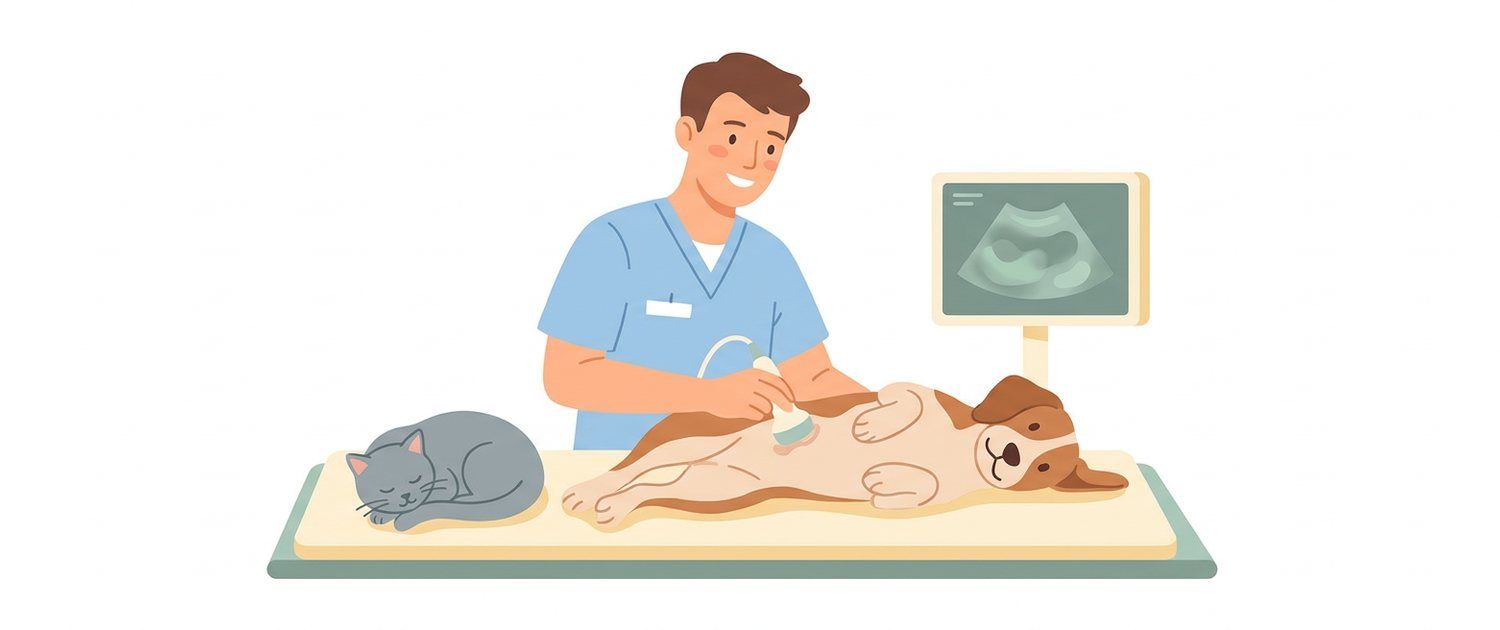
Ultrasound is one of the main ways to look inside a pet without pain or radiation. The vet sees the structure of organs, and the owner gets a report full of unfamiliar words. Let's break down what an ultrasound shows in dogs and cats, how to prepare the animal and how to read the result.
What an Ultrasound Shows in Dogs and Cats
Most often an abdominal ultrasound is done: liver, gallbladder, spleen, kidneys, bladder, GI tract, adrenal glands. Separately, a heart ultrasound (echocardiography) for murmurs, coughing, breathlessness. Ultrasound shows structure (size, shape, masses, fluid, stones) but not organ function — that is assessed by blood tests, so the methods complement each other.
Why a Pet Is Referred for an Ultrasound
Typical reasons: vomiting and refusing food, changes in blood tests (for example rising kidney or liver markers — see dog blood test), suspected stones or obstruction, pregnancy monitoring, a routine check-up in older animals, heart murmurs. How the scan runs and what exactly is examined is covered per species in dog abdominal ultrasound and cat abdominal ultrasound. Hamsters, rabbits, guinea pigs, parrots and tortoises are scanned differently — that is small pet imaging.
How to Prepare a Dog or Cat for an Ultrasound
- Abdomen: light fasting of 8–12 hours is preferred (shorter for small and young animals — check with the clinic) so gas and food do not block the view; sometimes you are asked not to let the pet urinate before a bladder scan.
- Fur: the area is usually shaved — this is normal and needed for probe contact.
- Calm: stress interferes; anxious animals sometimes need light sedation — the vet decides.
Common Phrases in the Report
| Phrase | What it usually means |
|---|---|
| Homogeneous structure, smooth contours | Normal |
| Increased liver echogenicity | Non-specific — assessed with blood tests |
| Calculi (stones) in kidneys/bladder | Stones — needs the vet's plan |
| Free fluid in the abdomen | The cause must be found |
| Thickened intestinal/stomach wall | Inflammation or other — clarified |
| Mass / space-occupying lesion | Needs further work-up (often biopsy) |
"Diffuse changes" and "increased echogenicity" are non-specific descriptions, not a diagnosis: they are interpreted together with tests and the exam.
Heart Ultrasound (Echo) in Pets
Echocardiography is done for murmurs, coughing, fainting, breathlessness. It assesses heart chambers, valves and contractility — what a regular ultrasound and blood tests cannot show. In cats, cardiomyopathies often stay hidden for a long time, so echo matters when suspected. What exactly is measured on echo and why a cardiogram is added is covered in dog heart ultrasound and ECG.
When to See a Vet Urgently
Urgently — for free fluid with worsening condition, suspected obstruction or torsion, a large mass, an acute abdomen, severe breathlessness. If you have both tests and ultrasound, they are read together; feline blood norms are in cat blood test, and a common reason for ultrasound is covered in vomiting in dogs.
To understand your pet's ultrasound report in plain language, upload it (PDF or photo) to the pet imaging interpretation service: the AI will explain the phrasing for the species. This helps you understand the result but does not replace a vet.
Ultrasound cannot see everything: the soft tissue of the head, the spine and small joint structures stay beyond it, and the vet then moves to cross-sectional imaging — how it differs and when a pet is referred for it is covered in MRI and CT in dogs and cats.
This article is informational. Diagnosis and treatment of your pet are the job of a veterinarian.
For informational purposes only
This article is for informational purposes only and does not constitute medical advice, diagnosis, or treatment. Please consult a healthcare professional for medical guidance.