Why a Cat Is Not Eating: Causes, Risks and What Tests
Reviewed by the LabReadAI medical team
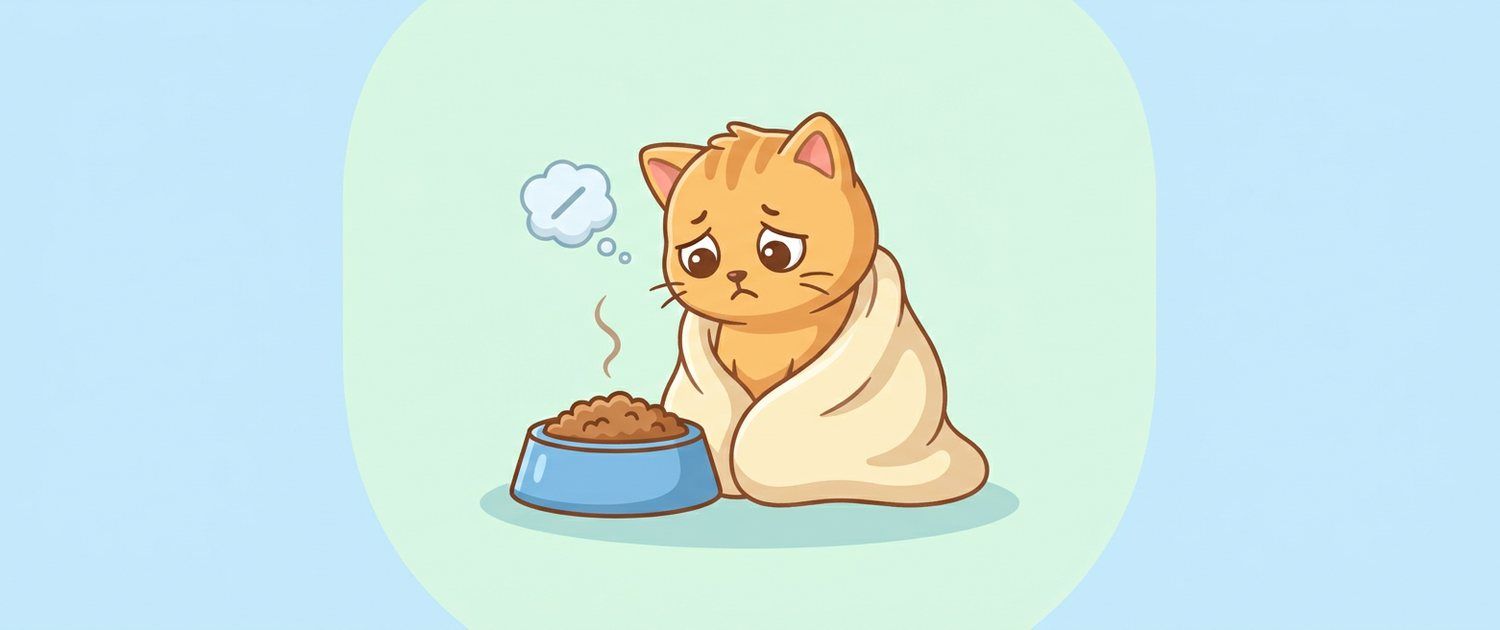
In cats, refusing food is more dangerous than it seems: even a few days of fasting can trigger hepatic lipidosis (fatty liver), especially in overweight cats. So "let's wait, it will eat" is a risky approach. Let's break down why a cat is not eating, why it is dangerous and what tests help find the causes.
Why a Cat Is Not Eating: Common Causes
- Stress and environment: a move, a new pet, a food change, a dirty bowl next to the litter tray.
- Teeth and pain: dental and gum disease, pain anywhere; an indirect sign of mouth pain is cat drooling or the cat approaching the bowl and walking away.
- GI tract: hairballs, a foreign body, gastritis, vomiting and diarrhoea.
- Internal disease: kidneys (CKD common in cats), liver, pancreas, hyperthyroidism.
- Infections and intoxication.
Why Refusing Food Is Dangerous in a Cat
The main danger is hepatic lipidosis: when a cat is not eating, the body mobilises fat, the liver cannot process it and liver failure develops. It can begin within just 2–3 days of fasting, which is why refusing food is taken more seriously in cats than in dogs.
When to See a Vet Urgently
Urgently if the cat:
- is not eating for more than a day (completely), and a kitten — more than 12 hours;
- is not eating and lethargic, hiding, with vomiting, diarrhoea or yellow gums;
- drinks but is not eating for over a day — still warrants a work-up;
- is rapidly losing weight or refusing even favourite food.
What Tests to Run
Baseline — a complete blood count and biochemistry focused on the liver and kidneys (key organs in cats); their breakdown is in cat blood test. Organ structure and foreign bodies are shown by ultrasound for dogs and cats. If there is vomiting/diarrhoea, see vomiting and diarrhoea in cats. Refusing food rarely comes alone: how the pairing with apathy is read is covered in a lethargic cat, and weight lost on a kept appetite is a separate scenario — see a cat losing weight.
What to Do at Home (No Red Flags)
If the cat is active and skipped one meal: remove stress factors, offer warm aromatic food (warming boosts the smell), ensure clean water and a quiet place. Do not deliberately starve the cat and do not give human medicines. No appetite beyond a day — see a vet, do not delay.
To understand your pet's tests in plain language, upload the form (PDF or photo) to the pet results interpretation service. This helps you understand the result but does not replace a vet.
Once the cat eats again, the question is what to feed: fussiness often rests on the wrong food, and how it is selected is in choosing food for a cat. If you notice other changes besides the refusal, describe the whole picture on the cat symptoms page — the range of causes narrows faster that way.
This article is informational. Diagnosis and treatment of your pet are the job of a veterinarian.
For informational purposes only
This article is for informational purposes only and does not constitute medical advice, diagnosis, or treatment. Please consult a healthcare professional for medical guidance.