Preeclampsia: Symptoms, Signs and What Tests to Run
Reviewed by the LabReadAI medical team
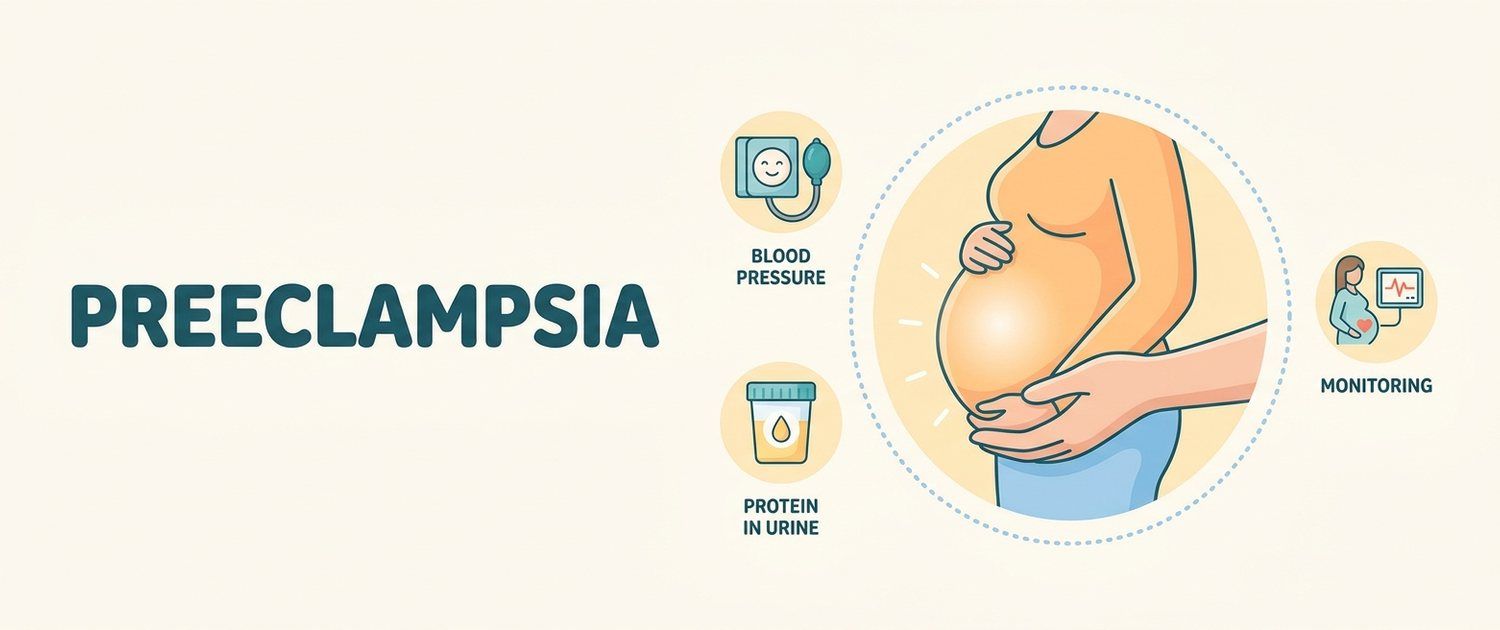
Preeclampsia is a dangerous complication of the second half of pregnancy, in which blood pressure rises and organs suffer. Its danger is that it often starts without symptoms yet can develop fast. Let's break down the early signs of preeclampsia, which tests catch it and when not to delay.
What Preeclampsia Is
Preeclampsia is the combination of high blood pressure (≥140/90) and organ involvement (most often protein in urine) after the 20th week of pregnancy. It is a systemic condition dangerous to both mother and baby; the extreme form — eclampsia (seizures) — is life-threatening.
Early Symptoms and Signs
It is often silent, but warning signs include:
- persistently high blood pressure;
- marked, rapidly increasing swelling (face, hands) — see swelling in pregnancy;
- severe headache, flashing spots, vision changes;
- upper abdominal pain (under the right ribs);
- sudden weight gain from fluid retention.
Which Tests and Investigations
Key are blood pressure measurement and protein in urine (protein in urine). Additionally assessed: complete blood count (platelets), liver tests, creatinine, sometimes specific markers (sFlt-1/PlGF ratio). These are part of the overall plan — what tests are done in pregnancy. With high pressure, the fetus is monitored by ultrasound and CTG.
Why It Is Dangerous and Who Is at Risk
Uncontrolled, preeclampsia leads to eclampsia, placental abruption and fetal growth restriction. Risk is higher with a first pregnancy, prior preeclampsia, chronic hypertension, diabetes, obesity, multiple pregnancy, age 35+. Such women get intensified monitoring and sometimes prophylaxis.
When to See a Doctor Urgently
Immediately (emergency): blood pressure 160/110 or higher, a severe headache with vision changes, pain under the right ribs, sudden swelling, seizures. Do not wait — preeclampsia can develop rapidly.
To understand your tests (pressure, protein, liver, platelets) in plain language, upload the form (PDF or photo) to the lab results interpretation service. This helps you understand the result, but with alarming signs see a doctor at once.
This article is informational. Diagnosis and treatment of preeclampsia are the doctor's job.
For informational purposes only
This article is for informational purposes only and does not constitute medical advice, diagnosis, or treatment. Please consult a healthcare professional for medical guidance.