Fetal Movements: When They Start, Norms and How to Count
Reviewed by the LabReadAI medical team
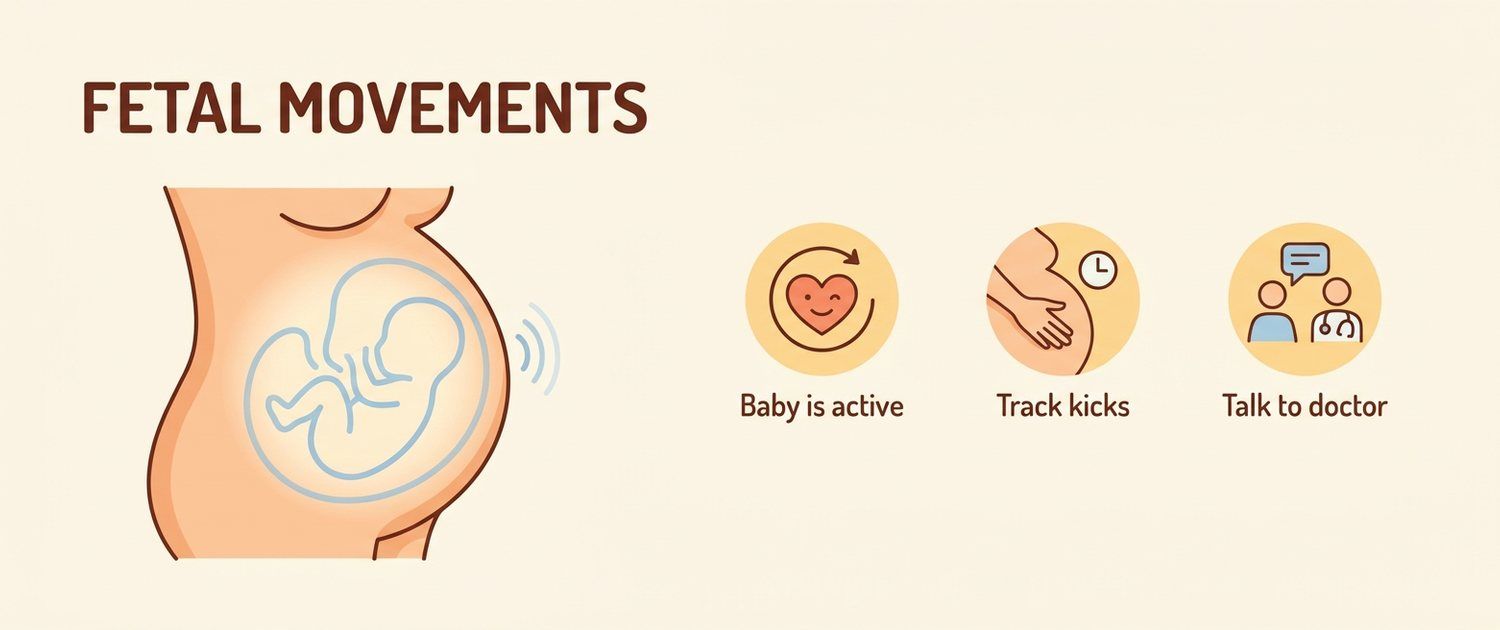
A baby's movements are one of the most touching moments of pregnancy and, at the same time, an important signal of their wellbeing. Let's break down at what stage fetal movements begin, how many there should be and when a drop in movements is a reason to see a doctor urgently.
When Movements Begin
Most often the first fetal movements are felt at 18–22 weeks. In women with previous pregnancies and slimmer women — sometimes earlier (from 16 weeks); in first pregnancies — a little later. At first it is a light "flutter" easily confused with the bowel.
How Many Movements Are Normal
Before 28 weeks movements are irregular — there is no need to count strictly. From the third trimester the baby settles into a rhythm: alternating sleep (up to ~40–60 minutes without movement) and activity. What matters is not an exact number but the activity usual for your baby and its day-to-day consistency.
How to Count Movements
The "count to 10 movements" method is popular: choose a calm time (often in the evening, after eating, lying on your side) and note movements. Usually 10 episodes are reached within an hour or two. If the baby is quiet for a while — first eat, lie on your side and watch.
When a Decrease or Absence Is Dangerous
A warning sign is a noticeable decrease or absence of movements in the third trimester compared with the usual rhythm. If after eating and resting on your side movements are still few — do not wait until morning, contact a doctor or maternity unit: they will assess the heartbeat and do a CTG.
When to See a Doctor
Urgently: the baby moves noticeably less or has gone quiet; sharp vigorous movements followed by stillness. It is fine to "play it safe" and get checked. Movements are assessed together with CTG and ultrasound; see also pregnancy week by week.
If you are worried about your baby and want to understand the exams, describe the situation or upload the report to the symptom review service. But with no movements — see a doctor at once, without delay.
This article is informational. Assessing the baby's condition is the doctor's job.
For informational purposes only
This article is for informational purposes only and does not constitute medical advice, diagnosis, or treatment. Please consult a healthcare professional for medical guidance.