Uterine Tone in Pregnancy: Symptoms, Causes and What to Do
Reviewed by the LabReadAI medical team
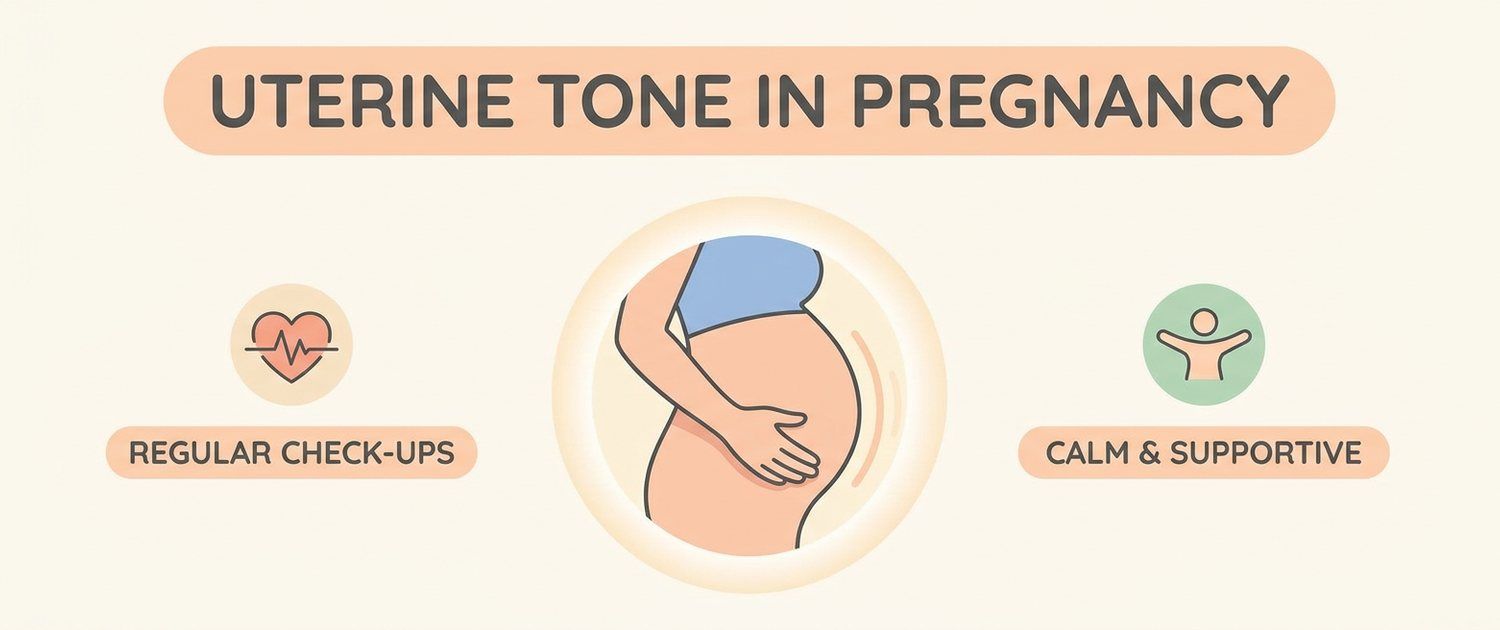
"Uterine tone" is a common note in a pregnant woman's chart and a common cause of worry. Sometimes it is harmless tightening, sometimes a sign that needs attention. Let's break down what uterine tone in pregnancy is, how to recognise it by symptoms and what to do.
What Uterine Tone Is
The uterus is a muscle, and its periodic contractions are normal. Increased tone (hypertonus) is when the muscle tightens more often and strongly than usual. Brief tone on its own (from movement, a full bladder, orgasm, stress) is usually not dangerous.
Symptoms: How to Recognise It
- a feeling that the belly "hardens", becomes firm;
- tugging pain in the lower abdomen or lower back, like period pain;
- a feeling of pressure or heaviness. Late on there are Braxton-Hicks contractions — irregular, painless, resolving at rest; this is normal.
Causes of Increased Tone
Physiological (exertion, a full bladder, stress, constipation) and ones needing attention (infections, polyhydramnios, uterine features). Persistent painful tone with discharge can be a sign of threat — see threatened miscarriage.
What to Do with Tone
If tone is brief, without pain or discharge: lie down, relax, empty the bladder, reduce exertion and stress, take a warm (not hot) shower. Do not prescribe yourself medicines — antispasmodics and others only on a doctor's recommendation.
When to See a Doctor Urgently
Immediately: regular painful contractions, tone with bloody or watery discharge (see discharge in pregnancy), severe pain, no relief at rest, especially before 37 weeks (preterm birth risk). Tone is assessed with an exam, ultrasound and tests — what tests are done in pregnancy.
If you want to make sense of your sensations, describe them in the symptom assessment service: it suggests what it might be and what to do. It is not a diagnosis; with alarming signs, see a doctor.
This article is informational. Diagnosis and treatment in pregnancy are the doctor's job.
For informational purposes only
This article is for informational purposes only and does not constitute medical advice, diagnosis, or treatment. Please consult a healthcare professional for medical guidance.