Threatened Miscarriage: Signs, Symptoms and What to Do
Reviewed by the LabReadAI medical team
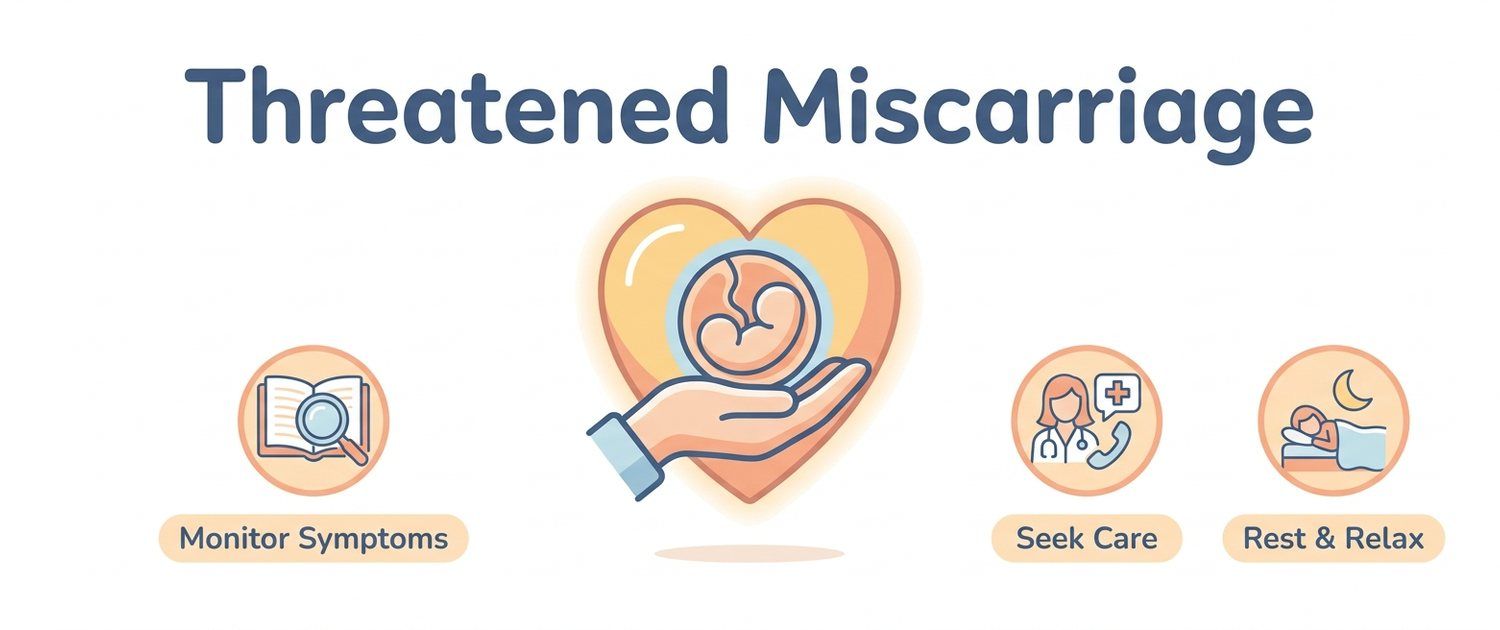
A "threatened miscarriage" is a diagnosis that frightens, but in many cases the pregnancy can be saved. It is important to recognise the warning signs in time and seek help. Let's break down the symptoms of a threatened miscarriage, how it is examined and what to do.
What a Threatened Miscarriage Is
It is a condition with a risk of loss, but the pregnancy is still developing and the cervix is closed. Early on it is called a threatened miscarriage, later a threat of preterm birth. Much depends on the cause and timely help.
Symptoms: Lower Pain, Bloody Discharge and Uterine Tone
The main warning symptoms:
- tugging or cramping pain in the lower abdomen and lower back;
- bloody or brown discharge (see discharge in pregnancy);
- a sense of uterine tone (the belly "hardens") — see uterine tone.
Any of these, especially pain plus spotting, is a reason to see a doctor urgently.
How It Differs from a Miscarriage
With a threat the pregnancy is still maintained (there is a heartbeat, the cervix is closed), and there is a chance to keep it. With a miscarriage in progress the process is already underway. A doctor tells them apart by examination, ultrasound and the hCG trend — so self-diagnosis does not work here.
How It Is Examined
Complaints, an examination, an ultrasound (heartbeat, tone, the state of the cervix and placenta) and, if needed, tests are assessed — hCG, progesterone (progesterone in pregnancy). The management (monitoring, treatment, hospitalisation) is decided by the doctor.
What to Do and When It Is Urgent
With pain and bloody discharge — do not delay: see a doctor or go to hospital. Immediately (emergency): heavy bleeding, sharp pain, contractions before term, waters breaking. Until examined — rest, no exertion or hot baths.
To understand your tests in plain language, upload the hCG form (PDF or photo) to the lab results interpretation service. This helps you understand the numbers, but with alarming symptoms — see a doctor at once.
This article is informational. Diagnosis and management of a threat are the doctor's job.
For informational purposes only
This article is for informational purposes only and does not constitute medical advice, diagnosis, or treatment. Please consult a healthcare professional for medical guidance.