Missed Miscarriage: Signs, Symptoms, Causes and Diagnosis
Reviewed by the LabReadAI medical team
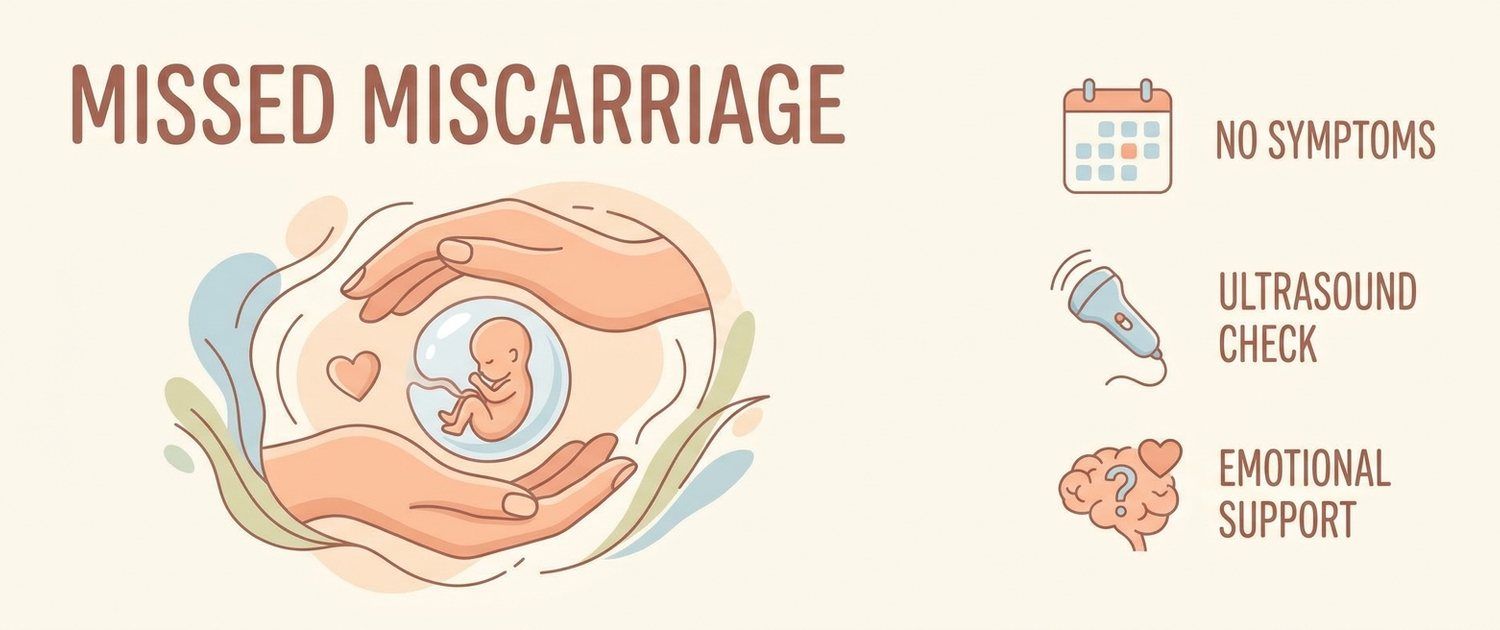
A missed (non-developing) miscarriage is when the embryo stops developing but the pregnancy does not end on its own straight away. Its danger is that it often runs without obvious symptoms. Let's break down the signs of a missed miscarriage, when it happens and how it is detected.
What a Missed Miscarriage Is
In a missed miscarriage the embryo (or fetus) stops developing, but the miscarriage does not happen at once — the body may still "behave" as pregnant for a while. It most often occurs in the first trimester. It is a hard event but, in the vast majority, a chance occurrence, not the woman's "fault".
Signs and Symptoms
Often there are no symptoms, and a missed miscarriage is found on a routine ultrasound. Possible signs:
- disappearance of pregnancy signs (toxicosis suddenly stopped, breasts softer) — see first signs of pregnancy;
- spotting/bloody discharge, tugging pain (see discharge in pregnancy);
- on ultrasound — no heartbeat or size not matching the dates.
Loss of toxicosis alone is not a diagnosis (it eases by 12–14 weeks anyway) — it is assessed in combination.
How It Is Detected: Ultrasound and hCG
The main method is ultrasound (ultrasound in pregnancy): no heartbeat with a sufficient embryo size. Additionally, the hCG trend: in a missed miscarriage it stops rising or falls. The diagnosis is made not from one measurement but from a repeat and the whole picture.
When It Happens
Most often in the first trimester (up to 12–13 weeks), less often later. Causes vary (most often chromosomal chance in the embryo, less often infections, hormonal, thrombophilia). After a missed miscarriage, a work-up helps find the cause, especially with recurrence.
What to Do and When to See a Doctor
With suspicion (pregnancy signs gone, discharge/pain appeared) see a doctor and have an ultrasound without delay. A confirmed missed miscarriage needs medical management. After — a pause and a work-up before the next attempt; the general list is in what tests are done in pregnancy.
To understand the hCG trend, upload the forms (PDF or photo) to the lab results interpretation service: the AI will explain the values. This helps you understand the numbers, but the diagnosis is made by the doctor from ultrasound and exam.
This article is informational. Diagnosis and management are the doctor's job.
For informational purposes only
This article is for informational purposes only and does not constitute medical advice, diagnosis, or treatment. Please consult a healthcare professional for medical guidance.