Ectopic Pregnancy: Signs, Symptoms and the Role of hCG
Reviewed by the LabReadAI medical team
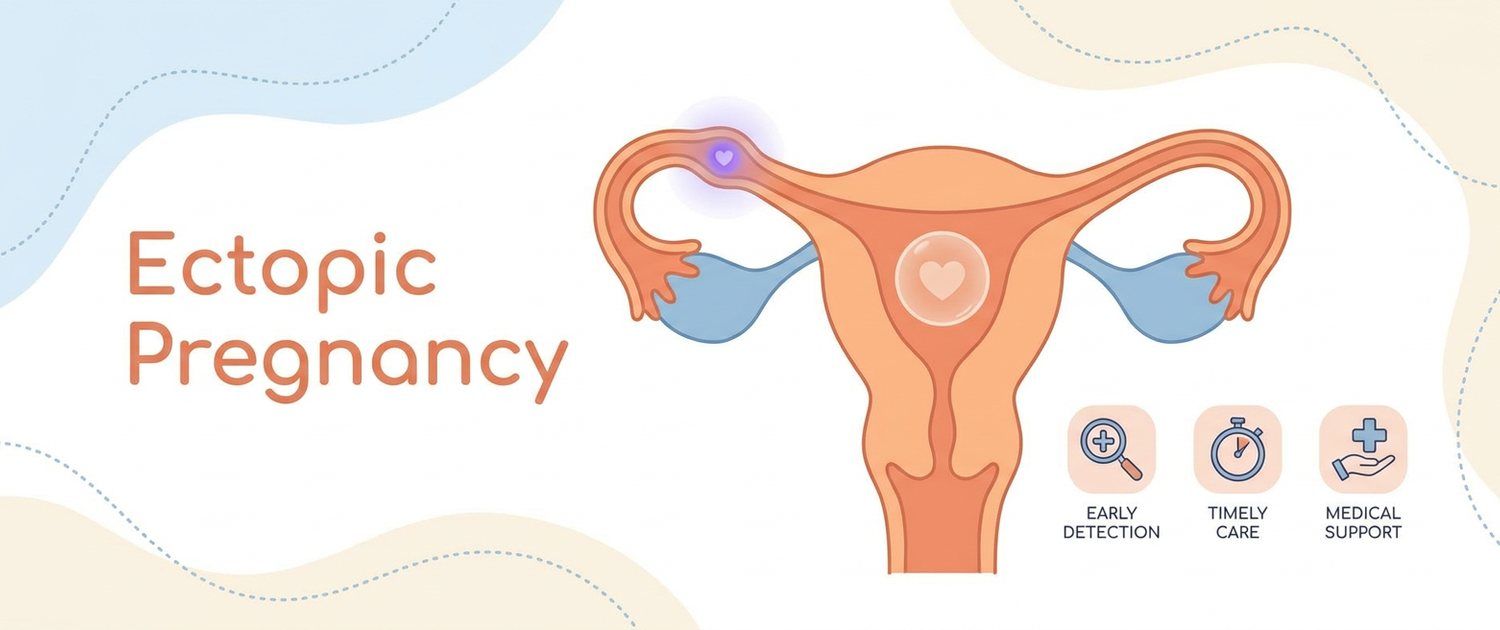
An ectopic pregnancy is when the fertilised egg implants outside the uterus (most often in the fallopian tube). It cannot develop normally and is life-threatening if it ruptures. So it is important to know the early signs of an ectopic pregnancy and how it is recognised by hCG and ultrasound.
What an Ectopic Pregnancy Is
Normally the egg implants in the uterus. In an ectopic pregnancy it attaches in the tube, less often the ovary or abdomen. Such a pregnancy cannot be carried, and the embryo growing in a narrow tube risks rupture and bleeding — an emergency.
Early Signs and Symptoms
It often starts as an ordinary pregnancy (missed period, positive test), then:
- lower abdominal pain, more often on one side, tugging or sharp;
- bloody/brown discharge (see discharge in pregnancy);
- on rupture — sharp severe pain, dizziness, weakness, fainting (internal bleeding).
How It Is Recognised: hCG and Ultrasound
The key methods are the trend of hCG and ultrasound. In a normal intrauterine pregnancy hCG rises fast (roughly doubling in 48 hours); in an ectopic it often rises slowly. On ultrasound in pregnancy, with a sufficient hCG level, no gestational sac is seen in the uterus — a warning sign. The diagnosis is made on the whole picture.
Why It Is Dangerous
The main danger is tubal rupture with internal bleeding, which is life-threatening. So at the first suspicion do not wait: the earlier an ectopic pregnancy is found, the higher the chance of gentler treatment.
When to Call Emergency Services
Immediately: sharp severe abdominal pain, heavy bleeding, dizziness, fainting, pallor, rapid heartbeat with a missed period/positive test. These are signs of possible rupture. Any one-sided pain with bloody discharge in early pregnancy warrants seeing a doctor urgently.
To understand your symptoms and tests, upload your hCG form (PDF or photo) to the lab results interpretation service or describe your symptoms. But with acute pain — call emergency services at once, without delay.
This article is informational. Diagnosis and treatment are the doctor's job; with acute symptoms call emergency services.
For informational purposes only
This article is for informational purposes only and does not constitute medical advice, diagnosis, or treatment. Please consult a healthcare professional for medical guidance.