Toxicosis in Pregnancy: Causes, Timing and What to Do
Reviewed by the LabReadAI medical team
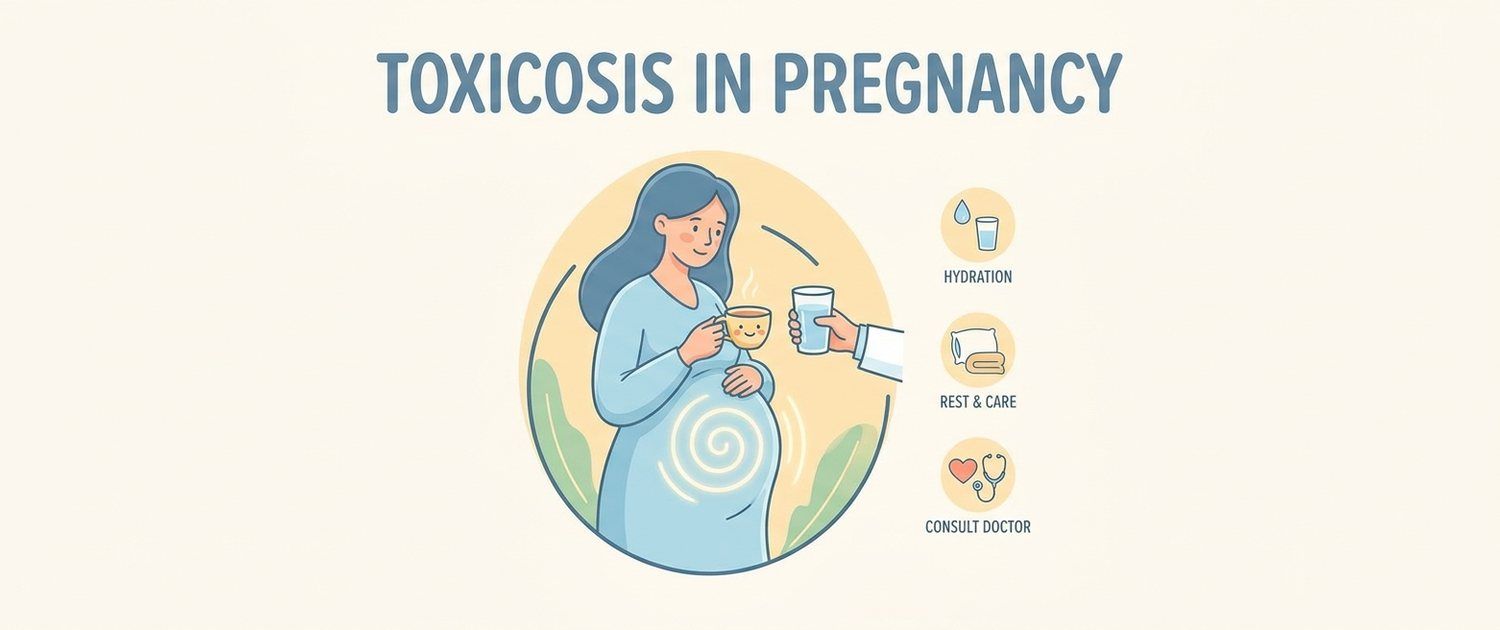
Morning nausea is one of the best-known companions of early pregnancy. Usually toxicosis is unpleasant but safe, yet severe vomiting can be dangerous. Let's break down why toxicosis happens in pregnancy, when it starts and ends, how to ease it and when a doctor is needed.
Why Toxicosis Happens
The exact cause is unclear, but hormonal change is central — rising hCG and oestrogen, heightened sensitivity to smells, and changes in the gut. It is not "weakness" but the physiology of early pregnancy.
When It Starts and Ends
Early toxicosis usually starts at weeks 5–6, peaks at 8–11 weeks, and for most women eases by weeks 12–14 (the start of the 2nd trimester). In some it lasts longer. Nausea appearing for the first time in the second half of pregnancy warrants a doctor (other causes).
How to Ease Nausea (If Mild)
- eat often in small portions, do not go hungry;
- a dry snack (a cracker) right after waking;
- more fluid in small sips, avoid sharp smells;
- ginger, cool food; enough sleep. Concurrent heartburn often worsens the discomfort — see heartburn in pregnancy.
When Toxicosis Is Dangerous (Hyperemesis)
Worrying is hyperemesis gravidarum: vomiting many times a day, inability to eat or drink, weight loss, dryness, dizziness, dark scant urine — this is dehydration needing treatment (sometimes IV fluids). It is not "ordinary toxicosis" but a condition that needs a doctor.
When to See a Doctor
Urgently: vomiting more than 3–4 times a day, inability to keep fluids down, weight loss, signs of dehydration, vomiting blood/bile, nausea appearing late for the first time. Mild toxicosis is monitored; the overall plan is in what tests are done in pregnancy.
If you want to make sense of your sensations, describe them in the symptom assessment service: it suggests what it might be and what to do. It is not a diagnosis and does not replace a doctor; for other early signs — first signs of pregnancy.
This article is informational. Diagnosis and treatment in pregnancy are the doctor's job.
For informational purposes only
This article is for informational purposes only and does not constitute medical advice, diagnosis, or treatment. Please consult a healthcare professional for medical guidance.