Heartburn in Pregnancy: Causes and How to Relieve It
Reviewed by the LabReadAI medical team
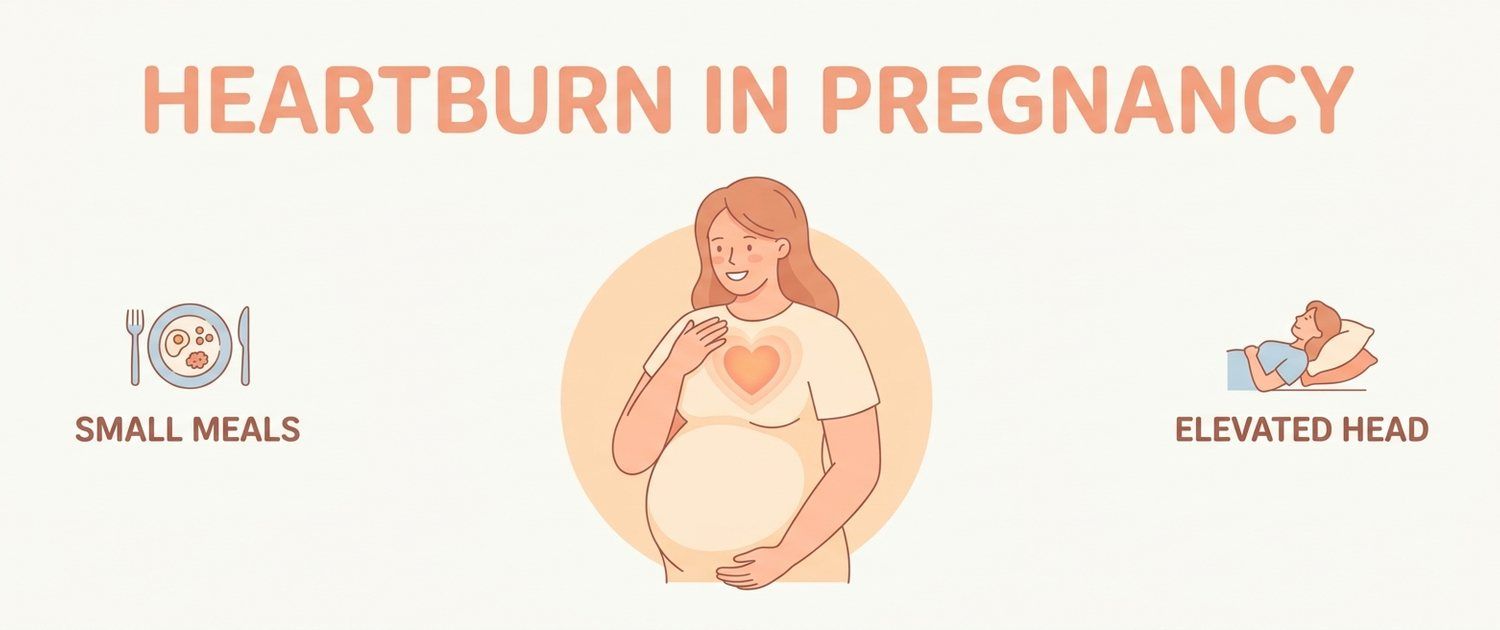
Heartburn is one of the most common companions of pregnancy, especially in the second half. The burning behind the breastbone is unpleasant but usually safe. Let's break down why heartburn occurs in pregnancy and how to relieve it without harming the baby.
Why Heartburn Occurs in Pregnancy
Two causes: the hormone progesterone relaxes the muscular valve between the oesophagus and stomach, and the growing uterus presses on the stomach, pushing acid into the oesophagus. So heartburn usually worsens towards the 3rd trimester and after eating or lying down.
When It Happens
It can appear early too (with hormones and toxicosis), but the peak is in the second half, when the uterus presses on the stomach most. After birth it almost always resolves quickly.
How to Relieve Heartburn: Diet and Lifestyle
- eat often in small portions, do not overeat, do not eat 2–3 hours before sleep;
- avoid spicy, fatty, fried, sour foods, coffee, fizzy drinks, chocolate;
- do not lie down right after eating; sleep with the head raised;
- avoid tight clothing around the belly, drink water between meals.
What Is Safe for Heartburn in Pregnancy
If lifestyle measures do not help, there are remedies safe in pregnancy (for example some antacids), but the doctor should choose them. Do not take "anything" for heartburn on your own — some medicines are not suitable in pregnancy.
When Heartburn Warrants a Doctor
Warning signs: heartburn with severe pain in the abdomen/chest, vomiting blood or "coffee grounds", black stool, difficulty swallowing, sudden weight loss. Also pain under the right ribs with high blood pressure and swelling — that is not heartburn but possible preeclampsia. The overall plan is in what tests are done in pregnancy.
If you want to make sense of your sensations, describe them in the symptom assessment service: it suggests what it might be and what to do. It is not a diagnosis; with alarming signs, see a doctor.
This article is informational. Prescribing treatment in pregnancy is the doctor's job.
For informational purposes only
This article is for informational purposes only and does not constitute medical advice, diagnosis, or treatment. Please consult a healthcare professional for medical guidance.