Formula · 7.8
Brand · 7.8
Dove · gluconolactone + trehalose · Russia
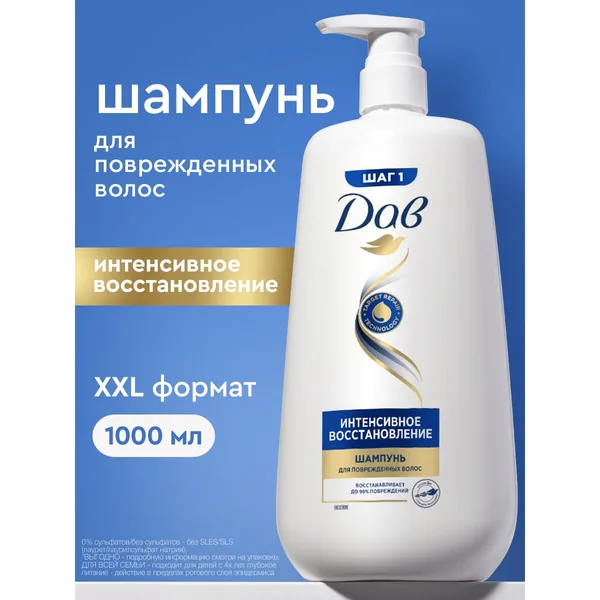
Dove “Intensive Repair” shampoo for damaged hair
LabReadAI label score
How the score is calculated- Actives and evidence0.8Effect moderately supported
- Completeness for the purpose1.0For “dry and damaged hair” — 100 %; without coconut oil — the only oil proven to reduce protein loss; could be added without conflict: coconut oil; a broad formula across 4 purposes
- Cleansing base0.6Harsh surfactants: sodium laureth sulfate (SLES); mild surfactants: cocamidopropyl betaine, mild surfactants and emulsifiers; irritation potential of the base — 42 % of SLS; film: silicones
- Tolerance0.9Rinse-off product; debatable groups: fragrance and its allergens (skin test positive in 13 of 100 tested)
- adults
- acne-prone
- dry skin
- pregnancyfew safety data — ask a doctor
- sensitive skinrare contact allergy to impurities
- rosaceatolerated better than AHAs, but start low
- atopic skinfragrance is a common trigger
- dry scalpmay dry
Ingredients — 26 components · 1 works
What works: 1 of 26 ingredients: gluconolactone. Damaged hair is helped on two fronts: oils that penetrate the shaft (only coconut oil is proven) and a film on the outside — silicones, panthenol, hydrolysed proteins. One from each front is enough; “collagen” and “biotin” in a shampoo work only on the label.
Strengths: completeness for the purpose, tolerance
What lowers the score: actives and evidence: effect moderately supported; cleansing base: harsh surfactants: sodium laureth sulfate
Questions: sodium laureth sulfate (SLES): sodium laureth sulfate — the main cleansing surfactant; can dry a sensitive scalp — the reason people look for «sulfate-free»; unrestricted in rinse-off products; fragrance and its allergens: fragrance, hexyl cinnamal, limonene, linalool — the fragrance and its aromatic components; the EU requires 26 of them to be listed separately — matters to people allergic to fragrance, does not affect how the product works
- Aqua base: coating, fillers · water — the solvent and base; listed first because there is more of it than anything else; in supplements — part of the capsule shell
- Sodium Laureth Sulfate questions · the main cleansing surfactant; can dry a sensitive scalp — the reason people look for «sulfate-free»; unrestricted in rinse-off products
- Sodium Chloride base: coating, fillers · tune the acidity and texture; salt is a common shampoo thickener
- Cocamidopropyl Betaine base: coating, fillers · a mild amphoteric surfactant: it builds dense foam and softens the harsh sulfates next to it. It occasionally causes contact allergy, and the culprit is a manufacturing impurity rather than the ingredient itself.
- Dimethiconol base: coating, fillers · form a smooth film and shine; inert and not absorbed — a preference question, not a safety one
- Glycerin base: coating, fillers · a humectant: coats the tablet, holds moisture in creams and shampoos; does not clog pores
- Gluconolactone works · the active ingredient — what the product is for; form: gluconolactone (PHA)
- PEG-45M base: coating, fillers · coating glazing agent
- Sodium Sulfate label wording · an allergen (sodium (salt)) — matters when limiting salt, for example with blood pressure; the label says it is absent
- Trehalose base: coating, fillers · a sugar humectant: it holds water in the skin and protects cell membranes when it dries out.
- Carbomer base: coating, fillers · hold the texture: gels, creams and foam do not separate
- Citric Acid base: coating, fillers · acidity regulator
- Cocamide MEA base: coating, fillers · a thickener and foam booster from coconut oil: it barely cleanses on its own, it makes the foam denser.
- Disodium EDTA base: coating, fillers · bind hard-water metals so the formula stays stable and the foam works
- Glycol Distearate base: coating, fillers · humectants and solvents — hold water and help actives dissolve
- Guar Hydroxypropyltrimonium Chloride base: coating, fillers · hold the texture: gels, creams and foam do not separate
- Mica base: coating, fillers · mineral flakes that give shimmer and softly scatter light. They do not affect how the product works.
- Phenoxyethanol base: coating, fillers · the most widespread cosmetic preservative: it keeps the product sterile. Permitted in the EU up to 1 %, recognised as safe at that level.
- PPG-8 base: coating, fillers · humectants and solvents — hold water and help actives dissolve
- Sodium Benzoate base: coating, fillers · a preservative both in cosmetics and in supplements: a salt of benzoic acid that works in an acidic medium. Permitted as food additive E211 and in cosmetics up to 0.5 %.
- Sodium Hydroxide base: coating, fillers · tune the acidity and texture; salt is a common shampoo thickener
- Parfum questions · the fragrance and its aromatic components; the EU requires 26 of them to be listed separately — matters to people allergic to fragrance, does not affect how the product works
- Hexyl Cinnamal questions · the fragrance and its aromatic components; the EU requires 26 of them to be listed separately — matters to people allergic to fragrance, does not affect how the product works
- TEA-Dodecylbenzenesulfonate base: coating, fillers · cleanse and bind water with oils; milder than the sulfate ones
- Limonene questions · the fragrance and its aromatic components; the EU requires 26 of them to be listed separately — matters to people allergic to fragrance, does not affect how the product works
- Linalool questions · the fragrance and its aromatic components; the EU requires 26 of them to be listed separately — matters to people allergic to fragrance, does not affect how the product works
Dove “Intensive Repair” shampoo for damaged hair is a product whose active ingredient is gluconolactone (pha). The concentration is not declared, but the active sits above the 1 % line in the list — a working share is likely. The effect is moderately supported: 8–14 %: renews skin and holds moisture, irritates less than glycolic; for acne 14 % is comparable to 5 % benzoyl peroxide — RCT. The formula has 26 ingredients, 1 of which does the work; the rest is the formula base. Worth noting: Sodium Laureth Sulfate (the main cleansing surfactant; can dry a sensitive scalp — the reason people look for «sulfate-free»; unrestricted in rinse-off products); Parfum, Hexyl Cinnamal, Limonene, Linalool (the fragrance and its aromatic components; the EU requires 26 of them to be listed separately — matters to people allergic to fragrance, does not affect how the product works). Damaged hair is helped on two fronts: oils that penetrate the shaft (only coconut oil is proven) and a film on the outside — silicones, panthenol, hydrolysed proteins. One from each front is enough; “collagen” and “biotin” in a shampoo work only on the label. By the list, no alcohol (alcohol denat), formaldehyde releasers, isothiazolinones (MIT/MCI), parabens, mineral oils and petrolatum, soap, gelatin in the coating, toning dyes, tar. Suitable for: adults, acne-prone, dry skin. pregnancy, sensitive skin, rosacea, atopic skin, dry scalp — ask a doctor. fragrance allergy — not without a doctor. Use: in the evening, daily is fine; SPF in the daytime. When to expect an effect: smoothness, hydration — 2–4 weeks; acne — 8–12. Label score — 7.8 out of 10 (effect moderately supported; harsh surfactants: sodium laureth sulfate (sles); mild surfactants: cocamidopropyl betaine, mild surfactants and emulsifiers; irritation potential of the base — 42 % of sls; film: silicones; rinse-off product; debatable groups: fragrance and its allergens (skin test positive in 13 of 100 tested)). Per the pack: avoid contact with eyes; rinse thoroughly with water on contact. A restatement of the label, not an assessment.
Who it does not suit
- fragrance allergyrisk of reaction
When to stop: burning, persistent redness — stop
Per the maker's leaflet: Per the pack: avoid contact with eyes; rinse thoroughly with water on contact. A restatement of the label, not an assessment.
Is this product right for your hair?
The score describes the formula, not your hair: a sulfate shampoo suits an oily scalp and fails a dry, sensitive one. Tell us about your hair, scalp and the problem — shedding, dandruff, oiliness, dryness — and we will build a routine and say whether this product suits you.