Formula · 1.8
Brand · 5.4
Ducray · lespedeza extract + milk thistle · France
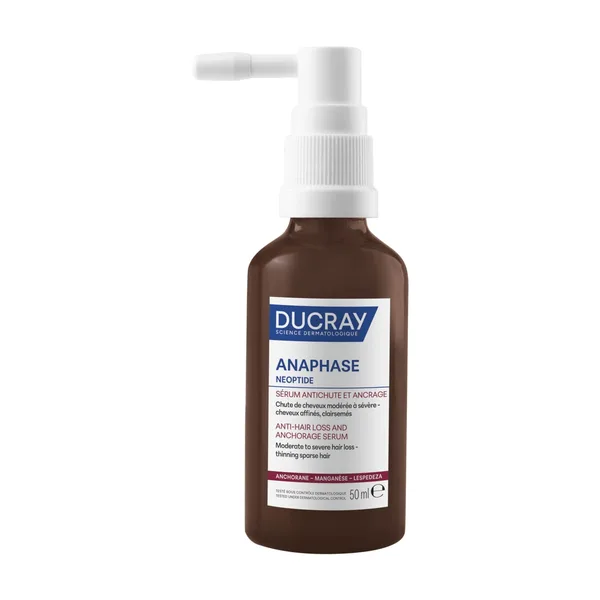
Ducray Anti-Hair-Loss Serum
LabReadAI label score
How the score is calculated- Actives and evidence0.4Little evidence of effect
- Completeness for the purpose0.0For “hair shedding (topical)” — 0 %; niacinamide (vitamin b3); could be added without conflict: niacinamide (vitamin b3); below threshold: milk thistle fruit extract; a formula with one main purpose
- Cleansing base0.8Mild surfactants: mild surfactants and emulsifiers; irritation potential of the base — 15 % of SLS
- Tolerance0.9Debatable ingredient groups: denatured alcohol
- adults
- acne-prone
- oily skin
- dry skinmay dry
- sensitive skinirritation possible
Ingredients — 16 components, 1 of them active
The rest is the formula base: it holds texture, shelf life and application, and is not meant to act.
What works: 1 of 16 ingredients: milk thistle fruit extract. Topical products against shedding work weakly: only minoxidil is proven (a medicine we do not score); among cosmetics rosemary oil has moderate data, caffeine weak. The cause of shedding is found by tests: iron, thyroid, vitamin D.
Strengths: cleansing base, tolerance
What lowers the score: actives and evidence: little evidence of effect; completeness for the purpose: for “hair shedding” — 0 %
Questions: denatured alcohol — evaporates fast and degreases; frequent contact can dry the skin — a tolerance question, not a regulatory one; does not clog pores
- WATER (AQUA base: coating, fillers · water — the solvent and base; listed first because there is more of it than anything else; in supplements — part of the capsule shell
- ALCOHOL DENAT questions · evaporates fast and degreases; frequent contact can dry the skin — a tolerance question, not a regulatory one; does not clog pores
- ISOPROPYL ALCOHOL base: coating, fillers · a volatile solvent alcohol, evaporates without residue; does not clog pores
- PEG-6 base: coating, fillers · coating glazing agent
- HEXYLENE GLYCOL base: coating, fillers · humectants and solvents — hold water and help actives dissolve
- PENTYLENE GLYCOL base: coating, fillers · humectants and solvents — hold water and help actives dissolve
- BUTYLENE GLYCOL base: coating, fillers · a humectant and solvent: it makes the texture lighter and helps actives spread. Better tolerated than propylene glycol.
- CITRIC ACID base: coating, fillers · acidity regulator
- LESPEDEZA CAPITATA FLOWER/LEAF/STEM EXTRACT base: coating, fillers · softens the skin and helps it hold water — the most common role in creams
- MANGANESE PCA base: coating, fillers · amino acids and PCA — substances the skin itself keeps in the outer layer to hold water; in a product they are humectants copying its own set
- POLYACRYLATE-13 base: coating, fillers · hold the texture: gels, creams and foam do not separate
- POLYISOBUTENE base: coating, fillers · soften, condition and carry the actives; the backbone of the texture
- POLYSORBATE 20 base: coating, fillers · cleanse and bind water with oils; milder than the sulfate ones
- SILYBUM MARIANUM FRUIT EXTRACT works · the active ingredient — what the product is for; form: fruit extract
- SODIUM DILAURAMIDOGLUTAMIDE LYSINE base: coating, fillers · cleanse and bind water with oils; milder than the sulfate ones
- SODIUM PHYTATE base: coating, fillers · bind hard-water metals so the formula stays stable and the foam works
- SORBITAN ISOSTEARATE base: coating, fillers · a water-in-oil emulsifier; rarely clogs pores in leave-on face products
Ducray Anti-Hair-Loss Serum is a product whose active ingredient is milk thistle fruit extract. The concentration is not declared and the active sits after the 1 % line — more for the label than for the effect. There is little evidence of effect: milk thistle fruit extract against clogged pores: a drop in comedone counts was shown in the maker's own studies, with no independent work. The formula has 16 ingredients, 1 of which does the work; the rest is the formula base. Worth noting: ALCOHOL DENAT (evaporates fast and degreases; frequent contact can dry the skin — a tolerance question, not a regulatory one; does not clog pores). Topical products against shedding work weakly: only minoxidil is proven (a medicine we do not score); among cosmetics rosemary oil has moderate data, caffeine weak. The cause of shedding is found by tests: iron, thyroid, vitamin D. By the list, no sulfates (SLS/SLES), formaldehyde releasers, isothiazolinones (MIT/MCI), parabens, mineral oils and petrolatum, soap, silicones, fragrance, gelatin in the coating, toning dyes, tar. Suitable for: adults, acne-prone, oily skin. dry skin, sensitive skin — ask a doctor. asteraceae allergy — not without a doctor. Use: morning and evening on clean skin. When to expect an effect: clogged pores — 4–8 weeks per the maker's data. Label score — 1.8 out of 10 (little evidence of effect; for “hair shedding (topical)” — 0 %; niacinamide (vitamin b3); could be added without conflict: niacinamide (vitamin b3); below threshold: milk thistle fruit extract; a formula with one main purpose; mild surfactants: mild surfactants and emulsifiers; irritation potential of the base — 15 % of sls; debatable ingredient groups: denatured alcohol). Per the pack: for external use, apply to the scalp, avoid contact with the eyes. A restatement of the label, not an assessment.
Who it does not suit
- asteraceae allergymilk thistle is in the same family as ragweed and mugwort
When to stop: redness and tightness — stop
Per the maker's leaflet: Per the pack: for external use, apply to the scalp, avoid contact with the eyes. A restatement of the label, not an assessment.
Is this product right for your hair?
The score describes the formula, not your hair: a sulfate shampoo suits an oily scalp and fails a dry, sensitive one. Tell us about your hair, scalp and the problem — shedding, dandruff, oiliness, dryness — and we will build a routine and say whether this product suits you.