Formula · 5.9
Brand · 5.6
Klorane · calendula extract · France
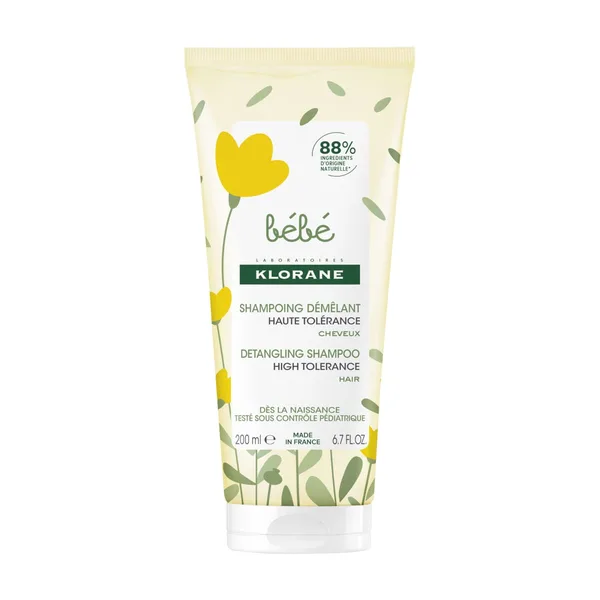
Klorane Gentle Baby Shampoo with Calendula
LabReadAI label score
How the score is calculated- Actives and evidence0.4Little evidence of effect
- Completeness for the purpose0.5For “sensitive scalp” — 53 %; a broad formula across 3 purposes
- Cleansing base0.8Mild surfactants: coco-glucoside, disodium laureth sulfosuccinate, sodium cocoamphoacetate, mild surfactants and emulsifiers; irritation potential of the base — 19 % of SLS
- Tolerance0.9Rinse-off product; debatable groups: fragrance and its allergens (skin test positive in 13 of 100 tested)
- adults
- pregnancyallowed per the leaflet
- children
- sensitive skinirritation possible
- atopic skinfragrance is a common trigger
Ingredients — 21 components, 1 of them active
The rest is the formula base: it holds texture, shelf life and application, and is not meant to act.
What works: 1 of 21 ingredients: calendula extract. A sensitive scalp needs two things: a mild cleansing base without harsh sulfates and fragrance, and a soothing ingredient — panthenol, allantoin or bisabolol. Itching and tightness ease within 1–2 weeks; if not, the cause is the skin (dermatitis, psoriasis), not the shampoo, and a doctor is needed.
Strengths: tolerance
What lowers the score: actives and evidence: little evidence of effect; completeness for the purpose: for “sensitive scalp” — 53 %; cleansing base: mild surfactants: coco-glucoside, disodium laureth sulfosuccinate, sodium cocoamphoacetate, mild surfactants and emulsifiers
Questions: fragrance and its allergens: fragrance, linalyl acetate — the fragrance and its aromatic components; the EU requires 26 of them to be listed separately — matters to people allergic to fragrance, does not affect how the product works
- WATER (AQUA)* base: coating, fillers · water — the solvent and base; listed first because there is more of it than anything else; in supplements — part of the capsule shell
- GLYCERIN* base: coating, fillers · a humectant: coats the tablet, holds moisture in creams and shampoos; does not clog pores
- CETEARETH-60 MYRISTYL GLYCOL base: coating, fillers · keeps the water and oil parts from separating
- COCO-GLUCOSIDE* base: coating, fillers · a sugar surfactant made from coconut oil and glucose: it cleanses gently with modest foam. A common base for baby and sulfate-free shampoos.
- SODIUM COCOAMPHOACETATE base: coating, fillers · an amphoteric surfactant: gentle cleansing and stable foam, a usual partner to the sugar surfactants.
- ZINC COCETH SULFATE base: coating, fillers · washes oil and dirt off skin or hair
- POLYSORBATE 20 base: coating, fillers · cleanse and bind water with oils; milder than the sulfate ones
- CALENDULA OFFICINALIS FLOWER EXTRACT works · the active ingredient — what the product is for; form: flower extract
- CITRIC ACID* base: coating, fillers · acidity regulator
- DISODIUM LAURETH SULFOSUCCINATE base: coating, fillers · a mild anionic surfactant: it foams almost like the sulfates but is tolerated far better. Common in baby products.
- FRAGRANCE (PARFUM questions · the fragrance and its aromatic components; the EU requires 26 of them to be listed separately — matters to people allergic to fragrance, does not affect how the product works
- GLYCERYL OLEATE* base: coating, fillers · fills the gaps between skin flakes, so the surface feels smooth
- HELIANTHUS ANNUUS (SUNFLOWER) SEED OIL (HELIANTHUS ANNUUS SEED OIL)* base: coating, fillers · a light emollient oil rich in linoleic acid (in tablets — a coating component); does not clog pores
- HYDROGENATED VEGETABLE GLYCERIDES CITRATE* base: coating, fillers · fills the gaps between skin flakes, so the surface feels smooth
- ISOLEUCINE* base: coating, fillers · amino acids, lipids and sugars akin to the skin’s own components — support for its barrier
- LINALYL ACETATE questions · the fragrance and its aromatic components; the EU requires 26 of them to be listed separately — matters to people allergic to fragrance, does not affect how the product works
- POLYSORBATE 80 base: coating, fillers · emulsifier in the coating; in cosmetics — a solubiliser; does not clog pores
- PROPYLENE GLYCOL base: coating, fillers · humectants and solvents — hold water and help actives dissolve
- SODIUM BENZOATE base: coating, fillers · a preservative both in cosmetics and in supplements: a salt of benzoic acid that works in an acidic medium. Permitted as food additive E211 and in cosmetics up to 0.5 %.
- SODIUM HYDROXIDE* base: coating, fillers · tune the acidity and texture; salt is a common shampoo thickener
- TOCOPHEROL* base: coating, fillers · vitamin E at hundredths of a percent: keeps the oils of the formula (a cream or a capsule fill) from going rancid; at that share it protects the product, it is not vitamin E as an active
- TRISODIUM ETHYLENEDIAMINE DISUCCINATE base: coating, fillers · bind hard-water metals so the formula stays stable and the foam works
Klorane Gentle Baby Shampoo with Calendula is a product whose active ingredient is calendula extract. The concentration is not declared, but the active sits above the 1 % line in the list — a working share is likely. There is little evidence of effect: soothes and aids healing in small studies; few rigorous RCTs. The formula has 21 ingredients, 1 of which does the work; the rest is the formula base. Worth noting: FRAGRANCE (PARFUM, LINALYL ACETATE (the fragrance and its aromatic components; the EU requires 26 of them to be listed separately — matters to people allergic to fragrance, does not affect how the product works). A sensitive scalp needs two things: a mild cleansing base without harsh sulfates and fragrance, and a soothing ingredient — panthenol, allantoin or bisabolol. Itching and tightness ease within 1–2 weeks; if not, the cause is the skin (dermatitis, psoriasis), not the shampoo, and a doctor is needed. By the list, no alcohol (alcohol denat), sulfates (SLS/SLES), formaldehyde releasers, isothiazolinones (MIT/MCI), parabens, mineral oils and petrolatum, soap, silicones, gelatin in the coating, toning dyes, tar. Suitable for: adults, pregnancy, children. sensitive skin, atopic skin — ask a doctor. Asteraceae allergy, fragrance allergy — not without a doctor. Use: morning and evening. When to expect an effect: soothing — days; no notable healing to expect. Label score — 5.9 out of 10 (little evidence of effect; for “sensitive scalp” — 53 %; a broad formula across 3 purposes; mild surfactants: coco-glucoside, disodium laureth sulfosuccinate, sodium cocoamphoacetate, mild surfactants and emulsifiers; irritation potential of the base — 19 % of sls; rinse-off product; debatable groups: fragrance and its allergens (skin test positive in 13 of 100 tested)). Per the pack: for external use, avoid contact with the eyes. A restatement of the label, not an assessment.
Who it does not suit
- Asteraceae allergychamomile, ragweed, calendula
- fragrance allergyrisk of reaction
When to stop: itching or rash with Asteraceae allergy — stop
Per the maker's leaflet: Per the pack: for external use, avoid contact with the eyes. A restatement of the label, not an assessment.
Is this product right for your hair?
The score describes the formula, not your hair: a sulfate shampoo suits an oily scalp and fails a dry, sensitive one. Tell us about your hair, scalp and the problem — shedding, dandruff, oiliness, dryness — and we will build a routine and say whether this product suits you.