Formula · 5.0
Brand · 5.6
Klorane · galangal rhizome extract · France
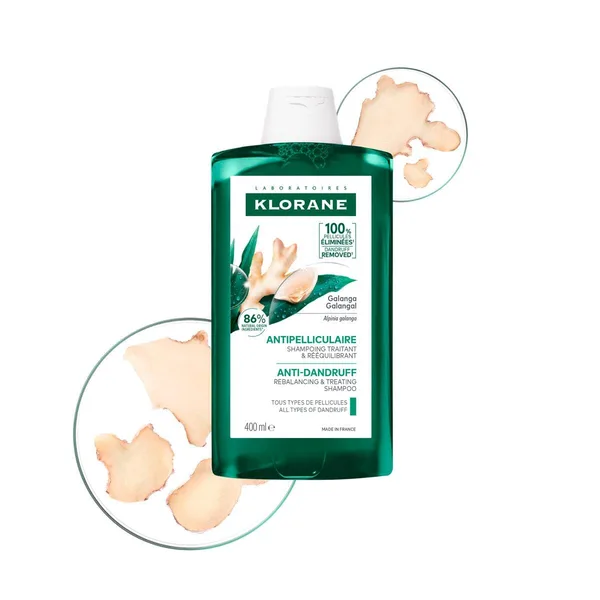
Klorane Galangal Anti-Dandruff Shampoo
LabReadAI label score
How the score is calculated- Actives and evidence0.4Little evidence of effect
- Completeness for the purpose0.4For “dandruff and itchy scalp” — 40 %; without salicylic acid, which lifts the flakes; nasturtium extract; could be added without conflict: salicylic acid (bha), nasturtium extract; a narrow formula for one purpose
- Cleansing base0.6Harsh surfactants: sodium laureth sulfate (SLES); mild surfactants: cocamidopropyl betaine, coco-glucoside; irritation potential of the base — 37 % of SLS
- Tolerance0.9Rinse-off product; debatable groups: fragrance and its allergens (skin test positive in 13 of 100 tested)
- adults
- colour-treated hair
- pregnancyno studies in pregnancy — discuss with a doctor
- sensitive skinrare contact allergy to impurities
- atopic skinfragrance is a common trigger
- dry scalpmay dry
Ingredients — 19 components, 1 of them active
The rest is the formula base: it holds texture, shelf life and application, and is not meant to act.
What works: 1 of 19 ingredients: galangal extract. Dandruff is the Malassezia fungus plus accelerated flaking. You need an antifungal active (piroctone olamine, zinc pyrithione, ketoconazole) and a mild cleansing base; results come after 2–4 weeks of regular washing.
Strengths: tolerance
What lowers the score: actives and evidence: little evidence of effect; completeness for the purpose: for “dandruff and itchy scalp” — 40 %; cleansing base: harsh surfactants: sodium laureth sulfate
Questions: sodium laureth sulfate (SLES): sodium laureth sulfate — the main cleansing surfactant; can dry a sensitive scalp — the reason people look for «sulfate-free»; unrestricted in rinse-off products; fragrance and its allergens: fragrance, linalyl acetate — the fragrance and its aromatic components; the EU requires 26 of them to be listed separately — matters to people allergic to fragrance, does not affect how the product works
- WATER (AQUA)* base: coating, fillers · water — the solvent and base; listed first because there is more of it than anything else; in supplements — part of the capsule shell
- SODIUM LAURETH SULFATE questions · the main cleansing surfactant; can dry a sensitive scalp — the reason people look for «sulfate-free»; unrestricted in rinse-off products
- COCAMIDOPROPYL BETAINE base: coating, fillers · a mild amphoteric surfactant: it builds dense foam and softens the harsh sulfates next to it. It occasionally causes contact allergy, and the culprit is a manufacturing impurity rather than the ingredient itself.
- SODIUM CHLORIDE* base: coating, fillers · tune the acidity and texture; salt is a common shampoo thickener
- COCO-GLUCOSIDE* base: coating, fillers · a sugar surfactant made from coconut oil and glucose: it cleanses gently with modest foam. A common base for baby and sulfate-free shampoos.
- PENTYLENE GLYCOL* base: coating, fillers · humectants and solvents — hold water and help actives dissolve
- ALPINIA GALANGA RHIZOME EXTRACT* works · the active ingredient — what the product is for; form: galangal rhizome extract
- CITRIC ACID* base: coating, fillers · acidity regulator
- FRAGRANCE (PARFUM questions · the fragrance and its aromatic components; the EU requires 26 of them to be listed separately — matters to people allergic to fragrance, does not affect how the product works
- GLYCERYL OLEATE* base: coating, fillers · fills the gaps between skin flakes, so the surface feels smooth
- GREEN 3 (CI 42053 base: coating, fillers · give the product its colour; do not affect how it works
- HELIANTHUS ANNUUS (SUNFLOWER) SEED OIL (HELIANTHUS ANNUUS SEED OIL)* base: coating, fillers · a light emollient oil rich in linoleic acid (in tablets — a coating component); does not clog pores
- HYDROGENATED VEGETABLE GLYCERIDES CITRATE* base: coating, fillers · fills the gaps between skin flakes, so the surface feels smooth
- LINALYL ACETATE questions · the fragrance and its aromatic components; the EU requires 26 of them to be listed separately — matters to people allergic to fragrance, does not affect how the product works
- OLETH-10 base: coating, fillers · an ethoxylated emulsifier; the longer the PEG chain across oleth-3, 5, 10, 20, the lower the comedogenicity; rarely clogs pores in leave-on face products
- POLYQUATERNIUM-22 base: coating, fillers · soften, condition and carry the actives; the backbone of the texture
- SODIUM BENZOATE base: coating, fillers · a preservative both in cosmetics and in supplements: a salt of benzoic acid that works in an acidic medium. Permitted as food additive E211 and in cosmetics up to 0.5 %.
- TETRAMETHYL ACETYLOCTAHYDRONAPHTHALENES base: coating, fillers · softens the skin and helps it hold water — the most common role in creams
- TOCOPHEROL base: coating, fillers · vitamin E at hundredths of a percent: keeps the oils of the formula (a cream or a capsule fill) from going rancid; at that share it protects the product, it is not vitamin E as an active
- TRISODIUM ETHYLENEDIAMINE DISUCCINATE base: coating, fillers · bind hard-water metals so the formula stays stable and the foam works
Klorane Galangal Anti-Dandruff Shampoo is a product whose active ingredient is galangal extract. The concentration is not declared, but the active sits above the 1 % line in the list — a working share is likely. There is little evidence of effect: galangal rhizome contains acetoxychavicol acetate, and in laboratory work the extract suppresses Malassezia furfur — the very fungus behind dandruff. In people the effect was tested by the brand itself: 33 participants, 6 weeks, washing three times a week. There are no independent controlled trials, so the level of evidence is low. The formula has 19 ingredients, 1 of which does the work; the rest is the formula base. Worth noting: SODIUM LAURETH SULFATE (the main cleansing surfactant; can dry a sensitive scalp — the reason people look for «sulfate-free»; unrestricted in rinse-off products); FRAGRANCE (PARFUM, LINALYL ACETATE (the fragrance and its aromatic components; the EU requires 26 of them to be listed separately — matters to people allergic to fragrance, does not affect how the product works). Dandruff is the Malassezia fungus plus accelerated flaking. You need an antifungal active (piroctone olamine, zinc pyrithione, ketoconazole) and a mild cleansing base; results come after 2–4 weeks of regular washing. By the list, no alcohol (alcohol denat), formaldehyde releasers, isothiazolinones (MIT/MCI), parabens, mineral oils and petrolatum, soap, silicones, gelatin in the coating, toning dyes, tar. Suitable for: adults, colour-treated hair. pregnancy, sensitive skin, atopic skin, dry scalp — ask a doctor. fragrance allergy — not without a doctor. Use: when washing the hair, leave on for 2–3 minutes. When to expect an effect: dandruff — 2–4 weeks of regular washing. Label score — 5.0 out of 10 (little evidence of effect; for “dandruff and itchy scalp” — 40 %; without salicylic acid, which lifts the flakes; nasturtium extract; could be added without conflict: salicylic acid (bha), nasturtium extract; a narrow formula for one purpose; harsh surfactants: sodium laureth sulfate (sles); mild surfactants: cocamidopropyl betaine, coco-glucoside; irritation potential of the base — 37 % of sls; rinse-off product; debatable groups: fragrance and its allergens (skin test positive in 13 of 100 tested)). Per the pack: for external use, avoid contact with the eyes. A restatement of the label, not an assessment.
Who it does not suit
- fragrance allergyrisk of reaction
When to stop: itching, scalp redness — stop
Per the maker's leaflet: Per the pack: for external use, avoid contact with the eyes. A restatement of the label, not an assessment.
Is this product right for your hair?
The score describes the formula, not your hair: a sulfate shampoo suits an oily scalp and fails a dry, sensitive one. Tell us about your hair, scalp and the problem — shedding, dandruff, oiliness, dryness — and we will build a routine and say whether this product suits you.