Formula · 9.4
Brand · 7.9
La Roche-Posay · SPF50+ fluid, 8 filters, fragrance-free · France
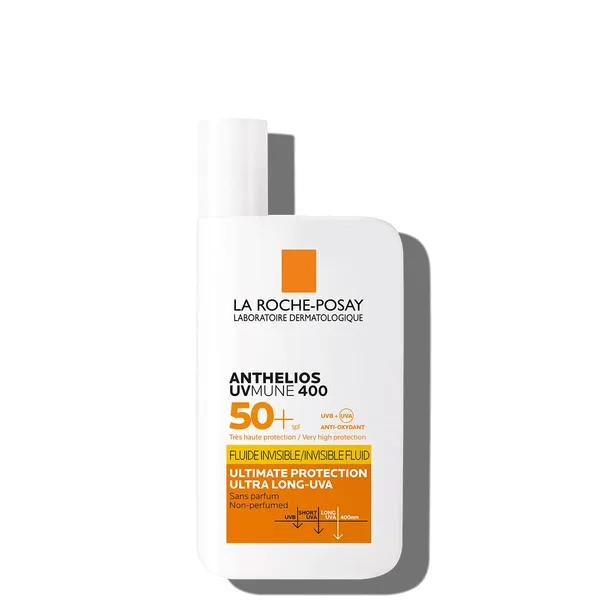
La Roche-Posay Anthelios UVMune 400 Invisible Fluid SPF50+
LabReadAI label score
How the score is calculated- Filters and spectrum1.0Broad spectrum UVA + UVB: ethylhexyl salicylate (octisalate), bemotrizinol (tinosorb s), ethylhexyl triazone (uvinul t 150), avobenzone, mexoryl 400 (mce), diethylamino hydroxybenzoyl hexyl benzoate (uvinul a plus), drometrizole trisiloxane (mexoryl xl), terephthalylidene dicamphor sulfonic acid (mexoryl sx)
- Filter concentration0.9After the 1 % line: mexoryl 400 (mce), diethylamino hydroxybenzoyl hexyl benzoate (uvinul a plus), drometrizole trisiloxane (mexoryl xl), terephthalylidene dicamphor sulfonic acid (mexoryl sx) — the concentration is likely token
- Completeness for the purpose1.0For “sun protection” — 96 %; vitamin c; could be added without conflict: vitamin c; below threshold: bemotrizinol (tinosorb s); a narrow formula for one purpose
- Tolerance0.9Debatable ingredient groups: denatured alcohol
- adults
- children
- pregnancyallowed per the leaflet
- sensitive skinper the brand — for sensitive and reactive skin
- contact lens wearersthe brand claims “anti eye-stinging”
- babiesunder 6 months — shade and clothing, not a cream
- dry skinmay dry
Ingredients — 26 components, 8 of them active
The rest is the formula base: it holds texture, shelf life and application, and is not meant to act.
What works: 8 of 26 ingredients: ethylhexyl salicylate, bemotrizinol, ethylhexyl triazone and 5 more. Sun protection works only with a broad spectrum: you need a UVB filter (burn) and a UVA filter (ageing, pigmentation) — a single broad-spectrum filter covers both. Antioxidants — vitamin C, vitamin E, ferulic acid — boost protection but do not replace filters.
Strengths: filters and spectrum, filter concentration, completeness for the purpose, tolerance
Questions: denatured alcohol — evaporates fast and degreases; frequent contact can dry the skin — a tolerance question, not a regulatory one; does not clog pores
- Avobenzone + Bemotrizinol (Tinosorb S) — reinforce each otherTinosorb S stabilises avobenzone and widens the spectrum
- Aqua/Water/Eau base: coating, fillers · water — the solvent and base; listed first because there is more of it than anything else; in supplements — part of the capsule shell
- Alcohol Denat questions · evaporates fast and degreases; frequent contact can dry the skin — a tolerance question, not a regulatory one; does not clog pores
- Triethyl Citrate base: coating, fillers · a citric acid ester: in tablets a coating plasticiser, in deodorants it slows the bacterial enzymes that make sweat smell
- Diisopropyl Sebacate base: coating, fillers · a light emollient solvent: dissolves oil-soluble filters and keeps a fluid weightless, without a greasy feel.
- Silica base: coating, fillers · tune the acidity and texture; salt is a common shampoo thickener
- Ethylhexyl Salicylate works · the active ingredient — what the product is for; form: ethylhexyl salicylate
- Bis-Ethylhexyloxyphenol Methoxyphenyl Triazine works · the active ingredient — what the product is for; form: bemotrizinol
- Ethylhexyl Triazone works · the active ingredient — what the product is for; form: ethylhexyl triazone
- Butyl Methoxydibenzoylmethane works · the active ingredient — what the product is for; form: avobenzone
- Glycerin base: coating, fillers · a humectant: coats the tablet, holds moisture in creams and shampoos; does not clog pores
- Propanediol base: coating, fillers · a humectant and solvent from corn sugar: it holds water and helps actives dissolve. A gentler replacement for propylene glycol.
- C12-22 Alkyl Acrylate/Hydroxyethylacrylate Copolymer base: coating, fillers · a film former: holds the filters in an even layer and gives water resistance.
- Sodium Citrate base: coating, fillers · tune the acidity and texture; salt is a common shampoo thickener
- Methoxypropylamino Cyclohexenylidene Ethoxyethylcyanoacetate works · the active ingredient — what the product is for; form: methoxypropylamino cyclohexenylidene ethoxyethylcyanoacetate
- Perlite base: coating, fillers · a volcanic mineral absorbent: soaks up sebum and gives a matte finish, does not act on the skin.
- Tocopherol base: coating, fillers · vitamin E at hundredths of a percent: keeps the oils of the formula (a cream or a capsule fill) from going rancid; at that share it protects the product, it is not vitamin E as an active
- Caprylic/Capric Triglyceride base: coating, fillers · a coconut-oil fraction, a light emollient and carrier of actives; does not clog pores
- Acrylates/C10-30 Alkyl Acrylate Crosspolymer base: coating, fillers · hold the texture: gels, creams and foam do not separate
- Caprylyl Glycol base: coating, fillers · a humectant that also holds bacteria back, which is why it often replaces part of the preservative.
- Citric Acid base: coating, fillers · acidity regulator
- Diethylamino Hydroxybenzoyl Hexyl Benzoate works · the active ingredient — what the product is for; form: diethylamino hydroxybenzoyl hexyl benzoate
- Drometrizole Trisiloxane works · the active ingredient — what the product is for; form: drometrizole trisiloxane
- Hydroxyethylcellulose base: coating, fillers · hold the texture: gels, creams and foam do not separate
- Terephthalylidene Dicamphor Sulfonic Acid works · the active ingredient — what the product is for; form: terephthalylidene dicamphor sulfonic acid
- Triethanolamine base: coating, fillers · a pH adjuster and thickener neutraliser; rarely clogs pores in leave-on face products
- Trisodium Ethylenediamine Disuccinate base: coating, fillers · bind hard-water metals so the formula stays stable and the foam works
La Roche-Posay Anthelios UVMune 400 Invisible Fluid SPF50+ is a product whose active ingredient is ethylhexyl salicylate (octisalate) + bemotrizinol (tinosorb s) + ethylhexyl triazone (uvinul t 150) + avobenzone. The concentration is not declared, but the active sits above the 1 % line in the list — a working share is likely. The effect is supported by studies: ethylhexyl salicylate (octisalate), bemotrizinol (tinosorb s), ethylhexyl triazone (uvinul t 150), avobenzone, mexoryl 400 (mce), diethylamino hydroxybenzoyl hexyl benzoate (uvinul a plus), drometrizole trisiloxane (mexoryl xl), terephthalylidene dicamphor sulfonic acid (mexoryl sx). The formula has 26 ingredients, 8 of which do the work; the rest is the formula base. Worth noting: Alcohol Denat. (evaporates fast and degreases; frequent contact can dry the skin — a tolerance question, not a regulatory one; does not clog pores). Well-matched pairs in the formula: avobenzone + bemotrizinol (tinosorb s). Sun protection works only with a broad spectrum: you need a UVB filter (burn) and a UVA filter (ageing, pigmentation) — a single broad-spectrum filter covers both. Antioxidants — vitamin C, vitamin E, ferulic acid — boost protection but do not replace filters. By the list, no sulfates (SLS/SLES), formaldehyde releasers, isothiazolinones (MIT/MCI), parabens, mineral oils and petrolatum, soap, silicones, fragrance, gelatin in the coating, toning dyes, tar. Suitable for: adults, children, pregnancy, sensitive skin, contact lens wearers. babies, dry skin — ask a doctor. Use: in the morning, as the last care step, 15 minutes before going out. When to expect an effect: protection — right after it sinks in; reapply every 2 hours in the sun. Label score — 9.4 out of 10 (after the 1 % line: mexoryl 400 (mce), diethylamino hydroxybenzoyl hexyl benzoate (uvinul a plus), drometrizole trisiloxane (mexoryl xl), terephthalylidene dicamphor sulfonic acid (mexoryl sx) — the concentration is likely token; for “sun protection” — 96 %; vitamin c; could be added without conflict: vitamin c; below threshold: bemotrizinol (tinosorb s); a narrow formula for one purpose; debatable ingredient groups: denatured alcohol). Per the brand leaflet: apply before sun exposure, reapply frequently and generously, especially after sweating or towelling. Sunscreens are not recommended for babies under 6 months — shade and clothing instead. A restatement of the leaflet, not an assessment.
Who it does not suit
When to stop: stinging eyes — switch to a mineral filter; redness or itching after application — stop and switch products
Per the maker's leaflet: Per the brand leaflet: apply before sun exposure, reapply frequently and generously, especially after sweating or towelling. Sunscreens are not recommended for babies under 6 months — shade and clothing instead. A restatement of the leaflet, not an assessment.
Is this SPF right for your skin?
The score describes the filters and the formula, not your skin: some filters sting the eyes and leave a white cast, others work under makeup and for children. Describe your skin, where and how you will use it, attach a photo of the ingredient list — we will go through every ingredient and say whether it suits you.
Similar products
Same nutrient and the same purpose — closest by form and dose. Each has its own score by the same method, so you can see whether there is an option nearby that is more honest or simpler in composition.