Formula · 5.6
Brand · 6.1
Librederm · piroctone olamine + zinc PCA · Russia
Librederm Zinc anti-dandruff shampoo for dry seborrhoea
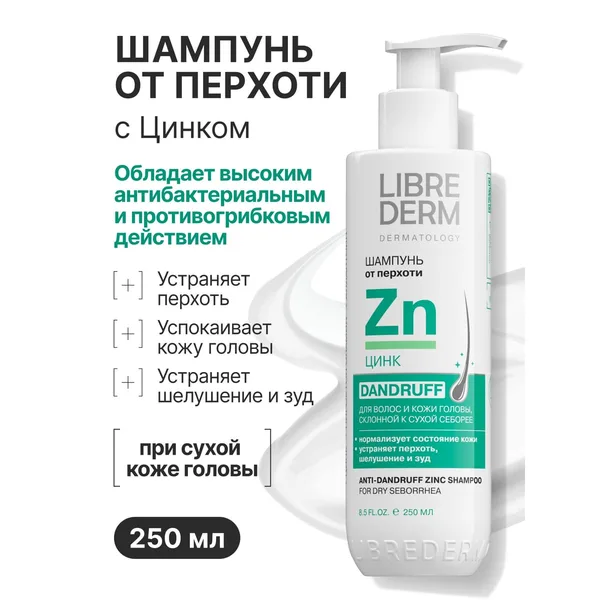
LabReadAI label score
How the score is calculated- Actives and evidence0.8Actives with strong evidence: 1 of 4
- Completeness for the purpose1.0For “dandruff and itchy scalp” — 100 %; without salicylic acid, which lifts the flakes; nasturtium extract; could be added without conflict: salicylic acid (bha), nasturtium extract; a broad formula across 6 purposes
- Cleansing base0.5Harsh surfactants: sodium coco-sulfate; mild surfactants: cocamidopropyl betaine, coco-glucoside, decyl glucoside; irritation potential of the base — 47 % of SLS
- Tolerance0.2Rinse-off product; debatable groups: cocamide DEA, isothiazolinone preservatives (MIT/MCI) (skin test positive in 6 of 100 tested), isothiazolinone preservatives (MIT/MCI)
- adults
- children
- pregnancyallowed per the leaflet
- for dandruff
- oily scalp
- oily skin
- acne-prone
- babies
- atopic skin
- colour-treated hairwashes colour out faster
- sensitive skinirritation possible
- dry scalpmay dry
- dry skinmay dry
Ingredients — 24 components, 4 of them active
The rest is the formula base: it holds texture, shelf life and application, and is not meant to act.
What works: 4 of 24 ingredients: piroctone olamine, zinc pca, panthenol and 1 more. Dandruff is the Malassezia fungus plus accelerated flaking. You need an antifungal active (piroctone olamine, zinc pyrithione, ketoconazole) and a mild cleansing base; results come after 2–4 weeks of regular washing.
Strengths: completeness for the purpose
What lowers the score: actives and evidence: actives with strong evidence: 1 of 4; cleansing base: harsh surfactants: sodium coco-sulfate; tolerance: rinse-off product
Questions: sodium coco-sulfate — a sulfate from coconut oil: by composition it is mostly the same lauryl sulfate, so a natural origin does not make it milder. Common in solid shampoos.; cocamide DEA — a thickener and foam booster. It is restricted: in the presence of nitrites diethanolamides can form nitrosamines, so the regulator caps secondary amines and forbids nitrosating additives; California lists it under Proposition 65.; isothiazolinone preservatives (MIT/MCI): methylchloroisothiazolinone, methylisothiazolinone
- Aqua base: coating, fillers · water — the solvent and base; listed first because there is more of it than anything else; in supplements — part of the capsule shell
- Sodium Coco-Sulfate questions · a sulfate from coconut oil: by composition it is mostly the same lauryl sulfate, so a natural origin does not make it milder. Common in solid shampoos.
- Glycerin base: coating, fillers · a humectant: coats the tablet, holds moisture in creams and shampoos; does not clog pores
- Decyl Glucoside base: coating, fillers · one of the gentlest cleansing ingredients: a sugar surfactant that barely disturbs the skin barrier.
- Cocamidopropyl Betaine base: coating, fillers · a mild amphoteric surfactant: it builds dense foam and softens the harsh sulfates next to it. It occasionally causes contact allergy, and the culprit is a manufacturing impurity rather than the ingredient itself.
- Cocamide DEA questions · a thickener and foam booster. It is restricted: in the presence of nitrites diethanolamides can form nitrosamines, so the regulator caps secondary amines and forbids nitrosating additives; California lists it under Proposition 65.
- Panthenol works · the active ingredient — what the product is for; form: panthenol
- Coco-Glucoside base: coating, fillers · a sugar surfactant made from coconut oil and glucose: it cleanses gently with modest foam. A common base for baby and sulfate-free shampoos.
- Glyceryl Oleate base: coating, fillers · fills the gaps between skin flakes, so the surface feels smooth
- Piroctone Olamine works · the active ingredient — what the product is for; form: piroctone olamine
- Allantoin works · the active ingredient — what the product is for; form: allantoin
- Zinc PCA works · the active ingredient — what the product is for; form: zinc PCA
- Zinc Gluconate base: coating, fillers · amino acids, lipids and sugars akin to the skin’s own components — support for its barrier
- Hydroxypropyl Bis-Hydroxyethyldimonium Chloride base: coating, fillers · draws water in and holds it in the upper layer of the skin
- Hydroxypropyl Guar Hydroxypropyltrimonium Chloride base: coating, fillers · hold the texture: gels, creams and foam do not separate
- Polyquaternium-44 base: coating, fillers · leaves a thin film on skin or hair
- Styrene/Acrylates Copolymer base: coating, fillers · an ingredient from the European cosmetic ingredient inventory; what exactly it does in this product is not described here yet
- Sodium Chloride base: coating, fillers · tune the acidity and texture; salt is a common shampoo thickener
- Citric Acid base: coating, fillers · acidity regulator
- Magnesium Nitrate base: coating, fillers · tune the acidity and texture; salt is a common shampoo thickener
- Methylchloroisothiazolinone questions · preservatives; banned in EU leave-on products and limited in rinse-off (0.0015%) — a frequent cause of contact allergy
- Magnesium Chloride base: coating, fillers · tune the acidity and texture; salt is a common shampoo thickener
- Methylisothiazolinone questions · preservatives; banned in EU leave-on products and limited in rinse-off (0.0015%) — a frequent cause of contact allergy
- Chlorphenesin base: coating, fillers · a preservative, usually paired with phenoxyethanol. Permitted in the EU up to 0.3 %.
- Tetrasodium EDTA base: coating, fillers · bind hard-water metals so the formula stays stable and the foam works
Librederm Zinc anti-dandruff shampoo for dry seborrhoea is a product whose active ingredient is piroctone olamine + zinc pca + panthenol (pro-vitamin b5) + allantoin. The concentration is not declared, but the active sits above the 1 % line in the list — a working share is likely. The effect is supported by studies: piroctone olamine. The effect is moderately supported: zinc pca, panthenol (pro-vitamin b5), allantoin. The formula has 24 ingredients, 4 of which do the work; the rest is the formula base. Worth noting: Sodium Coco-Sulfate (a sulfate from coconut oil: by composition it is mostly the same lauryl sulfate, so a natural origin does not make it milder. Common in solid shampoos.); Cocamide DEA (a thickener and foam booster. It is restricted: in the presence of nitrites diethanolamides can form nitrosamines, so the regulator caps secondary amines and forbids nitrosating additives; California lists it under Proposition 65.); Methylchloroisothiazolinone, Methylisothiazolinone. Dandruff is the Malassezia fungus plus accelerated flaking. You need an antifungal active (piroctone olamine, zinc pyrithione, ketoconazole) and a mild cleansing base; results come after 2–4 weeks of regular washing. By the list, no alcohol (alcohol denat), formaldehyde releasers, parabens, mineral oils and petrolatum, soap, silicones, fragrance, gelatin in the coating, toning dyes, tar. Suitable for: adults, children, pregnancy, for dandruff, oily scalp, oily skin, acne-prone, babies, atopic skin. colour-treated hair, sensitive skin, dry scalp, dry skin — ask a doctor. prone to contact allergy — not without a doctor. Use: with every wash, leave on for 2–3 minutes. When to expect an effect: dandruff — 2–4 weeks of regular use. Label score — 5.6 out of 10 (actives with strong evidence: 1 of 4; harsh surfactants: sodium coco-sulfate; mild surfactants: cocamidopropyl betaine, coco-glucoside, decyl glucoside; irritation potential of the base — 47 % of sls; rinse-off product; debatable groups: cocamide dea, isothiazolinone preservatives (mit/mci) (skin test positive in 6 of 100 tested), isothiazolinone preservatives (mit/mci)). Per the pack: avoid contact with eyes; rinse thoroughly with water on contact. A restatement of the label, not an assessment.
Who it does not suit
- prone to contact allergyone of the most frequent cosmetic allergens
When to stop: itching, rash — stop; tightness, flaking — use less often or stop
Per the maker's leaflet: Per the pack: avoid contact with eyes; rinse thoroughly with water on contact. A restatement of the label, not an assessment.
Is this product right for your hair?
The score describes the formula, not your hair: a sulfate shampoo suits an oily scalp and fails a dry, sensitive one. Tell us about your hair, scalp and the problem — shedding, dandruff, oiliness, dryness — and we will build a routine and say whether this product suits you.
Similar products
Same nutrient and the same purpose — closest by form and dose. Each has its own score by the same method, so you can see whether there is an option nearby that is more honest or simpler in composition.
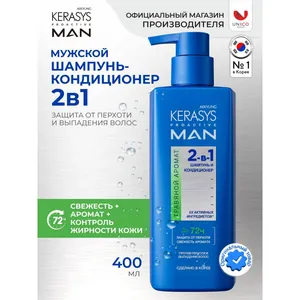 KerasysKerasys Proactive Man 2-in-1 men’s anti-dandruff and anti-shedding shampoo6.6
 ВитэксVitex Dual-Action Shampoo6.3
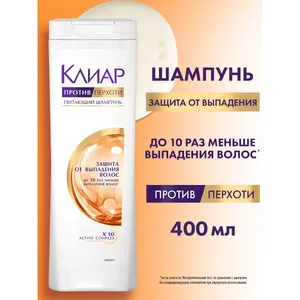 ClearClear anti-dandruff shampoo “Hair fall defense”8.4
 DucrayDucray Squanorm Balancing Anti-Dandruff6.7
 Aravia ProfessionalAravia Professional Oily Dandruff anti-dandruff shampoo for oily scalp6.5
 Head & ShouldersHead & Shoulders Classic Clean6.2
 Kapous ProfessionalKapous Studio Professional Treatment Cleansing Scrub5.6
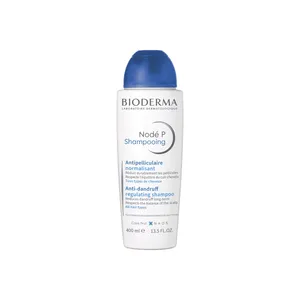 BiodermaBioderma Nodé P Normalising Shampoo7.5