Mantoux and Diaskintest: Norm, Size and What the Result Means
Reviewed by the LabReadAI medical team
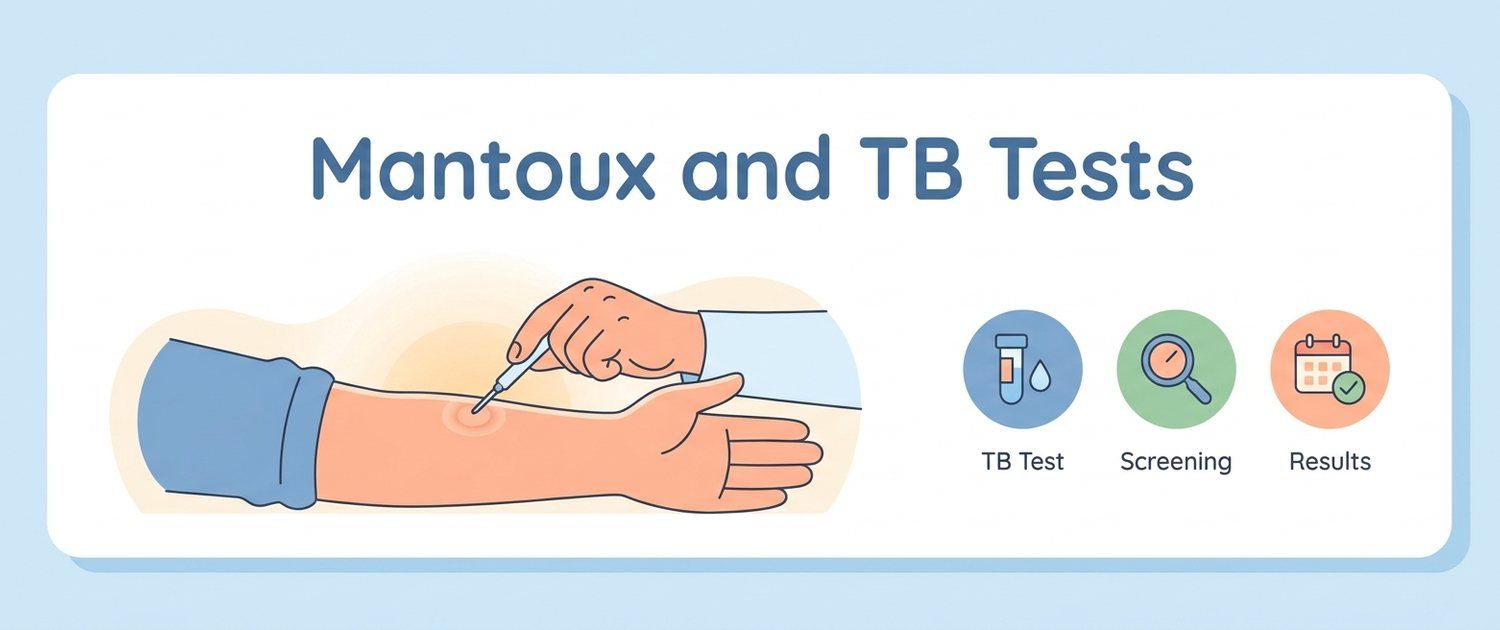
Parents are often frightened by a "big Mantoux" in a child, though a positive result by itself is not yet a disease. Mantoux and Diaskintest are not vaccines but tests that show whether the body has met the tuberculosis bacillus. Here is how their norm and size are assessed, what a positive result means and how the tests differ.
Why Mantoux and Diaskintest Are Done
These tests are a way of mass-screening children for tuberculosis (in adults a chest X-ray is more often used). A preparation is injected under the skin, and the reaction shows whether there is an immune response to the mycobacterium. The goal is to detect the infected and those who need follow-up in time — not to "make a diagnosis" from one test.
How Mantoux Is Read: Norm and Size
The Mantoux result is read strictly at 72 hours, measuring with a ruler not the redness but the firm bump (papule) in millimeters. Interpreting the size depends on age, the presence of a BCG scar and previous results — so the "norm" is individual and assessed by a doctor. The test site must not be wetted or scratched before reading — this can distort the result.
What a Positive Mantoux Means
A positive (enlarged) Mantoux can mean either a post-vaccine reaction after BCG or infection. Especially concerning is a "conversion" — a sharp increase in the papule compared with the previous year, or a very large reaction. But even this is not a diagnosis of tuberculosis but an indication for follow-up with a specialist (Diaskintest, and if needed an X-ray/CT).
Diaskintest: How It Differs and Its Norm
Diaskintest is a more modern test that barely reacts to the BCG vaccine and to most harmless mycobacteria, so it points more precisely to active tuberculosis infection. Normally Diaskintest is negative (no papule). A positive Diaskintest is a strong reason for evaluation by a specialist.
Mantoux and Diaskintest: the Difference
Mantoux reacts to both infection and the BCG vaccine, so it gives more "false alarms"; Diaskintest is more specific to active infection. They are often used together: Mantoux as initial screening, Diaskintest to clarify a doubtful or positive result. The choice and interpretation are up to a doctor.
What to Do with a Positive Result
Do not panic: a positive test is common, and in most cases tuberculosis is not confirmed. The child is referred to a specialist who will assess the trend of the tests, do a Diaskintest and, if needed, an X-ray. If you have a confusing report, you can upload it for decoding to understand it before the visit.
Mantoux, Diaskintest and the BCG Vaccine
It is important not to confuse them: BCG is a vaccine that protects infants from severe tuberculosis, while Mantoux and Diaskintest are tests, not vaccines. It was precisely because of BCG's effect on Mantoux that Diaskintest was introduced — it "does not see" the vaccine and detects infection more accurately.
When to See a Specialist
A referral to a TB specialist is made for a positive Diaskintest, a "conversion" or a large Mantoux, contact with a TB patient, and with symptoms (prolonged cough, weight loss, fever). This is a routine follow-up, not a reason for alarm. If unsure, you can describe the situation.
A common reason for these tests is a protracted cough in a child — see cough in children.
This article is for informational purposes only and does not replace a doctor's consultation. Test results are assessed by a doctor, and referral to a specialist is by indication.
For informational purposes only
This article is for informational purposes only and does not constitute medical advice, diagnosis, or treatment. Please consult a healthcare professional for medical guidance.