BCG Vaccine: Why It Is Given, the Reaction, Scar and Risks
Reviewed by the LabReadAI medical team
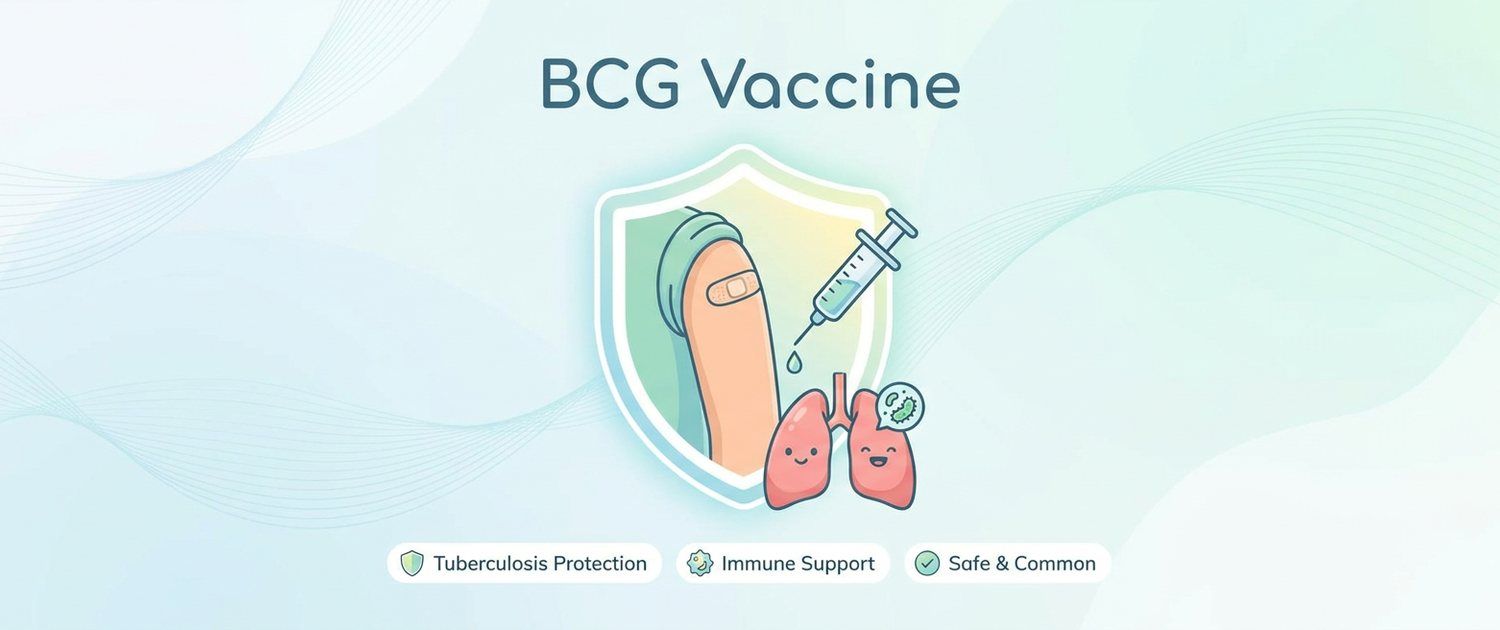
BCG is one of the first vaccines in a person's life: it is given in the maternity hospital. There are many questions around it: why vaccinate a newborn, what the "pustule" and scar that appear later are, and what to do if the scar does not form. Here is why the BCG vaccine is needed, what a normal reaction looks like and when to see a doctor.
What the BCG Vaccine Is and What It Protects Against
BCG is a vaccine against tuberculosis based on a weakened bovine mycobacterium. It does not guarantee that a person will never get tuberculosis, but it reliably protects young children from the most severe and deadly forms — tuberculous meningitis and disseminated tuberculosis. That is why it is given so early.
Who Gets BCG and When
In countries with high tuberculosis rates BCG is given to newborns in the first days of life in the maternity hospital. In weakened children the vaccine may be postponed or a lighter version used. Revaccination is in some cases done later based on test results — the decision is made by a doctor.
The BCG Reaction and the Scar
The reaction to BCG develops not at once but over several weeks to months: a papule appears at the injection site, then a blister, sometimes a small pustule and a crust, which gradually heal to form a small scar (usually on the shoulder). This is a normal course, not a complication. The site must not be squeezed, treated with antiseptics or covered.
What an Absent Scar Means
An absent scar may mean that immunity after the vaccine formed weakly. In this case the doctor goes by the tests (Mantoux/Diaskintest) and decides on the need for revaccination. An absent scar by itself is not a reason to panic but a reason to discuss management with a doctor.
BCG Complications
BCG complications are rare. They include marked inflammation at the injection site, enlargement of a regional lymph node, a cold abscess, and rarely more serious reactions in children with immunodeficiency. For large inflammation, an enlarged armpit lymph node or a long non-healing sore, the child should be shown to a doctor.
BCG, Mantoux and Diaskintest
It is important not to confuse the vaccine and the tests: BCG is protection, while Mantoux and Diaskintest are tests that show contact with tuberculosis infection. Because BCG affects Mantoux, Diaskintest is used to clarify, as it barely reacts to the vaccine.
Contraindications and Deferral
BCG is postponed for prematurity with low weight, acute illnesses and some immune conditions; in confirmed immunodeficiency the live vaccine is not given. All contraindications and timing are set by a doctor. A deferral is not "cancellation forever" but a shift to a more suitable time.
When to See a Doctor
See a doctor for marked inflammation or suppuration at the vaccine site, an enlarged armpit lymph node, high fever or a long non-healing sore. This helps tell a normal course from a complication. If unsure, you can describe the situation or upload the report.
This article is for informational purposes only and does not replace a doctor's consultation. Vaccination, timing and contraindications are determined by a specialist.
For informational purposes only
This article is for informational purposes only and does not constitute medical advice, diagnosis, or treatment. Please consult a healthcare professional for medical guidance.