Tongue Coating: What White or Yellow Coating Means
Reviewed by the LabReadAI medical team
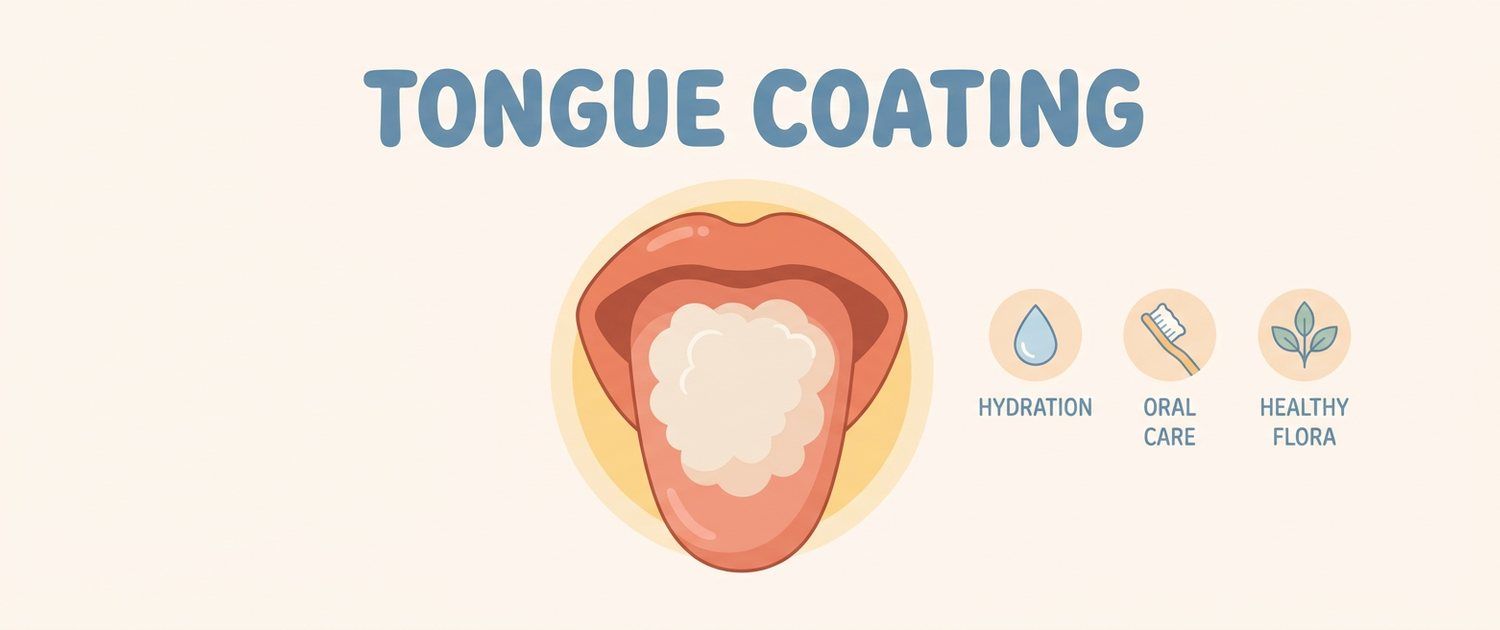
Many people notice a coating on the tongue, and it often frightens more than it should: in most cases it is a matter of hygiene, not serious disease. But sometimes the color and thickness of the coating are a clue to the state of digestion, the liver or the mouth. Let's sort out what a white, yellow or other coating means and when to see a doctor.
Why a Coating Forms on the Tongue
The tongue is covered with papillae, between which bacteria, food debris and shed cells collect — that is how a coating forms. A thin whitish coating in the morning, easily removed with a brush, is normal. Its amount and color are affected by oral hygiene, smoking, food and drinks (coffee, tea), dry mouth and dehydration.
White Coating on the Tongue
A moderate white coating is usually linked to poor hygiene, smoking and dehydration. A warning sign is a dense, curd-like white coating that is hard to remove and leaves a reddened surface — this can be oral candidiasis (thrush), especially in children, older people and those with weakened immunity. More is in the article on thrush (candidiasis).
Yellow Coating and the Liver
A yellowish coating is often linked to smoking, dehydration and stomach disease, but a deep-yellow coating together with a bitter taste, yellowing of the skin and eyes and pale stool can point to liver and bile problems. Such a combination is a reason to check liver markers, not just "clean the tongue".
Other Colors: Brown, Black, Gray
A brown coating is more common in smokers and coffee lovers. A dark, almost black coating (sometimes "hairy tongue") occurs with some medicines, antibiotics and poor hygiene. A gray, dirty-gray coating can accompany chronic GI disease. A sharp persistent color change with no clear cause is worth discussing with a doctor.
Tongue Coating and Stomach Disease
A persistent dense coating, especially at the back of the tongue, is popularly linked to the stomach — with some reason: it often accompanies gastritis and GI disease with heartburn, a bitter taste and heaviness. The coating alone does not make a diagnosis, but together with these symptoms it is a reason to examine the stomach.
Tongue Coating in Children
In children a white coating is often linked to milk residue, hygiene and mild viral infections. A dense white curd-like coating in an infant that does not come off is likely thrush and needs an exam. In scarlet fever there is a characteristic "strawberry tongue". A persistent or unusual coating in a child is worth showing to a pediatrician.
What to Do and Which Tests to Take
Start with hygiene: clean the tongue, drink enough, stop smoking. If the coating is persistent and there are other complaints, a doctor may order a GI work-up, a complete blood count, and if fungus is suspected a scraping. A confusing report can be uploaded for decoding to understand the values before your visit.
When to See a Doctor
See a doctor if the coating is persistent, dense, curd-like or unusually colored, does not come off with hygiene, comes with pain, tongue burning, a bitter taste, heartburn or jaundice, or lasts more than 1–2 weeks. A one-off morning whitish coating needs no worry. If unsure, you can describe your symptoms.
This article is for informational purposes only and does not replace a doctor's consultation. The cause of a persistent coating is determined by a specialist.
For informational purposes only
This article is for informational purposes only and does not constitute medical advice, diagnosis, or treatment. Please consult a healthcare professional for medical guidance.