Stool Color: What Green, Black or Pale Stool Means
Reviewed by the LabReadAI medical team
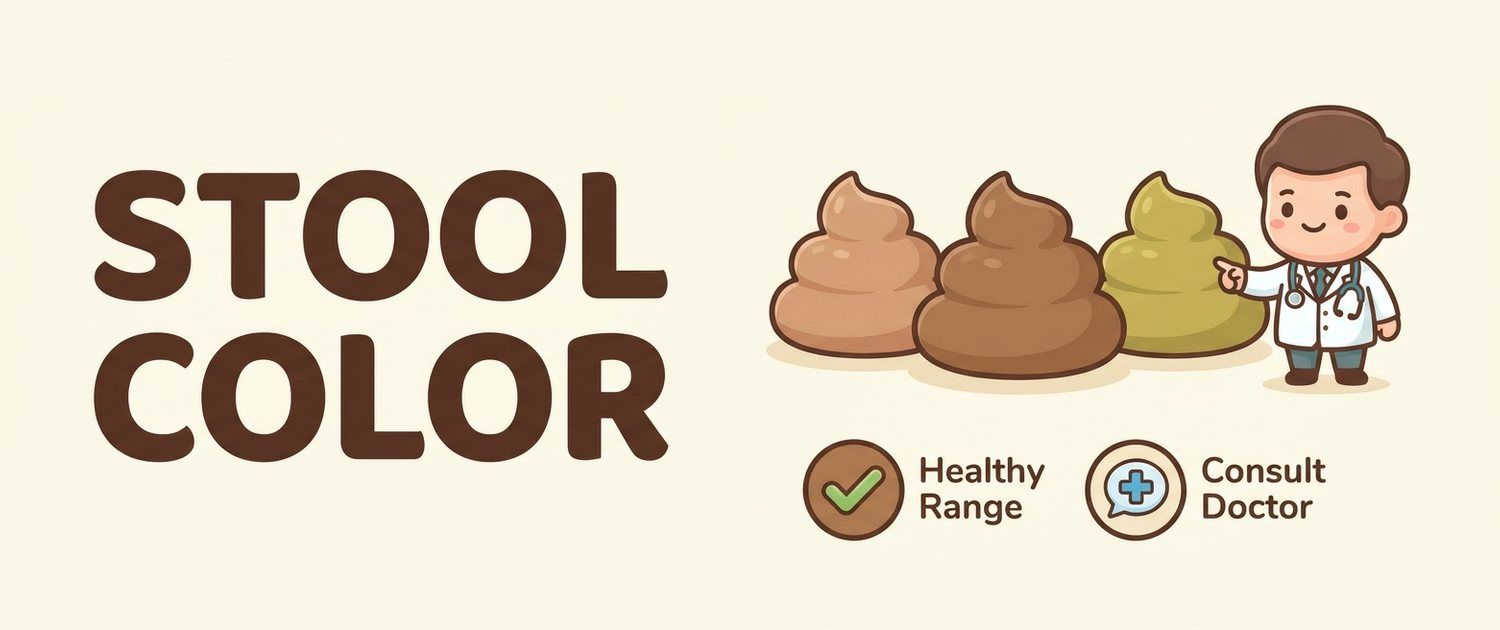
Stool color is something people usually ignore until it becomes unusual. And that concern is justified: sometimes stool color is an important signal about digestive and liver health. But more often the cause is harmless — food or medicines. Let's sort out what green, black or pale stool means and when it is a reason to see a doctor urgently.
What Affects Stool Color
Normally stool is brown — that color comes from processed bile. The shade is affected by food (greens, beetroot, blueberries, iron in supplements), medicines and how fast food moves through the gut. So a one-off color change after a specific food or drug is usually harmless and passes in a day or two.
Green Stool: Causes
Greenish stool is most often linked to food: lots of greens, spinach, dyes, and to faster transit (with diarrhea bile does not have time to "mature" to brown). In infants greenish stool is a common normal variant. Persistent green stool with diarrhea and abdominal pain is a reason to see a doctor.
Black Stool — When It Is Dangerous
Black is the most concerning color. Harmless causes: iron in supplements, activated charcoal, blueberries, bismuth-containing medicines. But black tarry, sticky, foul-smelling stool (melena) can mean bleeding in the stomach or duodenum — an emergency. If you have not taken iron or charcoal, black stool needs urgent care.
Pale or White Stool and the Liver
Pale, gray-white, "clay-colored" stool means a lack of bile in the gut — often due to liver and bile-duct problems (blockage, stasis). Especially worrying is pale stool together with dark urine and yellowing of the skin and eyes — the picture of jaundice, where bilirubin is checked. This combination needs prompt evaluation.
Blood and Mucus in Stool
Bright red blood on stool or paper is more often linked to hemorrhoids and fissures, but can also be a sign of inflammation or a tumor — so blood in the stool should always be shown to a doctor. Black stool is "digested" blood from the upper GI tract. Mucus in the stool occurs with bowel inflammation, including with gastritis and GI disease.
Other Changes in Stool
Besides color, the shape and frequency of stool tell about gut health. Greasy, shiny, hard-to-flush stool can point to impaired fat absorption. Sharp persistent changes in the usual stool (color, shape, frequency) with no clear cause are a reason for a work-up, especially in people over 45–50.
Which Tests to Take
For worrying changes a doctor may order a fecal occult blood test, a complete blood count (anemia with bleeding), and if the liver is suspected, bilirubin and liver markers, and if needed an endoscopy. A confusing report can be uploaded for decoding.
When to See a Doctor Urgently
Urgently — for black tarry stool (if not linked to iron/charcoal), heavy blood in the stool, pale stool with jaundice and dark urine, severe abdominal pain. A routine visit — for persistent changes in stool color and shape with no cause. A one-off color from food needs no worry. If unsure, you can describe your symptoms.
In children stool colour worries parents most during diarrhoea — what actually matters is in diarrhoea in children.
This article is for informational purposes only and does not replace a doctor's consultation. Changes in stool color are interpreted by a specialist from tests.
For informational purposes only
This article is for informational purposes only and does not constitute medical advice, diagnosis, or treatment. Please consult a healthcare professional for medical guidance.