How to Get Rid of Bloating: Causes, Treatment and Diet
Reviewed by the LabReadAI medical team
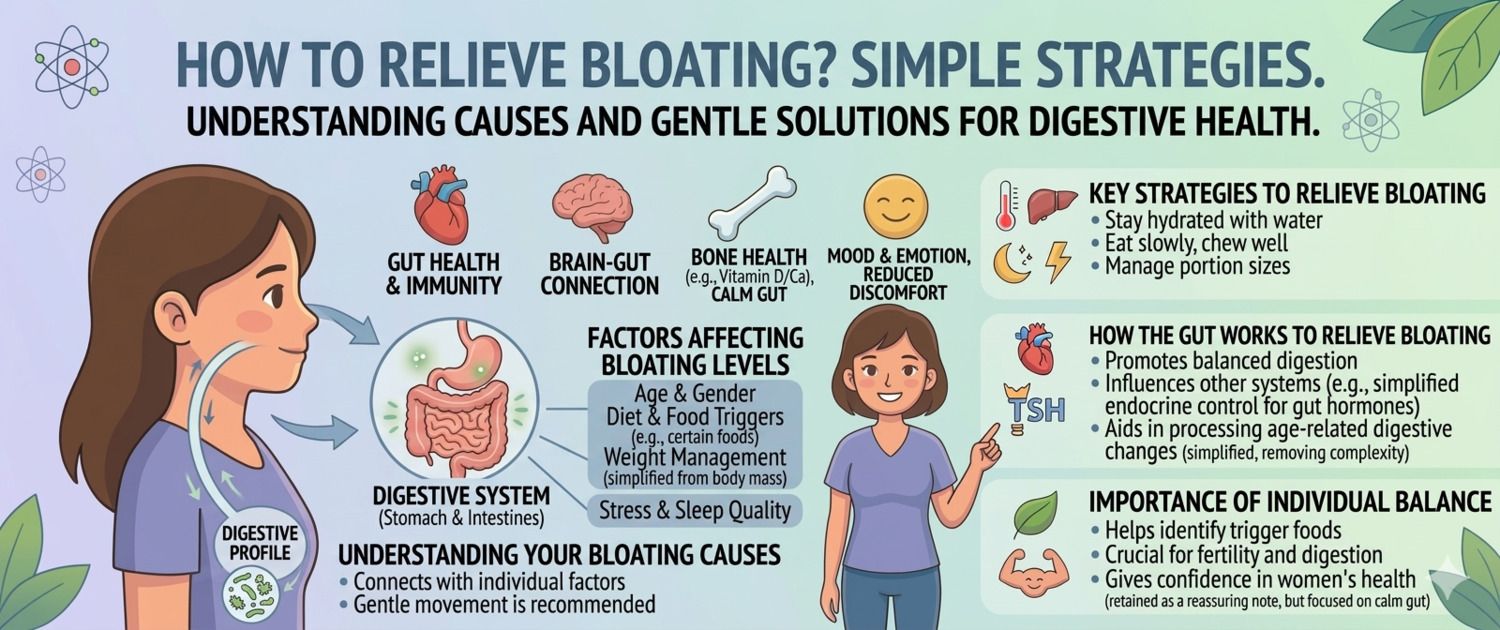
Your stomach feels fine in the morning but expands noticeably by evening. Or discomfort sets in reliably about an hour after eating — regardless of what you had. Bloating is one of the most common complaints in gastroenterology consultations, and one of the most underestimated: millions of people live with it for years without realizing the cause is identifiable and fixable. Let's break down where bloating comes from, which foods and conditions drive it, and what genuinely works to relieve it.
What Bloating Is and How It Develops
Bloating is a sensation of excess pressure or fullness in the abdomen, which may or may not be accompanied by visible abdominal distension. The medical term is meteorism, from the Greek for "elevated." The mechanism is straightforward: gas accumulates in the gut in amounts that exceed normal or that exceed an individual's tolerance threshold.
Intestinal gas enters by three routes: it is swallowed during eating and drinking (aerophagia), produced by microbiome bacteria fermenting unabsorbed carbohydrates, or diffused from the blood. A healthy adult passes 200–2000 mL of gas per day. In bloating, this volume increases, or the gut's ability to move it along is impaired.
A key insight: the sensation of bloating does not always correlate with the actual amount of gas present. In people with heightened visceral sensitivity — primarily those with irritable bowel syndrome — a normal gas volume is perceived as painful discomfort. This is not psychosomatic in a dismissive sense; it is a real physiological characteristic with a measurable impact on quality of life.
Main Causes of Bloating
Bloating causes divide into functional (no structural gut damage) and organic (linked to a specific disease).
| Cause | Mechanism | Characteristic features |
|---|---|---|
| Excess FODMAP carbohydrates | Bacterial fermentation of unabsorbed short-chain carbs | Worsens after legumes, onions, milk, wheat |
| Gut dysbiosis | Overgrowth of H₂ and CH₄-producing bacteria | Chronic bloating, unstable bowel habits |
| SIBO (small intestinal bacterial overgrowth) | Bacteria in the small bowel ferment food prematurely | Bloating within 30–60 minutes of eating |
| Irritable bowel syndrome | Heightened visceral sensitivity | Combined with pain, diarrhea, or constipation |
| Lactose intolerance | Lactase deficiency → bacterial fermentation of lactose | Bloating specifically after dairy |
| Celiac disease | Immune reaction to gluten, villous atrophy | Bloating + diarrhea + weight loss |
| Gastroparesis | Delayed gastric emptying | Upper abdominal bloating after meals |
| Constipation | Stool accumulation in the colon | Worsens toward evening, relieved by bowel movement |
| Gynecological causes | Endometriosis, ovarian cysts | In women; often cyclical pattern |
| Systemic causes | Hypothyroidism, diabetes, celiac disease | Bloating as one of multiple symptoms |
Aerophagia deserves separate mention: swallowing air while eating quickly, talking during meals, chewing gum, and drinking carbonated beverages. It is the simplest and most commonly overlooked cause of upper abdominal bloating and belching.
Foods That Cause Bloating: What to Cut and What to Add
The main dietary tool for chronic bloating is understanding FODMAPs — fermentable oligosaccharides, disaccharides, monosaccharides, and polyols. These are short-chain carbohydrates that are poorly absorbed in the small intestine and actively fermented by colonic bacteria.
High-FODMAP foods (primary triggers):
- Legumes: beans, lentils, chickpeas, peas
- Onions, garlic, leeks — in any form
- Lactose-containing dairy: milk, soft cheeses, ice cream
- Wheat and rye in large quantities
- Apples, pears, mango, watermelon
- Sugar alcohols: sorbitol, mannitol, xylitol (found in "sugar-free" gum and "diet" products)
What helps reduce bloating:
- Cooking, braising, and fermentation reduce FODMAP content: boiled lentils cause less bloating than roasted ones; yogurt is better tolerated than milk
- Ginger — documented prokinetic effect: speeds gastric emptying
- Fennel and caraway relax intestinal smooth muscle and reduce spasm
- Probiotics (lactobacilli, bifidobacteria) reduce gas production in some people with IBS when taken regularly — the effect is highly individual
The food–bloating connection is rarely straightforward: the same item can cause intense discomfort in one person and nothing in another. A two-to-four week food diary — logging "what I ate → how I felt one to three hours later" — is often more informative than any blood test.
Lifestyle Factors That Drive Bloating Beyond Diet
Eating speed. Eating quickly guarantees aerophagia and insufficient chewing. Slowing down (at least 15–20 minutes per meal) reduces air swallowing and gives the stomach time to initiate digestion properly.
Physical activity. A 15–20 minute walk after eating accelerates intestinal motility and moves gas along. This is one of the most effective and accessible ways to quickly relieve post-meal bloating. A sedentary lifestyle is an independent driver of chronic meteorism.
Stress and the gut–brain axis. The gut has its own nervous system — the enteric nervous system — and directly responds to psychological state. Acute stress slows gastric emptying and amplifies visceral sensitivity. Chronic stress is one of the main sustaining factors in IBS and functional bloating. Reducing chronic stress load through mindfulness practices, sleep normalization, and cortisol management is a legitimate part of functional bloating treatment.
Body position. Lying down immediately after eating slows gastric emptying. The optimal position is sitting or slow walking for the first 30–60 minutes after a meal. Using a footstool to achieve a squatting posture during defecation reduces residual colonic volume.
Carbonated drinks and gum. Every sip of sparkling water introduces CO₂ into the stomach; most exits via belching, but some passes into the intestines. Sugar-free gum with sorbitol delivers a double hit: aerophagia plus sorbitol as a FODMAP trigger.
When Bloating Is a Disease Symptom
Functional bloating is the most frequent cause — but not the only one. Several systemic conditions first manifest with gastrointestinal symptoms.
Hypothyroidism slows motility throughout the entire gastrointestinal tract: gastric emptying is delayed, the bowel becomes sluggish, constipation worsens, and bloating follows. Bloating and constipation alongside fatigue, cold intolerance, and weight gain is a classic triad that requires thyroid disease to be ruled out.
Insulin resistance and diabetes. In type 2 diabetes, diabetic gastroparesis — delayed gastric emptying due to vagal nerve damage — is a common complication. Checking blood glucose in people with chronic functional bloating and excess weight is worthwhile: insulin resistance is associated with dysbiosis and reduced intestinal motility.
Inflammatory bowel disease (IBD) — Crohn's disease and ulcerative colitis. Chronic bloating combined with blood in the stool, weight loss, and nocturnal symptoms are alarming signs requiring urgent investigation. C-reactive protein is the first laboratory marker of active intestinal inflammation.
Celiac disease — autoimmune gluten intolerance. Classic presentation: bloating, diarrhea, weight loss, and deficiency states (anemia, osteoporosis). Screening uses anti-tissue transglutaminase IgA antibodies (anti-tTG IgA) combined with total IgA.
Malignant causes. Gradually worsening bloating — especially asymmetric distension, a palpable mass, altered bowel habits, or blood in the stool — is an indication for colonoscopy.
Diagnosis for Chronic Bloating
If bloating occurs more than three times a week for several months running, it warrants investigation — not just dietary adjustments.
Standard first-line workup:
Laboratory tests:
- Complete blood count — rule out anemia (celiac disease, IBD); evaluate the differential
- C-reactive protein and ESR — inflammatory markers when IBD is suspected
- TSH — exclude hypothyroidism as the driver of reduced motility
- Anti-tTG IgA antibodies — celiac disease screening
- Fecal calprotectin — highly sensitive marker of intestinal inflammation
Imaging and functional tests:
- Abdominal ultrasound — rule out structural pathology, ascites, tumors
- Hydrogen breath test — diagnoses SIBO and lactose/fructose intolerance
- Colonoscopy — for alarm symptoms, age over 45, or a family history of colorectal cancer
Treatment and When to See a Gastroenterologist
Self-help for acute bloating:
- A 15–20 minute walk
- Clockwise abdominal massage
- Squatting position or knee-chest posture — aids passage of gas
- A warm heating pad on the abdomen — relieves smooth muscle spasm
- Simethicone (Gas-X and equivalents) — breaks up gas bubbles; safe and non-absorbed
For functional chronic bloating:
- Low-FODMAP diet for 4–6 weeks with gradual systematic reintroduction — the gold standard for IBS and functional meteorism; ideally guided by a dietitian
- Probiotics — require individual selection; not universally effective
- Antispasmodics (mebeverine, trimebutine) — for bloating with a pain component
See a gastroenterologist if:
- Bloating persists for more than 3 months despite dietary changes
- Bloating is accompanied by blood in the stool, significant weight loss, or nocturnal symptoms
- Bloating appeared for the first time after age 45
- The abdomen is tender on palpation or a mass is felt
- Progressive abdominal distension suggests possible ascites
Seek urgent care for acute severe bloating with sharp pain, vomiting, and absence of stool or gas — this picture suggests intestinal obstruction, a surgical emergency.
This article is for informational purposes only and does not replace professional medical advice. Consult a gastroenterologist or GP for chronic bloating.
For informational purposes only
This article is for informational purposes only and does not constitute medical advice, diagnosis, or treatment. Please consult a healthcare professional for medical guidance.